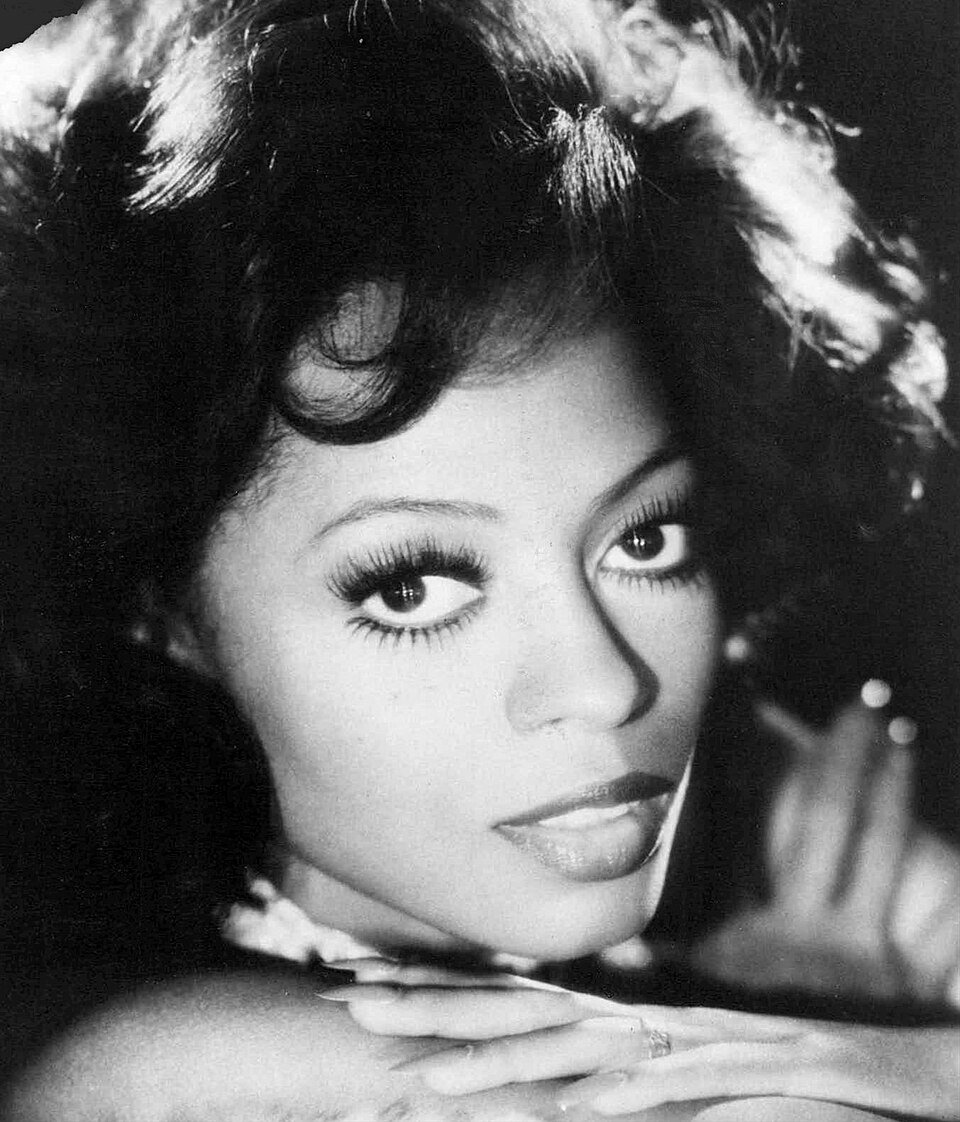
I’m Coming Out: The Anthem Diana Ross Was Afraid to Release
The idea was born in a bathroom. Not a metaphorical bathroom — an actual restroom, in an actual nightclub, on Eighth Avenue in Manhattan, sometime in 1979. Nile Rodgers, the guitarist and co-founder of Chic, had gone club-hopping near Studio 54 and wandered into the Gilded Grape, a transgender club that was then one of the hottest rooms in New York. He stepped into the men’s room and stopped cold.
On either side of him — three or four deep, he would later say, trying to make the story sound plausible because no one believed the real number — were Diana Ross impersonators. A forest of wigs, sequins, and false eyelashes, all dressed as the same woman. Rodgers stood there in the middle of it, the producer of the biggest disco band on earth, in the middle of producing his first true superstar — and the superstar was Diana Ross.
“It was like a Fellini movie,” Rodgers recalled. He ran out of the club, found a payphone, and called his partner Bernard Edwards, who was dead asleep. “Bernard, please write down the words: ‘I’m coming out.’” And then he explained: if they wrote a song called “I’m Coming Out” for Diana Ross, it would have the same power as James Brown’s “Say It Loud — I’m Black and I’m Proud.” Nobody thought of Diana Ross as a gay icon on the front lines of anything — but her gay fans worshipped her. A song that spoke to them, through her, would be historic.
They wrote it the next morning. What Rodgers didn’t tell Diana was who it was really for. And when she found out — or rather, when someone explained it to her — she was terrified. She came back to the studio heartbroken, in tears, demanding to know why the two young producers were trying to ruin her career.
This is the story of a song that was nearly killed by its own singer, remixed behind its writers’ backs, released into a country turning against disco — and became immortal anyway.
The Queen Without a Crown
To understand what “I’m Coming Out” meant in 1979, you have to understand where Diana Ross stood. She was, by any measure, one of the most successful female singers in history: the voice of the Supremes, Motown’s flagship act, with twelve number-one singles in the 1960s; a solo star with hits like “Ain’t No Mountain High Enough” and “Touch Me in the Morning”; an Oscar-nominated actress for Lady Sings the Blues. She was Diana Ross. She was already a legend.
But legends can stall. By late 1979, Ross had not cracked the American Top 10 since “Theme from Mahogany” four years earlier. Disco — the sound that had carried her through the late seventies — was facing a vicious backlash. Radio stations were holding “disco demolition” nights. Rock fans were burning Bee Gees records in baseball stadiums. Motown, her label and her home since she was a teenager, was pivoting toward younger signings. Ross was thirty-five, a veteran in a business that was starting to treat her like history.
She knew it. And she was determined to change it. When she sat down with Nile Rodgers and Bernard Edwards — then at the absolute peak of their powers, the architects of Chic’s “Le Freak” and “Good Times,” the funkiest, most sophisticated hit machine in America — she told them she wanted to turn her career upside down. To have fun again. To be dangerous again.
Rodgers and Edwards took her at her word. Before a single note was recorded, they conducted what amounted to a two-day oral history with their prospective singer — quizzing her about fame, family, loneliness, laughter, everything. Her answers became the raw material for the album. Every song on what would become Diana was, in some way, about her life. “Upside Down” came straight from her phrase about turning her career upside down. And “I’m Coming Out” — well, that one came from the bathroom at the Gilded Grape.
The Sessions at the Power Station
Recording began in November 1979 at the Power Station in New York — the great room where Chic made all their records, where the drums sounded like thunder and the strings cut like light. Rodgers and Edwards were perfectionists, and they were also, by their own admission, slightly terrified: this was their first time producing a genuine superstar, a woman whose voice had defined a decade before they had their first hit.
What they built for her was effervescent and defiant. The Chic sound — lean eight-bar vamps, pinwheeling string stabs, syncopated handclaps, Bernard Edwards’s basslines flicking like jump ropes — wrapped around Ross’s voice like it had been waiting for her all along. “Upside Down” was the obvious single: slinky, strange, instantly memorable. But “I’m Coming Out” was the statement.
Listen to how it begins: nearly a full minute of fanfare before the groove kicks in — horns blaring, strings soaring, drums rolling like a coronation. “She’s the queen,” Rodgers later explained. “It’s a fanfare.” Then the groove drops, and Ross enters, repeating the title like a mantra that gathers force each time: “I’m coming out.” The lyric is a declaration of self-ownership: “There’s a new me coming out and I just had to live.” “The time has come for me to break out of this shell.” “I have to shout that I am coming out.”
Ross loved it. She left the studio floating on air — by Rodgers’s account, the happiest he had ever seen her. She loved the whole album. She had no idea what “coming out” meant.
The Phone Call That Changed Everything
The crisis came through Frankie Crocker. Crocker was then the number-one radio personality in America, the voice of WBLS in New York, a man whose opinion could make or break a record. Ross played him the album, proud and excited. Crocker listened to “I’m Coming Out” and told her, flatly, that it would ruin her career.
Ross was devastated. She came back to the Power Station crestfallen and heartbroken — “an hour or two before, she had been the happiest woman in the world,” Rodgers recalled. “But we could see she was brokenhearted.” She confronted the two producers: “Why are you guys trying to ruin her career?” — no, “Why are you guys trying to ruin my career?”
What Crocker had explained to her was the phrase’s meaning in gay culture. “Coming out” — coming out of the closet — was the language of gay liberation. A song called “I’m Coming Out,” sung by Diana Ross, would be heard as a declaration that Diana Ross was gay. In 1980, for a mainstream Black female pop star, that felt like commercial suicide.
Rodgers did what he had to do. He reassured her — talked her down, reminded her of the logic of the situation. “If we really ruin your career, we’re ruining our career,” he told her. “You’re already Diana Ross. We’re just starting out.” He insisted the song was about artistic freedom, about breaking out of a shell — which was true, as far as it went. What he didn’t say, or didn’t emphasize, was that he had written it specifically for her gay fans after the night at the Gilded Grape. Some truths are better revealed slowly.
It worked. Ross calmed down. She agreed to keep the song — and, at Rodgers’s suggestion, even made it the opener of her live shows, the fanfare announcing her arrival. The crisis passed. But the tension it revealed — between who Diana Ross was and who her audience needed her to be — would shape the rest of the story.
The Album War
If the “coming out” crisis was the first battle over Diana, the second was worse — because this time, the producers lost.
When the album was finished, Ross took the master tapes to Detroit and had the entire record remixed by Motown engineer Russ Terrana — without consulting Rodgers and Edwards, without telling them, without their knowledge. Terrana’s remix shortened tracks, rearranged elements, and softened the Chic sound into something more conventionally Motown. It was, from Rodgers and Edwards’s perspective, vandalism.
They were furious. The dispute was bitter enough that when the album was released, no musicians were credited on the cover — a stunning omission for a record built on some of the finest session playing in New York. Rodgers has never fully forgiven it. The Diana the world knows is Terrana’s remix, not the Chic original; the producers’ mix would not see official release for decades.
And yet — and this is the strange alchemy of the record — it worked. Diana, released on May 22, 1980, became the best-selling album of Ross’s career, eventually certified platinum. “Upside Down” shot to number one — her first chart-topper in four years, the comeback she had asked for. The album’s success proved her instinct right: she had needed to turn her career upside down. She just hadn’t expected the producers to feel turned upside down along with it.
The Men Behind the Groove
Nile Rodgers and Bernard Edwards were, in 1979, the most important rhythm section in popular music — and the most unlikely superstars. Chic had exploded in 1978 with “Le Freak,” which became Atlantic Records’ biggest-selling single ever, and followed it with “Good Times,” whose bassline — Bernard Edwards’s immortal creation — became the most sampled groove in history, the foundation of the Sugarhill Gang’s “Rapper’s Delight” and therefore, in a real sense, the foundation of commercial hip-hop.
But by 1979, Chic was caught in the same backlash threatening Diana Ross. The infamous Disco Demolition Night at Chicago’s Comiskey Park — July 12, 1979, when a radio DJ blew up disco records between games of a baseball doubleheader and thousands of rock fans rioted — had made disco a target. Rodgers and Edwards, two brilliant Black musicians who thought of themselves as jazz-funk craftsmen in the tradition of their heroes, suddenly found their music treated as a punchline.
Producing Diana Ross was their escape route and their proving ground. If they could make a hit for a legend — a song singer, not a disco act — they could prove they were more than a genre. They threw everything they knew into Diana: the string arrangements they had studied from Philadelphia soul, the guitar work Rodgers had honed in the clubs, the rhythmic science Edwards had perfected in the studio. The album was their résumé and their revenge.
It is one of music’s rich ironies that the anti-disco backlash gave us Diana — a record that outlived disco by decades. The Gilded Grape, the bathroom, the payphone: none of it happens if Rodgers isn’t out club-hopping in the last days of the disco era, soaking up a culture about to go underground. “I’m Coming Out” is, among many other things, a message in a bottle from a vanishing world.
Making “Upside Down” and the Rest of Diana
The album’s lead single, “Upside Down,” deserves its own moment, because it shows how deeply Rodgers and Edwards listened to their subject. Ross had told them she wanted to turn her career — her world — upside down. They took the phrase literally, building a track that feels perpetually off-balance: the bassline stutters and lurches, the strings stab at unexpected angles, Ross’s vocal flips between coy and commanding. It is one of the strangest number-one records of the era, and it worked precisely because it sounded like nothing else on the radio.
The rest of the album was cut from the same cloth. “My Old Piano” — a clattering, joyful tribute to the instrument, with Ross pounding away like a woman possessed. “Now That You’re Gone.” “Have Fun (Again).” Each track was built from something Ross had said in those two days of interviews, each one a small portrait. The method was unusual — songwriters as biographers — but the results were intimate in a way Ross’s records had rarely been. For the first time in years, she sounded like a person, not a brand.
The Power Station sessions were famously disciplined. Rodgers and Edwards ran a tight room: the great session players — Tony Thompson on drums, the Chic strings, the horn section — cut live, take after take, until the groove was airtight. Ross, a veteran of Motown’s own demanding studios, thrived in the rigor. She was, by all accounts, a dream to work with — professional, prepared, and game for anything. She trusted the two young men completely.
Which is what made the Detroit remix such a betrayal.
Leaving Motown
The Diana battles — over “I’m Coming Out,” over the remix — were symptoms of a larger rupture. Diana Ross was outgrowing Motown, the company that had made her and, in her view, constrained her. Berry Gordy had been her mentor, her lover, her boss, her Svengali; the relationship, personal and professional, had defined her adult life. By 1980, she was done being defined.
In 1981, Ross signed with RCA Records in a deal reported at $20 million — then the largest recording contract in history. It was a declaration of independence as emphatic as any lyric on Diana. She was thirty-seven years old, a mother, a veteran, and she was starting over — the very thing “I’m Coming Out” had been about. The impersonators in the bathroom had understood her before she understood herself; now she was catching up.
Motown never really recovered from losing her. Gordy’s empire, already strained by the departures and disputes of the late seventies, entered a long decline. Ross’s exit was the symbolic end of an era — the flagship artist sailing away from the label that had launched a thousand ships. She had come out, in every sense.
Central Park, 1983
If there is a single image that captures what Diana Ross became after “I’m Coming Out,” it is July 21, 1983, in Central Park. Ross had organized a free concert for an estimated 800,000 people — one of the largest gatherings in the park’s history. Minutes into the show, a violent thunderstorm hit. Lightning cracked over the stage. The rain came down in sheets.
Most performers would have canceled. Ross refused to leave. She stood on that stage in the downpour, her hair plastered to her face, her white outfit soaked through, and kept singing — to a crowd that refused to leave with her. The concert was eventually stopped for safety, but not before it became legend: Diana Ross, drenched and defiant, communing with nearly a million people in a storm. The rescheduled show the next night drew another enormous crowd.
It was “I’m Coming Out” made flesh — the woman who breaks out of the shell, who shouts that she is coming out, standing in the rain and refusing to go inside. The girl who had been terrified that a song would ruin her career was now standing in a thunderstorm, daring the sky to stop her. Nobody dared.
August 1980: The Single
“I’m Coming Out” was released as the album’s second single on August 22, 1980. The country it entered was not an easy one for a disco-adjacent record by a thirty-six-year-old Black woman. The anti-disco backlash was still smoldering. Radio was fragmenting. MTV did not yet exist.
The song didn’t care. It climbed to number five on the Billboard Hot 100 — a massive hit, Ross’s biggest in years — and it did something stranger and more important than charting: it escaped. It escaped the album, escaped the controversy, escaped even Diana Ross herself, and went out into the world to become something its creators had only half-intended.
The gay community heard the song Rodgers had written for them in that bathroom — the one he hadn’t told Diana about — and claimed it instantly. “I’m Coming Out” became a Pride parade staple, blaring from floats, closing out club nights, soundtracking coming-out moments for a generation. The fanfare intro, the repeated mantra, the sheer joy of it: the song was liberation you could dance to. Rodgers’s secret dedication had found its audience, whether Diana liked it or not.
She came to like it. To love it, even. Over the years, Ross embraced the song’s second life completely — performing at Pride events around the world, becoming one of the most beloved divas in gay culture, and, in a groundbreaking 1999 interview with The Advocate, expressing views on LGBTQ rights that were strikingly progressive for a mainstream star of her generation. “Diana is definitely not homophobic, that’s for sure,” Rodgers said. “She is one of the coolest people you could ever meet.” The fear of 1980 gave way to something like pride — the other kind.
Anatomy of a Fanfare
Strip away the history and “I’m Coming Out” is, purely as a piece of music, a marvel of construction. The minute-long intro is Rodgers’s masterstroke: it doesn’t just introduce the song, it stages it. The horns announce, the strings sweep, the drums roll — and then, crucially, everything pulls back, leaving space for Ross’s voice to enter almost conversationally. The effect is theatrical: the queen is announced, and then she speaks.
The groove itself is pure Chic science. Bernard Edwards’s bass doesn’t dominate the way it does on “Good Times”; instead it dances around the beat, syncopated and buoyant, while Tony Thompson’s drums keep a rock-steady foundation. Rodgers’s guitar — that famous “chucking” rhythm style, part funk, part jazz — flickers in the spaces between. Over it all, Ross’s vocal builds from declaration to exultation, repeating the title until it becomes less a lyric than a spell.
What makes it work is restraint. For a song about breaking out, about shouting, the production never overwhelms the singer. The fanfare serves her; the groove carries her; the strings lift her. Rodgers and Edwards, for all their brilliance, understood that their job was to build a stage and let Diana Ross stand on it. The minute of horns says: pay attention. The next three minutes say: she was worth it.
The Anthem Grows Up
The song’s journey through the decades mirrors the journey of the movement it became an anthem for. In the 1980s, “I’m Coming Out” was a lifeline — played at Pride marches that were still protests as much as celebrations, in clubs that were sanctuaries, at a time when coming out could cost you your family, your job, your life. The song’s joy was defiance.
In the 1990s, as the culture shifted, the song shifted with it — becoming, through Biggie’s sample, a hip-hop party record, its meaning broadening from liberation to celebration. In the 2000s and beyond, it became heritage: the rare anthem that belongs equally to the grandmother who danced to it at Studio 54 and the teenager who hears it at their first Pride.
Diana Ross grew with it. The woman who wept in the studio in 1980 became, by the 1990s and 2000s, one of the most reliable allies a community could ask for — showing up, speaking out, lending her name and her voice. When she sang “I’m Coming Out” at Pride events around the world, she wasn’t just performing a hit; she was keeping a promise she hadn’t known she made, on a night in 1979, in a bathroom on Eighth Avenue, through a songwriter who saw her more clearly than she saw herself.
The Second Life: Hip-Hop and Beyond
The song’s afterlife took another turn in 1997, when the Hitmen — Puff Daddy’s production team — looped its triumphant brass fanfare for the Notorious B.I.G.’s “Mo Money Mo Problems.” The track, featuring Puff Daddy and Mase, became a number-one smash and introduced “I’m Coming Out” to an entirely new generation — kids who had never heard of the Gilded Grape, who knew Diana Ross as a name from history, suddenly shouting along to her horns on hip-hop radio.
It was a fitting fate for a song built on a Chic groove. Bernard Edwards’s bassline and Rodgers’s guitar had already shaped hip-hop once — Chic’s “Good Times” had provided the foundation for the Sugarhill Gang’s “Rapper’s Delight,” the record that launched rap commercially. Now “I’m Coming Out” was doing it again, its fanfare becoming the sound of late-nineties celebration. The song had come out, as it were, a second time — into a genre that didn’t exist when it was written.
The covers and samples kept coming. The song appeared in films, commercials, television shows — each use a small reminder that the fanfare still worked, that the declaration still felt good to make. It became one of those rare records that belongs to everyone: the Pride anthem, the party starter, the hip-hop sample, the diva’s signature.
The Woman in the Bathroom Mirror
There is a deeper irony to “I’m Coming Out” that Rodgers understood from the beginning, even if he didn’t spell it out for Diana. The song was never only about the gay community. It was also, as one observer put it, an ode to Ross’s liberation from Berry Gordy — her declaration of independence from the man who had controlled her career since she was a teenager in the Supremes. After nearly two decades under Gordy’s thumb, Ross was leaving Motown’s orbit artistically, working with young outsiders, making a record her label hadn’t ordered. “The time has come for me to break out of this shell” was autobiography.
That is why the song has lasted: it operates on every level at once. It is a gay anthem and a feminist statement and a career reinvention and a dance record, and it never has to choose. Rodgers wrote it for the impersonators in the bathroom; Diana sang it for herself; the world heard whatever it needed. Great songs are like that — they contain more than their makers put in.
Diana Ross would go on to many more triumphs and a few more controversies. She left Motown for RCA in 1981 in a then-record $20 million deal. She played Central Park in 1983 in a legendary rained-out concert. She became, simply, Diana — a first-name star, a survivor, an icon. But “I’m Coming Out” remains singular in her catalog: the hit she was afraid of, the song she tried to understand, the record that understood her better than she understood it.
Why It Still Shouts
More than four decades later, “I’m Coming Out” still does what Nile Rodgers hoped it would do on the night he ran out of the Gilded Grape to find a payphone. It still opens a door. For the kid in a small town hearing it at Pride for the first time, it is permission. For the woman reimagining her life at forty, it is encouragement. For the crowd on the dance floor, it is pure, unironic joy — the fanfare, the groove, the shout.
Rodgers once said the song’s power came from the same place as James Brown’s “Say It Loud — I’m Black and I’m Proud”: the shock of hearing someone declare themselves, without apology, in a world that preferred them quiet — and the thrill of realizing you could declare yourself too. Diana Ross was never supposed to be on the front lines of anything. She was supposed to be glamorous, safe, universal — the girl from the Brewster projects who conquered the world by being perfect. Instead, for three and a half minutes, she is the voice of everyone who ever needed to say: here I am.
She was terrified of that voice, once. She thought it would ruin her. It made her immortal instead. The impersonators in the bathroom knew something she didn’t — they always had. They saw Diana Ross more clearly than she saw herself: not just a singer, but a symbol, a permission slip, a queen. All she had to do was come out and meet them. She did. And every time that fanfare sounds — in a club, on a float, in a stadium, in a bedroom where someone is finally being honest with themselves — she is meeting them again. We are all still dancing to the sound of it.
Leave a Reply