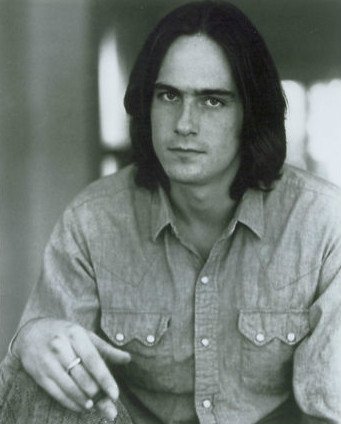
I’ve Seen Fire and I’ve Seen Rain: How James Taylor Turned Heartbreak Into His First Hit
He was twenty years old, three thousand miles from home, strung out on heroin, recording his debut album for the Beatles’ record label in London — and he was writing a song about a dead friend he had not been told about for six months. He would finish the song in a psychiatric hospital in Massachusetts. It would become one of the most personal hit singles ever released: a song about suicide, addiction, and collapse that millions of people made their own.
“Fire and Rain” is James Taylor’s signature — the song that took him from a little-known troubadour to the defining voice of the 1970s singer-songwriter movement. It peaked at number three on the Billboard Hot 100 in 1970, it was later inducted into the Grammy Hall of Fame, and it has been puzzled over, wept over, and sung along to for more than half a century. For years, its lyrics were a puzzle listeners tried to solve — who was Suzanne? What were the flying machines? Why was Jesus in the second verse? Taylor eventually answered every question, with a candor rare in pop stardom, and the answers turned out to be stranger and sadder than any theory. He had written it, he said, without ever imagining that anyone would be interested in his life.
But they were. Because “Fire and Rain” is built, verse by verse, out of three true stories — and each one is devastating. This is the story of those three verses: the friend, the addiction, and the band in pieces on the ground.
London, 1968: A Twenty-Year-Old in Trouble
To understand “Fire and Rain,” you have to start with how improbable James Taylor’s situation was in 1968. He was twenty years old — a kid from North Carolina and Massachusetts, barely out of his teens — and he had somehow landed a recording contract with Apple Records, the Beatles’ own label. He had traveled to London to record his self-titled debut album in the same studios where the Beatles were cutting the White Album. It should have been the beginning of everything. Instead, it was nearly the end.
Taylor was in the grip of a heroin addiction that had been escalating for years, along with a depression that would shadow him for much of his life. The Apple album — which contained early Taylor classics like “Carolina in My Mind” and “Something in the Way She Moves” — would sell poorly, undone by a combination of Taylor’s condition (he had to seek treatment and could not promote it) and Apple’s own commercial disarray. He would be dropped from the label. But in 1968, sitting in London with his life quietly coming apart, he started writing a song.
He wrote it in pieces, at three different times, in three different places — and each piece corresponded to a different catastrophe. Taylor has explained the structure himself, in interviews over the years, with unusual candor. The song, he said, “details three different episodes of hard times.” Verse one: learning of a friend’s death. Verse two: arriving back in America sick, strung out, and addicted. Verse three: recuperation, memory, and the wreckage of his first band. Fire and rain, indeed — and then, impossibly, a kind of hope.
The Apple Debacle
The circumstances of that London recording deserve a closer look, because they explain how a twenty-year-old ended up writing a song like “Fire and Rain.” James Taylor’s deal with Apple Records — the Beatles’ own label — was the kind of break young musicians dream about. He recorded his self-titled debut in London in 1968, literally in the same studio complex where the Beatles were at work on the White Album. The record contained songs that would become Taylor classics: “Carolina in My Mind,” “Something in the Way She Moves.” On paper, it was a launch.
In practice, it was a disaster. The album sold poorly — a casualty, as one historian put it, of two converging failures: Taylor’s heroin addiction, which forced him to seek treatment and made it impossible for him to promote the record, and Apple’s own downward spiral as a business. A debut album needs its singer on the road, in the press, on the stage. Taylor was in no condition for any of it. Apple dropped him. He returned to America sick, strung out, and essentially starting over — the “arrival in this country with a monkey on my back” of the second verse.
It is one of the cruelest ironies in the song’s story: the Beatles’ label gave Taylor his first chance and his first failure, and the failure produced the song that made him a star. Had the Apple album succeeded — had Taylor been healthy enough to promote it, had Apple been functional enough to sell it — there would have been no Austen Riggs, no little room, no third verse. “Fire and Rain” exists because everything went wrong. Taylor has never been bitter about it; if anything, he has treated the Apple period as the necessary wreckage out of which his real career was built. But it is worth remembering, when you hear the song’s quiet confidence, that it was written by someone whose first big break had just collapsed.
Verse One: Suzanne
“Just yesterday morning, they let me know you were gone / Suzanne, the plans they made put an end to you.”
The opening verse of “Fire and Rain” is about a real person, and her story is the saddest in the song. Her name was Suzanne Schnerr — Susie to her friends. Taylor had met her in New York in 1966 or 1967, when he was a teenager performing with his band, the Flying Machine. She was part of that young downtown circle. And while Taylor was in London in 1968, finishing his Apple album, Susie Schnerr — who had been placed in an isolation cell in a psychiatric facility — could not take it, and took her own life.
Taylor did not find out for six months. His friends — Richard, Joel, Margaret, the circle back home — knew how fragile he was, knew about the album, the opportunity, the pressure. They made a decision: they would not tell him. They were excited for him, having the record deal, making the album in London, and they decided the news of Susie’s death would shake him too badly. So they waited. They let him finish. And then, well into the mixing of the album, they told him.
“I started it in London,” Taylor later said of the song, explaining that the first verse came directly from that delayed, devastating news. “My friend Suzanne had committed suicide a couple of months before my friends let me know. They didn’t know how the news would hit me and kept it from me until we were well into mixing that album. Then they told me about it, so that’s why the song starts with that first verse.”
The lyric that resulted is one of the most quietly shattering openings in popular music. “Just yesterday morning, they let me know you were gone” — the “yesterday morning” is literal and also a lie; it had been months, but the grief was brand new. “Suzanne, the plans they made put an end to you” — a line Taylor later said he felt bad about, because “they” did not mean her family or her doctors; “they” meant, as he put it, “ye gods,” or basically the Fates. He never knew her folks. The line was not an accusation. It was a young man reaching for someone to blame for something blameless.
For years, listeners invented their own stories about Suzanne. The mention of “flying machines” later in the song convinced many that she had died in a plane crash. Others assumed she was Taylor’s girlfriend. She was neither — she was a friend, a young woman who died alone, whose death was kept from Taylor by people trying to protect him. The truth, as Taylor eventually told it, is sadder and simpler than any rumor: a girl he knew, gone, and nobody told him until the grief was stale for everyone but him.
The Rumors About Suzanne
The mythology that grew up around the first verse is a case study in how listeners fill silence with story. Because Taylor was cryptic — “Suzanne, the plans they made put an end to you” — and because the song later mentions “flying machines in pieces on the ground,” a durable rumor took hold: Suzanne must have died in a plane crash. It is a perfectly logical misreading, and it is completely wrong. The “flying machines” are the band, not an aircraft. Suzanne died by suicide, in an isolation cell, months before Taylor heard about it.
Another rumor made her his girlfriend, even his fiancée — the assumption being that only a lover could inspire such a verse. Taylor corrected this too. In a 1971 interview with Petticoat magazine, he said plainly: “It concerned a girl called Susanne I knew who they put into an isolation cell and she couldn’t take it and committed suicide.” A girl he knew. Not a lover, not a plane crash — a friend, lost to despair, in a system that failed her.
And then there is the line itself: “the plans they made put an end to you.” For years, people read it as an accusation — against her family, her doctors, the facility. In a 1972 Rolling Stone interview, Taylor expressed regret about the phrasing: “I always felt rather bad about the line, ‘The plans they made put an end to you,’ because ‘they’ only meant ‘ye gods,’ or basically ‘the Fates.’ I never knew her folks.” It was not a charge against anyone. It was a twenty-year-old’s howl at the universe — at the senselessness of a young woman dying alone while he was three thousand miles away, unknowing, singing.
The rumors matter because they show what the song does to people: it makes them need the story to be as big as the feeling. But the real story is big enough. A friend died. Nobody told him. He found out half a year later, in a mixing studio in London, and wrote the first verse. Everything else is embroidery on a grief that needed none.
Verse Two: The Monkey on His Back
“Won’t you look down upon me, Jesus, you’ve got to help me make a stand / You’ve just got to see me through another day.”
If the first verse is about grief, the second is about desperation — Taylor’s own. In a 1972 interview with Rolling Stone, he laid it out plainly: “The second verse is about my arrival in this country with a monkey on my back, and there ‘Jesus’ is an expression of my desperation in trying to get through the time when my body was aching and the time was at hand when I had to do it.”
The “monkey on my back” was heroin. By the time Taylor returned to America after the Apple album, he was, in his own later description, sick and strung out — physically exhausted, undernourished, and addicted. The addiction had already cost him the chance to promote his debut; it would soon land him in a hospital in Manhattan and then in a psychiatric facility in Massachusetts. The second verse of “Fire and Rain” was written out of the physical reality of withdrawal and the spiritual reality of hitting bottom: a young man, barely twenty-one, crying out for help to get through one more day.
It is worth sitting with how radical this was in 1970. Pop songs did not talk about heroin addiction — not plainly, not in the first person, not on singles aimed at the Top 40. The confessional singer-songwriter movement was just beginning, and Taylor was its most vulnerable pioneer: he was not writing about heartbreak in the abstract but about his own body aching, his own desperation, his own need to “make a stand.” The “Jesus” in the lyric is not theology; it is what Taylor called it, “an expression of my desperation.” When you have nothing left, you cry out to whatever might be listening.
The verse also contains the song’s most famous lines — the ones that lifted “Fire and Rain” from personal testimony to universal anthem: “I’ve seen fire and I’ve seen rain / I’ve seen sunny days that I thought would never end / I’ve seen lonely times when I could not find a friend.” Taylor was writing about his own extremes — the fire of addiction, the rain of grief — but he wrote them so simply that anyone could inhabit them. Everybody has seen fire. Everybody has seen rain. That is why the song traveled so far beyond Taylor’s own story: he gave his pain the plainest possible language, and the plainness made it everyone’s.
Verse Three: Austen Riggs
“Sweet dreams and flying machines in pieces on the ground.”
The third verse was written in the strangest of the song’s three birthplaces: the Austen Riggs Center, a private psychiatric facility in Stockbridge, Massachusetts, where Taylor committed himself after the Apple debacle. He stayed for about five months. They put him, as he remembered it, in a little room. And in that little room, he wrote — prolifically, desperately, therapeutically. “It was very productive,” he later said. “I was getting my strength back, I was getting my nervous system back. Writing a lot of stuff.”
The third verse, Taylor explained, “refers to my recuperation in Austen Riggs.” But it is not really about the hospital. It is about looking back — about memory, and about the first band, the Flying Machine, the group he had formed with guitarist Danny Kortchmar back in 1966 as teenagers in New York. The Flying Machine had recorded some songs, released one single, and split up without ever issuing an album. By the time Taylor was writing in his little room at Austen Riggs, the band was a memory — and the line “sweet dreams and flying machines in pieces on the ground” was his elegy for it: for the teenage dream, for the kids in New York, for the version of his life that had broken apart.
There is a bitter postscript to that line. After “Fire and Rain” became a hit and Taylor became a star, the label that controlled the Flying Machine’s old recordings suddenly became very interested in the band — and cobbled together an album from those teenage sessions, releasing it in 1971 as James Taylor and the Original Flying Machine. The flying machine, in pieces on the ground, was reassembled for profit. Taylor had written the line as a farewell. The business heard it as an opportunity.
But in the song, the third verse is, as Taylor said, “hopeful” — “much more general, about remembering one’s life.” After the grief of verse one and the desperation of verse two, verse three steps back and takes stock. It is, Taylor explained, “like a postcard from the loony bin before going back out into the world and reengaging.” He was getting his strength back. He was getting his nervous system back. The song ends not with despair but with the quiet determination to continue: “I’ve seen fire and I’ve seen rain” — and I am still here.
Sweet Baby James
Taylor left Austen Riggs, left Apple Records behind, and signed with Warner Bros. Records. His second album — his first for Warner — was Sweet Baby James, released in early 1970. It is a remarkable record: mostly lighter, more uplifting songs, full of warmth and melody, the sound of a young man trying to live in the sunlight. Songs like the title track and “Country Road” feel like deep breaths after a long illness. And sitting in the middle of it, stark and unflinching, is “Fire and Rain” — the darkest, most personal song on the album, the one that does not look away. The contrast is the point: the album is the recovery, and “Fire and Rain” is the record of what he recovered from. You cannot have the sunlight without acknowledging the fire.
The recording itself is a study in intimacy. Taylor’s fingerpicked guitar, his soft, wounded tenor — and on piano, his new friend and fellow songwriter Carole King. King was already a legendary songwriter; she was on the verge of her own solo breakthrough with Tapestry. She played on “Fire and Rain,” and the song affected her profoundly. She was struck, she later said, by the line “I’ve seen lonely times when I could not find a friend” — and she went home and wrote an answer to it: “You’ve Got a Friend,” which Taylor would record and take to number one in 1971. Think about that exchange: one songwriter’s cry of loneliness answered by another songwriter’s promise of companionship, both songs becoming standards. It is one of the great friendships in popular music, conducted entirely in melody.
Sweet Baby James eventually reached number three on the Billboard album chart. But the singles told the real story of Taylor’s arrival. The title track was released as the first single and failed to chart — a gentle, lovely song that radio did not know what to do with. Taylor was on the road, promoting the album the hard way, night after night. Then Warner released the second single: “Fire and Rain.” And this time, the deeply personal song about suicide, heroin, and collapse — the song Taylor had assumed nobody would be interested in — took off.
Carole’s Answer
There is a coda to the recording of “Fire and Rain” that might be the most beautiful footnote in 1970s pop. Carole King — Taylor’s friend, his pianist on the track, and herself on the verge of the Tapestry breakthrough — was deeply affected by the song. One line in particular stayed with her: “I’ve seen lonely times when I could not find a friend.” King went home and wrote a response. Not a cover, not a tribute — an answer, a hand extended back through the music: “You’ve Got a Friend.”
Taylor recorded “You’ve Got a Friend” and took it to number one in 1971 — his first chart-topper, arriving on the heels of “Fire and Rain.” Think about the symmetry: Taylor’s cry of loneliness, answered by King’s promise of companionship, both songs becoming standards, both artists becoming defining voices of the decade. It is one of the great creative friendships in popular music, and it was conducted, at its most profound, entirely in song. He said he could not find a friend. She wrote back to say he had one.
King’s piano on “Fire and Rain” is worth listening for, too — understated, supportive, the sound of a friend in the room. The whole Sweet Baby James session has that quality: musicians playing for the song, not for themselves. It is part of why the record feels so intimate, even now. You are not listening to a production. You are listening to people.
The Hit Nobody Expected
“Fire and Rain” was released as a single in August 1970. It rose steadily through the fall, and it peaked at number three on the Billboard Hot 100 — held off the top, but a massive hit by any measure, and Taylor’s first. The twenty-two-year-old who had written it in pieces — in London, in a Manhattan hospital, in a little room at Austen Riggs — was suddenly a star, the face of a movement. The song that had taken him from little-known troubadour to defining voice of the singer-songwriter era was the most personal thing he had ever written.
Taylor was genuinely surprised. He had not thought people would be interested in his life — in Suzanne, in the monkey on his back, in the flying machine in pieces. But that was exactly what people were interested in, because Taylor had done what the great confessional writers do: he had turned the specific into the universal without sanding off the truth. Listeners did not need to know who Suzanne was to feel the shock of “just yesterday morning, they let me know you were gone.” They did not need to have been through withdrawal to feel “you’ve just got to see me through another day.” The details were Taylor’s. The feelings were everyone’s.
The industry recognized what had happened. “Fire and Rain” was later inducted into the Grammy Hall of Fame, the Recording Academy’s honor for recordings of lasting qualitative and historical significance. It has appeared on countless lists of the greatest songs ever written. And Taylor — who has estimated that he has played it more than a thousand times — has never stopped singing it, never retired it, never seemed tired of it. A thousand performances of a song about the worst years of your life: that is either a burden or a ritual, and Taylor has always treated it as the latter. Each time he sings “I’ve seen fire and I’ve seen rain,” he is not just remembering 1968. He is testifying — to survival, to the distance traveled, to the fact that the lonely times ended and the sunny days, against all odds, came back.
Some songs are hits. “Fire and Rain” is a companion: the song he reaches for, and the song his audience reaches back for, in every season of life.
Why It Endures
“Fire and Rain” endures because it is true — not just emotionally true but factually true, three times over. A friend died, and nobody told him. He was addicted, and his body was aching. His band broke up, and he wrote the elegy in a psychiatric hospital. There is no metaphor in the song that is not anchored to something that actually happened to a twenty-year-old kid who was falling apart. And then, out of that wreckage, he built something with the plainest language imaginable: fire, rain, sunny days, lonely times. Four images. Everybody’s life.
It also endures because of what it started. “Fire and Rain” was the breakthrough not just of James Taylor but of the confessional singer-songwriter as a commercial force — the proof that an audience would embrace a song about heroin and suicide if it was honest enough, melodic enough, human enough. The whole 1970s wave of personal songwriting, from Carole King’s Tapestry to Joni Mitchell’s Blue, moves in the wake of what Taylor did here: the demonstration that vulnerability, precisely rendered, is not a commercial liability but a superpower.
And it endures, finally, because Taylor never hid from it. He answered the questions — about Suzanne, about the monkey on his back, about the little room at Austen Riggs — honestly, repeatedly, without mythologizing. In an industry built on mystique, he chose transparency, and the song is stronger for it. There is no puzzle left, no secret verse, no hidden meaning. Just three true stories, plainly told, set to a melody that carries them gently. That is all a song ever needs to be. That is everything this one is.
Taylor survived it all — the addiction, the depression, the fame, the thousand performances. He got his strength back, just as he said he was doing in that little room at Austen Riggs, and he built a lifetime of music on the foundation of that survival. And the song remains, exactly as he wrote it: three verses, three catastrophes, and a chorus that holds them all. “I’ve seen fire and I’ve seen rain.” He had. He wrote it down. And somehow, impossibly, it made him — and everyone who has ever sung along — feel less alone. It is the rarest thing in popular music: a hit single that tells the whole truth, and keeps telling it, every time he sings it.
Leave a Reply