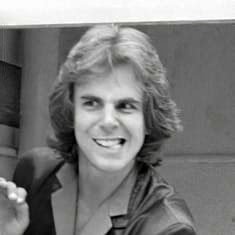
They sang about small-town girls and city boys, about faithfully waiting and never stopping believin’. But the men of Journey lived lives as dramatic as any of their songs: a singer who walked away from the biggest band in America at the very top and found his way back through grief, a guitarist who never missed a single show in fifty years, a keyboardist who found God and married a televangelist, and a frontman discovered on YouTube singing in a Manila bar. This is the human story behind the arena anthems — the loves, the losses, and the second acts.
Steve Perry: The Voice That Walked Away
Steve Perry had the most beautiful voice in rock — a tenor of such purity and power that fans simply called him “The Voice,” capable of filling an arena and breaking a heart in the same phrase — and at the height of Journey’s fame, he walked away from it. The decision baffled the industry. Here was the singer of the biggest band in America, stepping off the treadmill at the very top. But Perry had been running on empty for years: the relentless touring, the internal band politics, a body breaking down. After the tensions of the Raised on Radio era and the band’s 1987 breakup, Perry retreated from public life almost completely. He released a solo album in 1994, reunited with Journey for 1996’s Trial by Fire, and then vanished again when hip problems and exhaustion made touring impossible. For nearly two decades, one of the most famous voices on earth fell silent — by choice.
What few people knew was how deliberately Perry guarded his private world. He never married — he later admitted he was too scared of it after watching his parents’ divorce and watching his bandmates lose half of everything, multiple times, in their own divorces. And in a stunning 2019 interview, he revealed something he had kept hidden for decades: he is a father, and a grandfather. “I do have a child,” he said, “but in the essence of protecting her, I kinda don’t want to get into that — and I have grandchildren too.” The most famous voice of his generation, and he had kept his family a complete secret for his entire career. It was the most Steve Perry thing imaginable: the man who sang about holding on, holding on to the people he loved by keeping them out of the spotlight entirely — the one part of his life he refused to sell.
Kellie: The Love That Brought Him Back
In 2011, Perry’s self-imposed exile cracked open in the most unexpected way. He had been shadowing a friend on the set of Five, a Lifetime film about breast cancer patients, when he saw Kellie Nash — a Los Angeles psychologist — on screen. It was, by his own account, love at first sight. He got her email address, learned her cancer had returned and spread, and wrote to her anyway.
What followed was a year-and-a-half whirlwind. Nash was battling stage-four breast cancer, and Perry stayed at her side through all of it — moving in with her, accompanying her to chemotherapy, following her to New York for experimental treatments, sitting with her through the terror and the hope in equal measure. Friends say he was a different man in those months: tender, present, fully alive in a way he hadn’t been in years. “I believed our love would cure her cancer,” he later admitted. “I really did.” It didn’t. Kellie Nash died on December 14, 2012, at just 40 years old. Perry would later say that when someone with stage-four cancer looks at you and says “I love you,” you feel loved for the first time in your life — because you know they have better things to do than waste their time.
But before she went, she extracted a promise. “If something was to ever happen to me,” she told him, “promise me you won’t go back into isolation. If you do, I fear this would all be for naught.” Perry promised — how could he not? And he kept it, though keeping it nearly broke him. He spent three years in deep grieving, with professional help, slowly finding his way back to the land of the living. Then, almost without deciding to, he began writing music again — the first songs he had written in decades, pouring out of a heart that had finally been broken open. The result was Traces, released on October 5, 2018: his first solo album in 24 years, a somber, beautiful meditation on love and loss that debuted at number six on the Billboard 200 — his first-ever Top 10 solo debut, achieved at an age when most rock stars are coasting on nostalgia. He had returned to the stage in 2014, singing with the Eels in St. Paul, Minnesota, and he has kept going since — releasing the Christmas album The Season in 2021 and, in 2025, recording a new duet version of “Faithfully” with Willie Nelson to benefit Farm Aid. Kellie Nash gave Steve Perry eighteen months of love. He gave her immortality: every single note he has sung since is a kept promise, sung for her.
Neal Schon: The Guardian of the Flame
If Perry is Journey’s voice, Neal Schon is its spine — and its memory. Schon is the only member to have played on every Journey album and every Journey tour since the band’s founding in 1973. He was a teenager when he first played with Carlos Santana; he is now the gray-haired guardian of the flame, the man who has steered the band through every breakup, every lawsuit, every singer change, and never once put down his guitar.
Schon’s personal life has been as eventful as his professional one. His 2013 marriage to Michaele Salahi — famous as one half of the couple who crashed a White House state dinner in 2009 — made headlines around the world, a rock-and-roll romance straight out of central casting, complete with a televised wedding. Through it all, Schon kept playing: the ferocious solos, the lyrical ballad work, the unmistakable tone that has defined Journey’s sound for half a century. He has also been the band’s de facto leader through every crisis, the one who found Arnel Pineda on YouTube and the one who keeps the machine running. When historians write about Journey, they will write about Perry’s voice. But musicians will talk about Schon’s guitar — and about the man who never left, not once, in fifty years.
Jonathan Cain: Faith and the Third Marriage
Jonathan Cain’s story is the most unexpected of them all. Born Jonathan Leonard Friga on February 26, 1950, he was the piano prodigy who gave Journey its signature sound — the man behind the opening riff of “Don’t Stop Believin’.” He wrote “Faithfully” for his first wife, actress and singer Tané McClure, pouring the loneliness of the road into one of rock’s great ballads. He had three children — Madison, and twins Liza and Weston — with his second wife, Elizabeth, before that marriage ended in 2014.
Then came the plot twist no one saw coming. Cain met televangelist Paula White on a Southwest Airlines flight, and his life changed completely. White, one of America’s most prominent megachurch pastors, helped Cain return to the childhood faith he had left behind in the rock-and-roll years — the faith of the Chicago kid who once wanted to be a priest. In April 2015, Archbishop Nicholas Duncan-Williams married them on a prayer mountain in Ghana; weeks later, they held a second ceremony in the United States. It was the third marriage for both. Cain has called meeting Paula a “game changer,” and has since become a worship leader in his own right, performing at White’s church in Florida, releasing faith-based music, co-founding a ministry, and publishing his memoir, Don’t Stop Believin’, in 2018. The man who wrote rock’s most famous anthem about holding on had finally found what he was holding on for.
The Rhythm Section Holds the Line
Behind every great frontman is a rhythm section, and Journey’s has been through the wars. Drummer Steve Smith and bassist Ross Valory were the engine room of the classic lineup — Smith’s precise, powerful drumming and Valory’s melodic bass giving the anthems their lift and their swing. Both men lived through the band’s bitter internal battles, including the lawsuits and countersuits over finances and direction that marked the modern era, with members splitting into warring camps. Whatever the courts decided, the music is the verdict that matters.
Whatever the courts decided, the music is the verdict that matters. When you hear the thunderous groove under “Separate Ways” or the delicate pulse of “Faithfully,” you’re hearing two musicians who spent decades perfecting the art of serving the song. They may not have gotten the magazine covers, but every Journey fan knows: without Smith and Valory, there is no Journey.
Arnel Pineda: The Fairy Tale Continues
And then there is the newest chapter — the one that sounds like a movie. In 2007, Neal Schon was watching YouTube videos of Journey cover bands when he stumbled on a Filipino singer named Arnel Pineda, fronting a Manila bar band called The Zoo, nailing “Faithfully” note for note. Schon flew him to San Francisco for an audition. Pineda got the job, debuted before 20,000 fans in Chile in February 2008, and has fronted Journey ever since.
Pineda’s story — from Manila clubs to stadium stages, from poverty to performing for 30,000 hometown fans on the Revelation tour — is the living embodiment of everything Journey ever sang about. He is the small-town dreamer, the city boy, the believer who never stopped. Nearly two decades into the job, he remains one of the most beloved frontmen in rock, pouring his heart into every show with a gratitude that never fades, proof that the Journey story wasn’t finished when Perry left. It was just waiting for its next verse.
The men of Journey sang about holding on, staying faithful, and never stopping believin’ — and then they lived it, each in his own way. Perry kept a promise to a dying woman and found his voice again after twenty silent years. Schon never left the stage in fifty years, guarding the flame through every storm. Cain found faith and love on an airplane and finally came home to himself. Pineda believed his way from a Manila bar to the world’s biggest arenas. These aren’t just rock stars. They’re the characters from their own songs, still writing verses, still refusing to stop. And as long as there’s a small-town girl or a city boy somewhere with a dream, Journey’s music will be there waiting — faithfully.
Leave a Reply