The world saw the glove, the moonwalk, the stadiums, the tabloid storms. What it rarely saw was the man underneath: the boy who never had a childhood and spent his adult life trying to give one to his own children; the friend who showed up for people with a loyalty that surprised everyone who thought they knew him; the philanthropist who gave away a fortune so quietly that the full scale of it is still being uncovered, decades later. Michael Jackson the icon was a construction, brilliant and deliberate. Michael Jackson the man was something rarer: a wounded soul who turned his pain into generosity. This is the story of the heart behind the hits.
The Childhood He Never Had
To understand Michael Jackson the father, you have to start with Michael Jackson the child. Born the eighth of ten children in Gary, Indiana, he was performing by the age of five and famous by eleven — a childhood spent in rehearsal rooms, on tour buses, and under the strict, often brutal discipline of his father, Joseph, who acknowledged whipping him regularly. Michael would later say he was physically and emotionally abused, and in the same breath credit his father’s strictness with his success. Both things were true, and the wound never closed.
He missed everything normal children take for granted: school dances, sleepovers, lazy summers, the freedom to be silly without an audience, the simple luxury of being unknown. As an adult, he built Neverland Valley Ranch — the California estate with its zoo, amusement rides, and movie theater — as the childhood he never had, a fantasy kingdom where he could finally play. Critics mocked it as eccentricity. But those who understood him saw it for what it was: a man trying to heal himself the only way he knew how, by building the thing he’d been denied, and then opening its gates to sick and underprivileged children so they could play too.
Three Children, One Devotion
When Jackson became a father, friends said they saw him transform. His first two children — Michael Joseph Jackson Jr., known as Prince, born February 13, 1997, and Paris-Michael Katherine Jackson, born April 3, 1998 — were born during his marriage to Debbie Rowe, a dermatology nurse he wed in Sydney, Australia, in 1996 and divorced in 1999. Jackson was awarded full custody and raised them as a single parent, with a nanny’s help and his mother’s constant presence. His third child, Prince Michael Jackson II — the boy the world knew as Blanket, who now goes by Bigi — was born via surrogate on February 21, 2002.
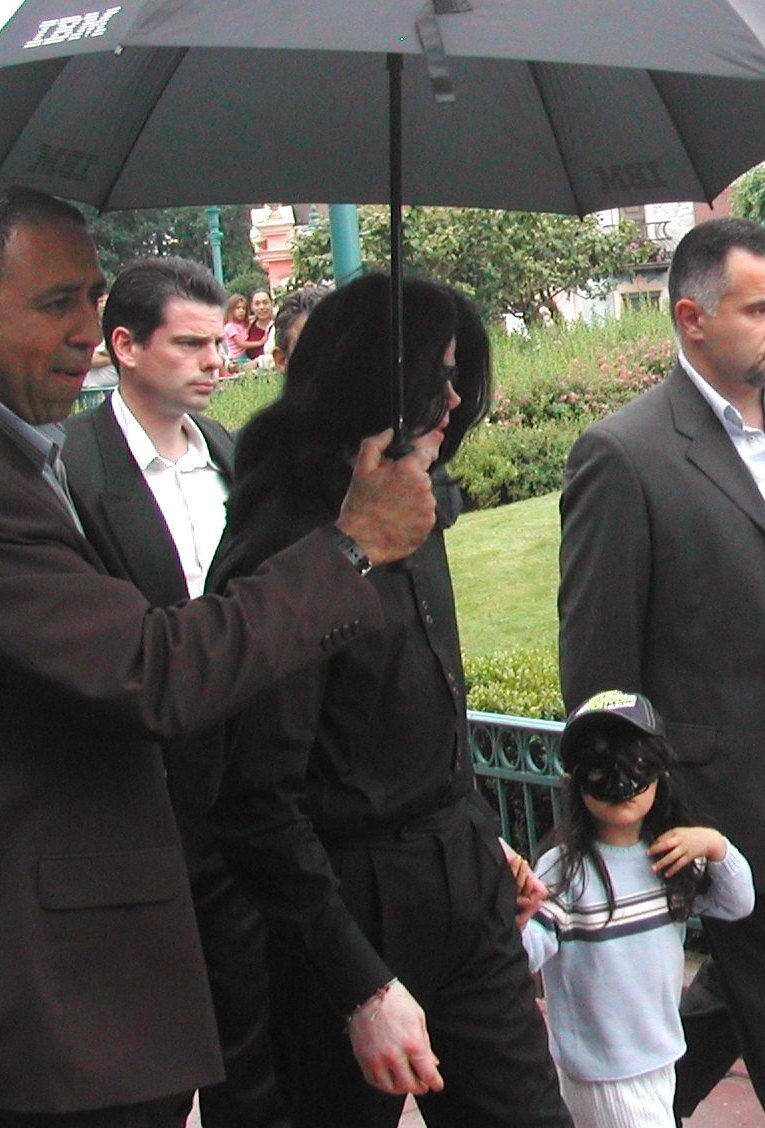
Whatever the world thought of Michael Jackson, his devotion to those three kids was absolute and undisputed. He shielded them from the cameras that had devoured his own childhood, famously draping veils and masks over their faces in public — a practice the tabloids ridiculed, but which the children themselves later said they understood: he was giving them the privacy he never had, the anonymity he had craved since he was eleven. He read to them, played with them, took them everywhere, and structured their lives around normalcy as fiercely as his own life had been structured around fame. Paris has said her father was an incredible dad, that he taught her to love the world and to work hard, and that he made education — reading, learning, curiosity — a religion in their house. Prince has devoted his own adult life to philanthropy through his Heal Los Angeles foundation, clearly his father’s son. Those who saw them together describe a tender, goofy, completely present father — the role, friends said, that made him happiest.
The Mother He Never Stopped Needing
If his father was the wound, his mother was the balm. Katherine Jackson, the devout Jehovah’s Witness who raised ten children in that tiny Gary house, was the one person Michael trusted completely, his whole life. When the world turned on him, when the trials and the headlines closed in like weather, it was his mother he called — the one person whose love had never been conditional on anything he could do for her. After his death in 2009, it was Katherine who was given custody of Prince, Paris, and Bigi, raising them with the same steady faith she’d raised him.
The bond ran deeper than duty. Michael spoke of his mother with a reverence that never wavered, and those close to the family said she was the only person who could truly calm him — the one voice that could quiet the noise. In a life full of transactional relationships — managers, lawyers, hangers-on, all wanting a piece of the King — Katherine was the real thing: the woman who had loved him before the fame, who loved the boy from Gary, not the King of Pop. When he needed grounding, he went home to his mother. He always did.
The Friendships That Mattered
For all his isolation, Jackson collected deep, unlikely friendships. The most famous was with Elizabeth Taylor, the Hollywood legend who became his closest confidante. They were kindred spirits — two child stars who had grown up in public, who understood each other’s loneliness in a way nobody else could, who had both been chewed up by fame and survived it. Taylor defended him fiercely, publicly and privately, and stood by him through his darkest hours, when almost everyone else had walked away. When Jackson died, she was inconsolable. Their friendship was one of the great odd-couple bonds in entertainment history, and it was entirely genuine.
There were others: Macaulay Culkin, the “Home Alone” star who understood child fame better than almost anyone, and who remained a loyal friend into adulthood; Diana Ross, his Motown mentor, whom he named in his will as a backup guardian for his children — a staggering statement of trust; the countless collaborators — Quincy Jones, the engineers, the dancers — who spoke of his kindness, his humor, his habit of remembering everyone’s name. The loneliest man in pop music was, paradoxically, one of its most loyal friends.
The Quiet Philanthropist
And then there was the giving — vast, constant, and largely secret, the least-known chapter of the most famous life in pop. In 2000, the Guinness Book of World Records recognized Michael Jackson for supporting thirty-nine charities, more than any other pop star in history. The list included AIDS Project Los Angeles, the American Cancer Society, the Make-A-Wish Foundation, the United Negro College Fund, the Sickle Cell Research Foundation, and dozens more. Estimates of his lifetime giving run into the hundreds of millions of dollars — by some accounts, more than $300 million, a figure no other entertainer has approached.
In 1992, he founded the Heal the World Foundation, named for his song, with the mission of providing medicine to children and fighting world hunger, homelessness, and child exploitation. He staged his Dangerous World Tour to fund its work. The foundation airlifted forty-six tons of supplies to Sarajevo during the siege, paid for a Hungarian child’s liver transplant, and brought sick children to Neverland for days they would never forget. He donated the entire $1.5 million Pepsi settlement from the 1984 burn accident to the hospital that treated him. He gave $500,000 to Elizabeth Taylor’s AIDS Foundation. He recorded charity singles, visited hospitals in secret while on tour, and gave without announcing it so often that no one has ever compiled a complete list. The Guinness record, by all accounts, was a floor, not a ceiling.
The World Tour of Kindness
The philanthropy wasn’t just checks written from a mansion. In February 1992, Jackson traveled some 30,000 miles across Africa in eleven days, visiting hospitals, orphanages, schools, churches, and institutions for mentally handicapped children — not for cameras, but because he wanted to see. Throughout the Dangerous World Tour, he made a habit of slipping away from the entourage to visit sick children in local hospitals, often in secret, often with toys. The nurses and doctors who met him described a man utterly unlike the tabloid caricature: gentle, attentive, in no hurry to leave, asking about the children by name. He didn’t send a representative. He came himself.
After September 11, 2001, he pulled together an all-star lineup to record the charity single “What More Can I Give” for the victims’ families — another entry in a lifetime of turning his fame into a fundraising machine. In 1986, he had endowed a $1.5 million scholarship fund with the United Negro College Fund. Year after year, decade after decade, the pattern held: when the world hurt, Michael Jackson showed up. Not always with fanfare — often without any announcement at all, slipping into a hospital ward the way other stars slip into a limousine. Usually just with help, which was always the point.
The Man Behind the Mirror
Michael Jackson died on June 25, 2009, at fifty, and the world mourned the King of Pop with a grief usually reserved for heads of state — millions in the streets, billions watching the memorial. But the tributes that meant the most came from the people who knew the man: his children, who spoke at his memorial with a poise that broke hearts; his mother, who carried on; his friends, who remembered the kindness behind the eccentricity.
It’s easy to get lost in the mythology — the glove, the trials, the tragedies, the endless arguments about the man versus the myth. But strip it all away and what remains is a boy from Gary who never got to be a child, who became the most famous person on earth, and who spent his fortune and his heart trying to make the world gentler than it had been to him. He built a wonderland for children. He gave away hundreds of millions. He loved his three kids with everything he had. The King of Pop was a role he played brilliantly — the moonwalk, the glove, the stadiums, all of it real and all of it earned. But it was still a role, a costume he put on. The father who read bedtime stories, the friend who never forgot a loyalty, the giver who wrote the checks in secret — that was who he was when the costume came off.
Heal the world, he sang, make it a better place — for you and for me and the entire human race. It was the mission statement of his life, hiding in a pop song, the truest thing he ever wrote. Michael Jackson spent his career making the world dance. He spent his heart trying to make it kinder. And in the end, the kindness may be the thing that lasts longest of all.
Leave a Reply