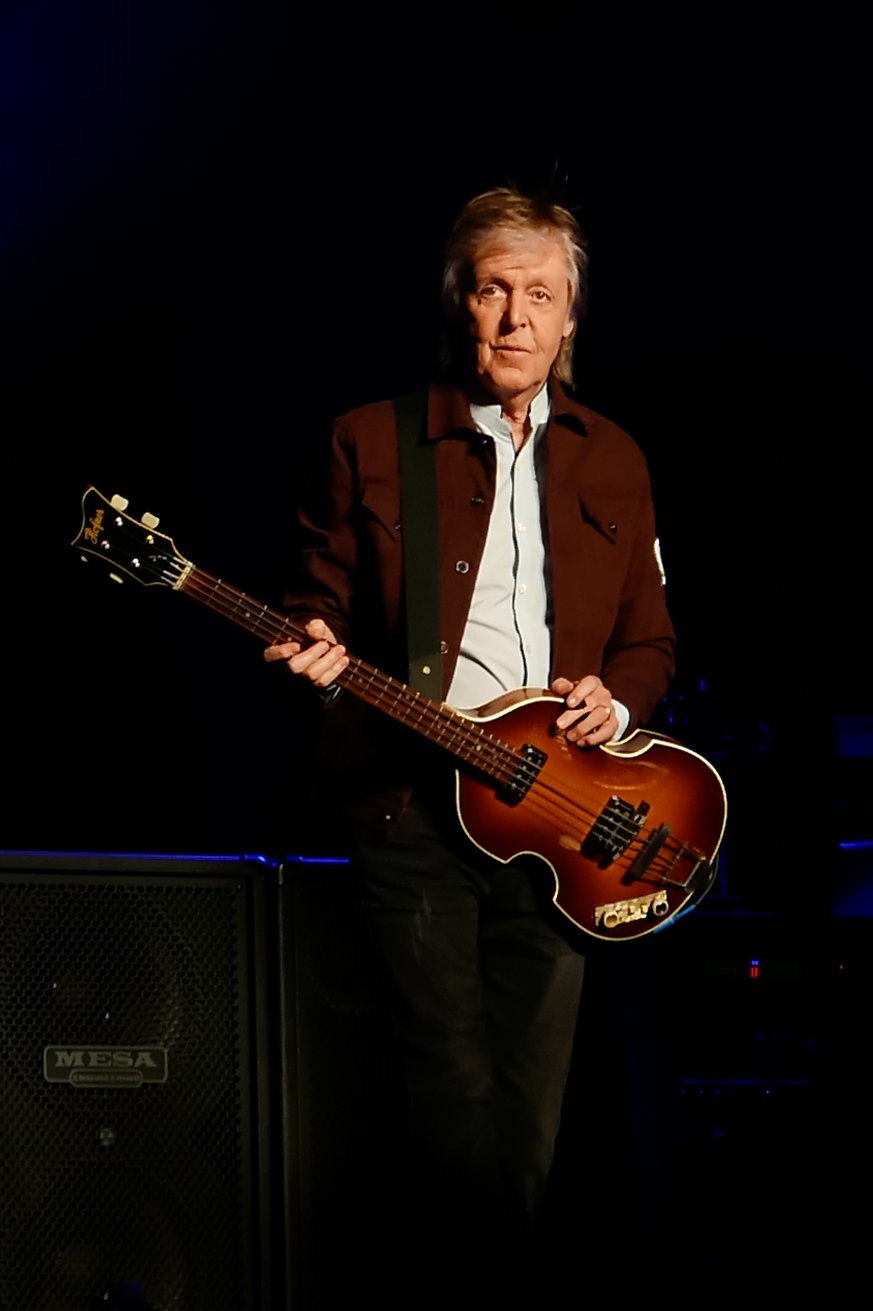

In the summer of 1973, Paul McCartney made a decision that, by his own later admission, was based on a romantic fantasy. He decided to record his new album in Lagos, Nigeria, because he liked the idea of working in an exotic location, of sunbathing on the beach during the day and recording at night, and of escaping the pressures of London and the shadow of the Beatles. The reality, when he arrived, was very different: a ramshackle studio, a military government, a robbery at knifepoint, a band reduced to three people, and a series of mishaps that would have derailed a less determined musician. The album that emerged from that chaos, Band on the Run, released in December 1973, is widely regarded as the finest record McCartney made after the Beatles, and as the album that saved his post-Beatles career. The story of how it was made is a story about ambition, bad luck, and the stubborn belief that a good song can survive almost anything.
To understand why Band on the Run mattered so much, it helps to remember where McCartney stood in 1973. After the Beatles broke up in 1970, McCartney had released a solo album and an album with his wife Linda, Ram, both of which had their admirers but neither of which had quite silenced the critics who doubted whether he could succeed without John Lennon. He had then formed Wings, a band intended to be a real group rather than a backing band for a solo star, but Wings’ first albums had been received coolly, and the band had struggled to establish an identity separate from McCartney’s past. By 1973, McCartney needed a record that would prove, to himself and to the world, that he could still make a great album, and that Wings could be a great band.
McCartney’s solution was to leave Britain altogether. Looking through a list of EMI’s international studios, he chose Lagos, in Nigeria, partly because it sounded glamorous and partly because it offered a change of scene. He imagined, as he later described it, a tropical paradise where the band could work in comfort. What he did not fully appreciate was that Nigeria, in 1973, was a country still recovering from a civil war that had ended in 1970, governed by a military regime, with widespread corruption, disease, and political tension. The studio in Lagos, EMI’s facility on Wharf Road in the suburb of Apapa, was, by McCartney’s standards, severely under-equipped: the control desk was faulty, there was only one eight-track tape machine, and the building itself was ramshackle. The band rented houses near the airport in Ikeja, an hour’s drive from the studio, and established a routine of recording during the week and exploring on weekends.
A band reduced to three
The Lagos trip began badly, before the band had even left Britain. Shortly before departure, Wings’ lead guitarist, Henry McCullough, and drummer, Denny Seiwell, both left the group, for reasons that included musical differences and personal tensions. With no time to recruit replacements, McCartney went to Lagos with just his wife Linda, who played keyboards and sang backing vocals, and guitarist Denny Laine, who had been with Wings since its formation. McCartney himself would have to play bass, drums, percussion, and most of the lead guitar parts, in addition to singing and writing the songs. It was, in effect, a solo album made by a trio, and it put an enormous burden on McCartney, who was already under pressure to prove himself.
The band arrived in Lagos in late August 1973, and the difficulties continued. The studio’s limitations forced McCartney and his engineer, Geoff Emerick, who had worked with the Beatles at Abbey Road, to improvise constantly, making the most of a single tape machine and a faulty desk. The climate was hot and humid, the rainy season was under way, and the band had to contend with illness, with unfamiliar food, and with the general sense of being far from home in a country whose politics they did not fully understand. McCartney, who had been a heavy smoker, suffered a bronchial spasm during the sessions and collapsed, an incident that, while not serious in the long term, underlined the physical strain of the trip.
The most famous incident of the Lagos sessions occurred one evening when Paul and Linda McCartney were walking home and were robbed at knifepoint. The thieves took their valuables, and, more importantly for the album, a bag containing McCartney’s unfinished song lyrics and demo tapes. The loss could have been catastrophic, because the demos contained the working versions of songs that had not yet been fully recorded. McCartney, however, had written the songs recently enough to remember them, and he was able to reconstruct them from memory in the studio. In retrospect, the robbery has sometimes been presented as a blessing in disguise, because it forced McCartney to rethink the songs and to record them with a freshness that might have been lost if he had simply copied the demos. Whether or not that is true, the fact remains that Band on the Run was, in large part, recorded from memory, by a three-person band, in a studio that was barely adequate for the task.
Watch: Paul McCartney & Wings — “Band on the Run” (Official Music Video)
Fela Kuti and the question of exploitation
The Lagos sessions also brought McCartney into contact with one of Africa’s most important musicians, Fela Kuti, the Nigerian Afrobeat pioneer and political activist. Kuti publicly accused McCartney of coming to Africa to exploit indigenous music, a charge that reflected a broader concern, in post-colonial Africa, about Western musicians taking African sounds without acknowledgement or compensation. McCartney’s response was to invite Kuti to the studio, to play him the tapes, and to assure him that the music did not draw on African influences in the way Kuti feared. Kuti, by most accounts, was satisfied by the meeting, and the incident passed without further controversy, but it remains an interesting episode in the album’s history, because it shows McCartney, at a moment of vulnerability, being challenged on the ethics of his presence in Nigeria, and responding not with defensiveness, but with openness.
That openness is characteristic of Band on the Run as a whole. The album is not, despite its Lagos origins, an African album. It is a British and American rock album, with songs that draw on McCartney’s usual sources: rock and roll, pop, country, and music hall. The Lagos experience influenced the album less in its sound than in its spirit: the sense of a band on the run, of people making music under difficult circumstances, of a group that has been reduced to its essentials and has discovered, in that reduction, a new kind of strength. The album’s title track, with its three-part structure and its theme of escape and freedom, captures that spirit perfectly, and it has become one of McCartney’s most beloved songs.
The songs and the success
Band on the Run, as a record, is a nine-track album that moves with remarkable confidence through different styles. The title track opens the album with a slow, almost pastoral introduction that builds into a full rock song, and it sets the tone for a record that is both ambitious and accessible. “Jet,” with its driving rhythm and its enigmatic lyric, became a major hit, and “Bluebird,” a gentle acoustic song, showed McCartney’s gift for melody at its simplest. “Let Me Roll It” is a bluesy, guitar-driven track that has become a live staple, and “Picasso’s Last Words (Drink to Me)” is a more experimental piece, inspired by the death of the painter Pablo Picasso, that shows McCartney’s willingness to take risks. The album closes with “Nineteen Hundred and Eighty Five,” a dramatic, piano-driven song that brings the record to a powerful conclusion.
The album was completed in London, after the band’s return from Nigeria, with final overdubs and orchestral arrangements recorded at AIR Studios, conducted by Tony Visconti in a single day in October 1973. It was released in the United Kingdom on 30 November 1973 and in the United States on 5 December 1973, and it was, initially, a slow seller, debuting at a modest chart position. Its success grew over the following months, as the singles gained radio play and as word of mouth spread, and it eventually reached number one on the American Billboard album chart, spawning three Top 10 singles. Critics who had doubted McCartney’s post-Beatles career were forced to reconsider: Jon Landau, writing in Rolling Stone, called it the finest record yet released by any of the four former Beatles, a judgement that, while debatable, reflected the album’s impact at the time.
Band on the Run also changed Wings. The album’s success gave the band a new confidence and a new audience, and it established Wings as a major act in its own right, rather than as a vehicle for McCartney’s solo career. The band went on to tour the world, to release further successful albums, and to become, in the mid-1970s, one of the biggest live acts in the world. McCartney himself, who had spent the early 1970s under the shadow of the Beatles and under critical scrutiny, could now point to Band on the Run as proof that he could still make a great album, on his own terms, and under the most difficult circumstances imaginable.
Why Lagos mattered
It is tempting to see the Lagos trip as a mistake that somehow worked out, but that would be to miss the point. McCartney’s decision to record in Lagos was, in part, a gamble, but it was also a deliberate attempt to break out of a rut. By removing himself from London, from the Beatles’ legacy, and from the comforts of a familiar studio, he forced himself to work differently, to rely on his own memory and musicianship, and to make an album with a smaller, more focused group. The difficulties of Lagos — the poor studio, the robbery, the reduced band, the confrontation with Fela Kuti — all contributed, in different ways, to an album that sounds focused, determined, and alive.
Listen to Band on the Run today, and it does not sound like an album made under duress. It sounds like an album made by a musician who is enjoying himself, who is confident in his songs, and who is willing to take risks. That confidence is the album’s real achievement, and it is why Band on the Run remains, more than fifty years later, McCartney’s most celebrated post-Beatles record. The Lagos gamble did not just produce a great album. It proved that Paul McCartney, without John Lennon, without George Martin, and without a proper studio, could still make music that mattered, and that he could do it by going to the last place anyone expected him to go, and by staying there until the work was done.
The album’s cover is also part of its story, and it deserves a brief mention. The famous cover photograph, showing McCartney, Linda, and Denny Laine dressed as escaped convicts, surrounded by a group of well-known actors including Christopher Lee and James Coburn, was taken in London after the band’s return from Lagos, and it plays on the album’s title and its theme of escape. The cover’s humour and theatricality match the album’s spirit: a group of musicians, having survived a difficult trip, presenting themselves as outlaws on the run, with a wink to the audience. It is one of the most recognisable album covers of the 1970s, and it has helped to keep Band on the Run in the public imagination long after its release, as an image as well as a record.
The final stage of the recording is worth noting, because it shows how much of the album’s polish came after Lagos. Once the basic tracks were done, McCartney returned to London, where orchestral overdubs were recorded at AIR Studios with arranger Tony Visconti, on 17 October 1973. Those sessions added the sweeping string and brass colours that give the title track and other songs their sense of scale, and they explain why an album recorded in difficult conditions in Nigeria sounds, in its finished form, so spacious and confident. The contrast between the Lagos sessions and the London overdubs is, in miniature, the story of the whole record: a project that began in chaos and ended, through patience and craft, as one of the most polished albums of McCartney’s career.
The commercial result confirmed the gamble. Released in Britain on 30 November 1973, Band on the Run went on to reach number one on the American Billboard chart and to produce three Top 10 singles, including the title track. For a band that had arrived in Lagos as three people with a faulty studio desk and a set of songs partly reconstructed from memory, that was a remarkable reversal. It also settled, for a time, the question that had followed McCartney since the Beatles ended: whether he could make a great album without them. Band on the Run did not answer that question by imitating the Beatles. It answered it by sounding like a band that had survived a difficult journey and had something to prove, which, in the end, was exactly what Wings had become.
Sources / further reading
- Wikipedia, “Band on the Run” — on the December 1973 release, the Lagos EMI studio, the departures of McCullough and Seiwell, the knifepoint robbery, and the London overdubs.
- Best Classic Bands, “Band on the Run 50th Anniversary Edition” — on the trio of Paul, Linda and Denny Laine, the demo theft, and the album’s chart success.
- Ultimate Classic Rock, “How Paul McCartney’s Band on the Run Became a Mishap-Laden Apex” — on the Lagos conditions, the bronchial spasm, the Fela Kuti confrontation, and the album’s number one position.
Image: Wendy Wei via Pexels, free licence.
Leave a Reply