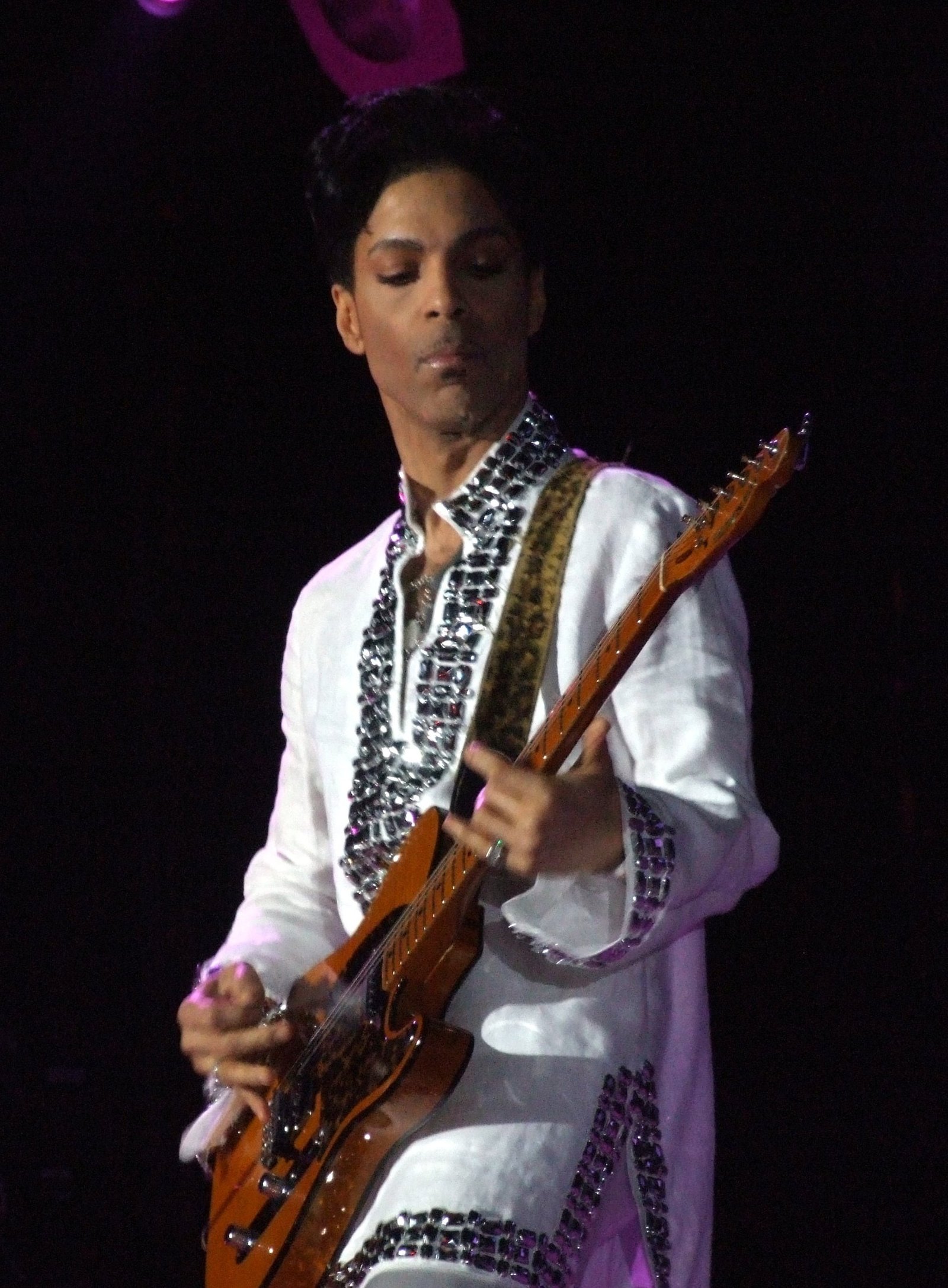
In the summer of 1984, Prince did something that no musician had done before. For a period that summer, he simultaneously held the number one film, the number one album, and the number one single in the United States. The film was Purple Rain, the album was Purple Rain, and the single was “When Doves Cry.” It was a feat of commercial dominance that captured, in a single statistic, what the Purple Rain project had achieved: it had turned a brilliant but still somewhat cultish Minneapolis musician into a global superstar, and it had done so not with a single hit, but with a film, an album, and a tour that all reinforced each other. Purple Rain was not just a record. It was a world, and in 1984 the whole of America walked into it.
To understand how extraordinary that was, it helps to remember where Prince stood at the start of 1984. Born Prince Rogers Nelson in Minneapolis in 1958, he had been a prodigy from an early age, playing multiple instruments and writing songs as a teenager. His first albums in the late 1970s had established him as a talented and provocative rhythm and blues artist, and his 1982 double album 1999 had been a major breakthrough, selling well and producing hits that crossed over from black radio to pop radio. He was already famous, but he was not yet a household name on the scale of Michael Jackson or Madonna. He was also, by his own design, a somewhat mysterious figure, based in Minneapolis rather than Los Angeles or New York, working with a small, loyal team, and controlling his music with an intensity that sometimes baffled the record industry.
The Purple Rain project began, in essence, as a film idea. Prince, through his manager, insisted that his next step should include a starring role in a major motion picture, even though his exposure at that point was limited to a handful of hits, music videos, and television appearances. The film that resulted, directed by Albert Magnoli, was loosely autobiographical. Prince played a character known as the Kid, a young Minneapolis musician struggling with a difficult home life, a rival band, and his own ambition, who finds redemption through music. The cast included his band, the Revolution, and Morris Day and the Time, Prince’s Minneapolis associates, who provided comic relief and musical competition. The film was made on a relatively modest budget, shot in Minneapolis in winter, and it was not, by conventional Hollywood standards, a polished piece of acting. What it had, instead, was music, energy, and Prince himself, and that proved to be enough.
The album first
The album came first, released on 25 June 1984, about a month before the film. It is, by common consent, one of the great albums of the 1980s, and it is worth pausing on why it works so well as a record, quite apart from the film. Purple Rain is not a collection of singles with filler. It is a coherent, dramatic album that moves from the ecstatic rock of “Let’s Go Crazy” through the stark, bass-less pop of “When Doves Cry” to the gospel-inflected title track, which builds over eight minutes from a quiet guitar figure to a full-throated climax. The album was recorded with the Revolution, Prince’s new backing band, and it shows the influence of live performance throughout. Several of its key tracks were recorded, in whole or in part, live at First Avenue, the Minneapolis club that became the film’s central location.
“When Doves Cry” is the album’s most radical track, and it is worth understanding why. Prince removed the bass line from the recording, a decision that most producers would have regarded as madness for a dance single, and left a song built on drums, keyboards, guitar, and his own vocal. The result is a record that sounds both empty and full at the same time, with space around every element, and it became Prince’s first number one single. “Let’s Go Crazy,” the album’s opening track and another number one, is its opposite: a full-throttle rock song with a sermon-like introduction and a guitar solo that announces Prince as a rock guitarist of the first rank. The title track, which reached number two in the United States, is a ballad that grows into a rock epic, and it has become, along with “When Doves Cry,” one of Prince’s defining songs.
The album spent 24 consecutive weeks at number one on the American Billboard 200 chart, from August 1984 into January 1985, and it sold millions of copies in its first months, eventually selling more than thirteen million copies in the United States alone. Those numbers are impressive, but they do not quite capture the album’s cultural presence in 1984. Purple Rain was everywhere: on the radio, on MTV, in record shops, in cinemas, and in conversation. It was an album that teenagers and adults, black and white audiences, rock fans and pop fans, all seemed to own at the same time.
Watch: Prince — “Purple Rain” (Official Video)
The film
The film, released on 27 July 1984, was a commercial success that surprised many in Hollywood. It grossed around seventy million dollars at the box office, a remarkable return on a low-budget production with a largely inexperienced cast, and it knocked the summer’s biggest comedy off the top of the box office in its opening weekend. Critics were divided. Some praised its music and its energy, while others found the acting stiff and the story thin. Audiences, however, did not seem to care. They came for the music, and the film delivered it in extended performance sequences set in First Avenue, where Prince and the Revolution played as if their lives depended on it.
The film’s story, for all its melodrama, touches on themes that run through Prince’s work: family conflict, artistic ambition, jealousy, and the redemptive power of performance. The Kid’s father is a failed musician, his mother is caught between husband and son, and the Kid himself is torn between love and ambition. The rival band, led by Morris Day, provides both competition and comic relief, and the film’s climax, in which the Kid performs the title song and wins over both his audience and his love interest, is a piece of pure Hollywood wish fulfilment. It is not a subtle film, but it is an honest one about what it feels like to be young, talented, and desperate to be heard.
The film also won Prince an Academy Award, for Best Original Song Score, at the ceremony held in 1985. That award, for a musician who had started the decade as a cult figure, was a measure of how far he had come in a single year. It also confirmed something that Prince had understood from the start: that his music needed a visual dimension, and that film, video, and live performance were not separate from his records, but part of the same artistic project.
The tour
The Purple Rain tour, which began in the autumn of 1984 and continued into the spring of 1985, completed the project. It was Prince’s first large-scale arena tour as a headliner, and it was, by the standards of the time, a spectacular production, with elaborate staging, costume changes, and extended musical sequences that drew on the film and the album. The tour sold more than a million tickets in the United States alone, and it consolidated Prince’s reputation as a live performer of extraordinary intensity. Audiences who had seen the film could now see the music performed live, and audiences who had bought the album could now see the world of the film brought to life on stage.
The tour also revealed something about Prince’s working methods. He was, by all accounts, a demanding bandleader, rehearsing relentlessly and expecting his musicians to match his own standards. The Revolution, who had been central to the album and the film, became, on tour, a tight, powerful band, capable of shifting from rock to funk to balladry without losing momentum. Prince himself, on stage, was a study in control and release: precise, athletic, and theatrical, but also capable of moments of quiet intimacy, as in the solo performances that punctuated the longer shows.
Why Purple Rain lasted
Purple Rain’s success was not simply a matter of timing, although timing helped. The mid-1980s were a moment when MTV, the compact disc, and the blockbuster film were all reshaping popular culture, and Prince was one of the few artists who understood all three at once. He made a film that worked as a long-form music video, an album that worked as a soundtrack and as a standalone record, and a tour that worked as a live version of both. That multimedia approach, which now seems obvious, was still novel in 1984, and Prince executed it with a confidence that few of his contemporaries could match.
There was also something deeper at work. Purple Rain succeeded because it was, at its heart, about the struggle to be heard. The Kid in the film, Prince in real life, and the audience in the cinema and the arena were all, in different ways, looking for a voice. The album’s songs speak to that struggle directly: the defiance of “Let’s Go Crazy,” the confusion of “When Doves Cry,” the longing of “Purple Rain” itself. That emotional directness is why the album has endured long after the summer of 1984, and why it continues to be discovered by new listeners who were not alive when it was released.
Prince’s career after Purple Rain was deliberately restless. He followed it with albums that were more experimental, more prolific, and less commercially straightforward, and he spent much of the rest of his life resisting the idea that he should repeat the Purple Rain formula. He died in April 2016, at his Paisley Park complex in Minnesota, and the tributes that followed rightly focused on his genius, his prolific output, and his independence. But Purple Rain remains the moment when all of those qualities came together in a single, undeniable popular triumph. For a few months in 1984, Prince was not just a brilliant musician. He was the centre of American popular culture, with the number one film, album, and single at the same time, and he had achieved it by staying in Minneapolis, trusting his band, and making a film about a young musician who refuses to give up.
Listen to Purple Rain today, and it does not sound like a museum piece. It sounds like a record made by someone who believed that pop music could be ambitious, emotional, and commercially successful all at once. That belief, more than any single hit, is Prince’s legacy from the Purple Rain summer, and it is why the album, the film, and the tour are still talked about, watched, and listened to more than forty years later.
It is also worth remembering what Purple Rain meant for Minneapolis itself. Before 1984, Minneapolis was not widely thought of as a music capital, and Prince’s decision to base himself there, to record there, and to set his film there was a deliberate choice to build a world on his own terms rather than moving to Los Angeles or New York. After Purple Rain, First Avenue became a place of pilgrimage for fans from around the world, and Minneapolis became associated, in popular culture, with a particular sound: funk, rock, and pop mixed together with a precision and a strangeness that could only have come from that city at that time. Prince stayed in Minneapolis for the rest of his life, working at Paisley Park, and the city has repaid that loyalty by keeping his music at the centre of its cultural identity. Purple Rain, in that sense, was not just a breakthrough for one musician. It put a city on the musical map, and it showed that a major pop phenomenon did not have to come from the usual centres to conquer the world.
The film’s Minneapolis setting also deserves emphasis, because it shaped how audiences understood Prince. By insisting on filming in his home city, in winter, in a real club, Prince rejected the idea that a pop star had to move to Hollywood to be taken seriously. First Avenue was not a set built in Los Angeles; it was a working venue where Prince had actually played, and the film’s concert scenes carry the energy of a real room. That authenticity helped audiences believe in the Kid, even when the acting was uneven, because the music felt live and the place felt real. It also meant that Purple Rain functioned as a kind of advertisement for Minneapolis itself, a city that had not previously been a centre of American pop, and that has since embraced Prince as its defining musical figure.
Sources / further reading
- Minnesota Historical Society, MNopedia, “Purple Rain (film and album)” — on the June and July 1984 release dates, the box office, the Oscar and the tour.
- Wikipedia, “Prince (musician)” — on the simultaneous number one film, album and single, the 24 weeks at number one on the Billboard 200, and the album’s United States sales.
- Uncut, “Prince’s Purple Rain: The Inside Story” (via summary) — on the 1999 tour, the First Avenue recordings, the film’s production and its reception.
Image: Isabella Mendes via Pexels, free licence.
Leave a Reply