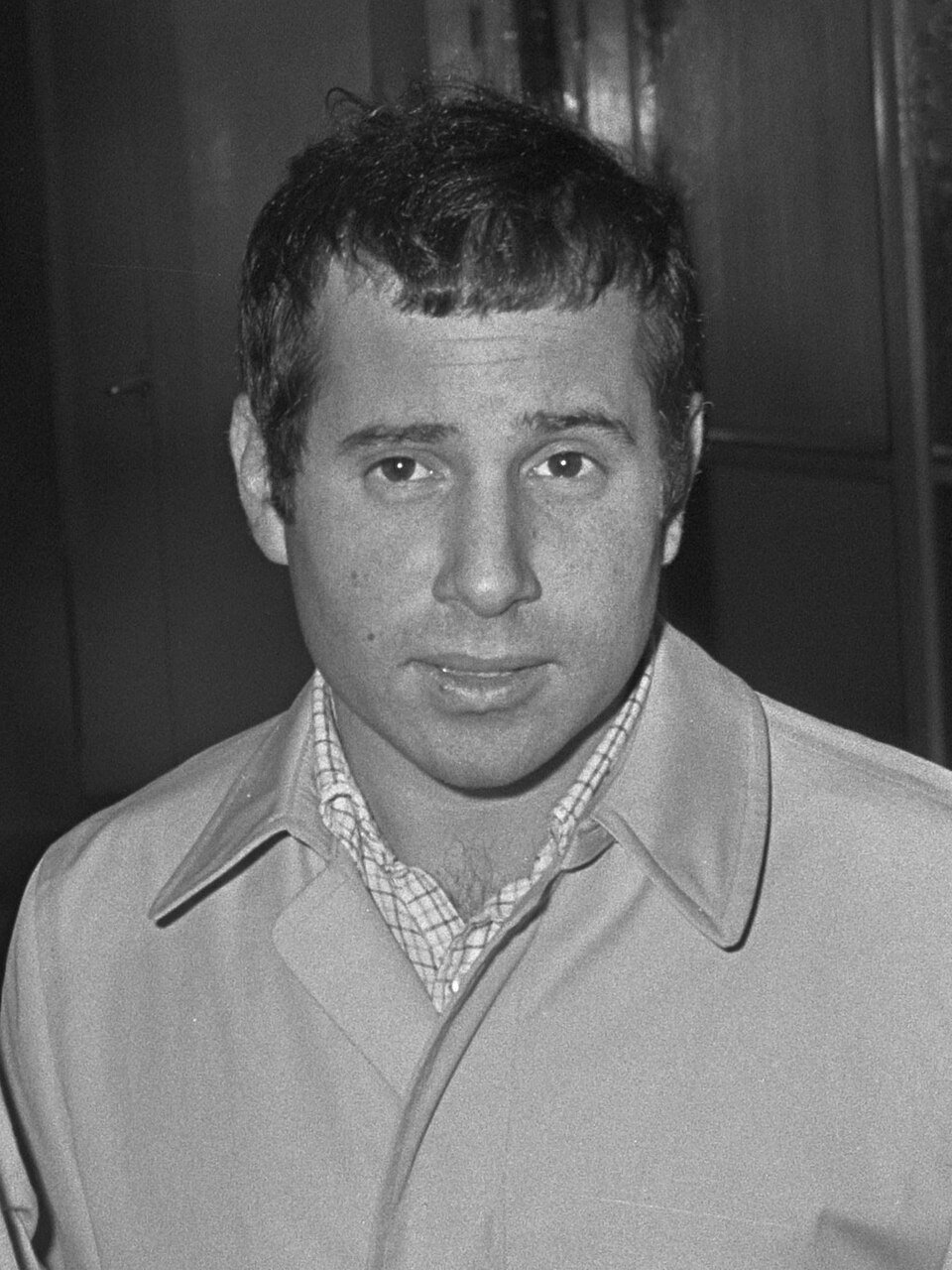
The Cassette That Changed Everything: Paul Simon’s Forbidden Journey to “Graceland”
In the summer of 1984, Paul Simon was lost. The man who had written “The Sound of Silence,” “Bridge Over Troubled Water,” and “Still Crazy After All These Years” — one of the most decorated songwriters alive, a three-time Album of the Year winner — was coming off the worst failure of his career. His 1983 album “Hearts and Bones,” originally conceived as a Simon & Garfunkel reunion, had stiffed. His marriage to the actress Carrie Fisher, begun in August 1983, was collapsing and would be over within a year. He was 42 years old, depressed, and, by his own later admission, creatively empty.
Then a friend handed him a cassette.
It was a bootleg tape with a hand-lettered title: “Gumboots: Accordion Jive Hits, Volume II.” The music on it came from the townships of South Africa — mbaqanga, the street music of Soweto, all springing bass lines, bright guitars, and joy stacked on joy. Simon played it, and played it again, and could not stop playing it. He would later tell the New York Times that the tape had a profound effect on him. What he did next would make him the most celebrated — and the most denounced — musician in the world: he got on a plane to Johannesburg, in defiance of a United Nations cultural boycott, to record with the men who made that music. He arrived with no songs, no lyrics, and no plan. He left with the raw material of “Graceland,” the album that would win Album of the Year, sell more than fifteen million copies, and ignite one of the fiercest ethical debates pop music has ever known.
This is the story of how a cassette tape led Paul Simon into the heart of apartheid South Africa — and how the title song of the album he made there began as a nonsense lyric he couldn’t get out of his head, and ended with him weeping at Elvis Presley’s grave.
The Bottom
To feel the weight of what “Graceland” rescued, you have to measure the fall. Through the 1960s and 1970s, Paul Simon had been American songwriting royalty. With Art Garfunkel, he had made “Bridge Over Troubled Water,” which won Album of the Year in 1970; alone, he had made “Still Crazy After All These Years,” which won it again in 1975. He was one of a tiny handful of artists — the list would eventually include Frank Sinatra and Stevie Wonder — to win the Grammy’s biggest prize three times.
But the early 1980s were unkind. The 1981 Simon & Garfunkel reunion concert in Central Park had been a triumph of nostalgia — half a million people on the Great Lawn — and it briefly raised the possibility of a full reunion album. “Hearts and Bones,” released in 1983, was originally intended to be that record, until Simon decided the new songs were too personal to share and made it a solo album instead. The public, which had been promised a reunion, responded with indifference, and the falling-out with Garfunkel over the decision poisoned the partnership for years. The album stiffed. His marriage to Carrie Fisher, the “Star Wars” actress he had been dating since the late 1970s, unraveled almost as fast as it had begun; they married in August 1983 and divorced in 1984.
Simon sank into a depression. The hits had stopped. The marriage had failed. The reunion had evaporated. He was a legend with nothing to say — until the cassette gave him something to hear.
The Cassette
The tape came to Simon through Heidi Berg, a singer-songwriter whose album he had agreed to produce. Berg played him the bootleg: “Gumboots: Accordion Jive Hits, Volume II,” a collection of mbaqanga — literally “steamed maize bread,” the slang name for the township jive of South Africa’s Black townships, a music built on rolling bass, pennywhistle-bright guitars, and rhythms that seemed to laugh at sorrow. The standout band on the tape was the Boyoyo Boys.
Simon became obsessed. He played the cassette for months, absorbing its logic — the way the bass danced instead of anchoring, the way joy and melancholy braided together, the way the guitars seemed to ring like bells over the township streets. He told friends he wanted to make a record that felt like that. His label, Warner Bros., tracked down a South African producer, Hilton Rosenthal, who identified the musicians on the tape and made a radical suggestion: don’t imitate them in New York. Come to South Africa and play with them.
There was one enormous problem. South Africa in 1985 was a pariah state, ruled by a white-minority apartheid regime that imposed brutal segregation on the Black majority. The United Nations General Assembly, in Resolution 35/206, had called on “all states to prevent all cultural, academic, sporting and other exchanges with South Africa” and urged “writers, artists, musicians and other personalities to boycott” the country. The boycott was the international community’s chosen weapon against apartheid, and breaking it was, in the eyes of the anti-apartheid movement, a betrayal of the cause. Simon’s own management advised against the trip. The calypso legend and activist Harry Belafonte urged him to consult the African National Congress first. Simon went anyway.
“I knew I would be criticized if I went,” he said at the time, “even though I wasn’t going to record for the government… or to perform for segregated audiences. I was following my musical instincts in wanting to work with people whose music I greatly” admired. He sought and received the blessing of the South African Black musicians’ union. In February 1985, he and his longtime engineer Roy Halee flew to Johannesburg and walked into Ovation Studios with no lyrics, no finished songs, and no plan beyond a feeling — just a songwriter with everything to prove and a cassette that had rewired his imagination.
Two Weeks in Johannesburg
What happened over the next two weeks was a masterclass in collaborative spontaneity. Simon would sit in the studio with local legends — the Boyoyo Boys, the girl group the Gaza Sisters, the singer General MD Shirinda, the a cappella choir Ladysmith Black Mambazo — and simply jam. He hummed melodies. He scat-sang nonsense syllables over their rhythmic patterns. The musicians played; Halee’s tape rolled; Simon listened for the moments when something true happened, then built songs backward from the groove.
The rhythm section that emerged became the album’s heartbeat: guitarist Ray Phiri, whose playing braided American country and township jive into something entirely new; fretless bassist Baghiti Khumalo, whose dancing bass lines gave the record its buoyant lift; and drummer Isaac Mtshali. Simon was struck, he later said, by a deep commonality — Phiri was mixing his aural memories of American country music with Simon’s chord changes, and the result was a sound that belonged to both continents at once. “Graceland,” the title song, would be Simon’s own description of “how a collaboration works even when you’re not aware of it occurring.”
The sessions were joyful — and they were shadowed. This was apartheid South Africa, and the Black musicians Simon was recording with were second-class citizens in their own country, subject to strict curfews that barred them from city streets and public transport after dark. Simon told Rolling Stone in 1986 that the sessions reached an uncomfortable juncture when the players couldn’t concentrate until they knew there would be a car to take them home. The joy on the tapes was real. So was the system strangling the men who made it. It was the central tension of the entire project, and it never went away: the music was a collaboration of equals made inside a society that permitted no equals.
Simon returned to America with hours of raw tracks and began the long, painstaking work of turning jams into songs. He overdubbed in New York, Los Angeles, Louisiana, and London, adding American collaborators — the Everly Brothers, Linda Ronstadt, Los Lobos, the zydeco band Good Rockin’ Dopsie and the Twisters — and writing lyrics last, the way a sculptor finds the figure in the stone. The album took shape slowly, rhythm first, words last. And the title track — the song that would name the whole enterprise — began as a joke his subconscious refused to drop.
“I’m Going to Graceland”
Of all the tracks taking shape, one had a melody but no words — only a placeholder lyric Simon had been scat-singing in Johannesburg, a bit of Sun Records-flavored nonsense that reminded him of early rock and roll. “I’m going to Graceland,” he kept singing. “Graceland, Memphis Tennessee.” Every time he sang it, he told himself he would replace it. “This is not going to be a song about Elvis Presley,” he thought. But the line would not leave him. “I thought, gee, I can’t get this out of my head,” he recalled. “I better go down to Graceland and see if there’s something that this song is telling me I should investigate by going there.”
He was in Louisiana at the time, recording vocals for the album’s zydeco-flavored track “That Was Your Mother” with Good Rockin’ Dopsie and the Twisters. So he hired a car and drove north, up Highway 61, following the Mississippi River toward Memphis. And somewhere on that road, the song began to write itself. “The Mississippi Delta was shining like a National guitar,” he sang — and later said of the line, “It was literally in front of me.” The landscape was composing the lyric: the river, the highway, the cradle of the Civil War rolling past the windshield.
He reached Graceland — Elvis Presley’s mansion, by then a museum — and did what every other pilgrim does. “I didn’t tell anybody I was coming. I didn’t get any special treatment. I just waited in line,” he said. He walked through the house and found himself, to his own surprise, “singularly unimpressed.” Then he went outside, to the Meditation Garden where Presley is buried, and read the inscription on the grave: “Elvis Presley, whose music touched millions of people all around the world.” And Paul Simon — the most cerebral songwriter of his generation — started to cry. “I mean, this guy was loved by everybody,” he said.
Everything fell into place after that. The song became a narrative: a father and his nine-year-old son — “the child of my first marriage,” Harper Simon, born in 1972 to Simon’s first wife Peggy Harper — driving to Graceland to mend a broken heart, traveling with “ghosts and empties,” poorboys and pilgrims all converging on the same shrine. The verses piled up their haunted, half-surreal images — the girl in New York City who calls herself the human trampoline, the wind blowing through the window of the heart — and the chorus kept returning to its simple promise, as if repetition itself were a form of prayer. Graceland stopped being a placeholder and became a metaphor: a land of grace, the place you go when you need to be healed. Musically, it was the album’s thesis in miniature — Ray Phiri’s guitar, Baghiti Khumalo’s fretless bass, Isaac Mtshali’s drums, and the Everly Brothers, Simon’s childhood heroes, floating on backing vocals: South African rhythm, Sun Records twang, and American harmony in a single frame. Simon called it “the true hybrid of South African music and American” — the sound of two continents answering each other.
He could not have known, as he drove back to Louisiana, that the song would win the Grammy for Record of the Year — or that it would do so as the lowest-charting song ever to win the prize, having peaked at a mere number 81 on the Billboard Hot 100 (and number 98 in Britain). The industry’s biggest honor would go to a song the public had barely heard on the radio — released as a single in November 1986, after the eligibility cutoff, which is why it competed at the 1988 ceremony a full year after the album’s own Album of the Year triumph. But that was 1988. First, the album had to survive 1986.
The Songs That Carried It
“Graceland” the song was the album’s soul, but “Graceland” the album was carried by songs that each told the collaboration’s story in miniature. “You Can Call Me Al” — built on a groove Simon developed with the Johannesburg musicians — became the album’s biggest hit, and its video became one of the defining images of 1986: Paul Simon, all five-foot-three of him, lip-syncing beside the six-foot-four comedian Chevy Chase, who mugged and towered over him for the entire song while Simon played it deadpan. It was the perfect visual metaphor for the album — the earnest artist letting the joke run, the joy doing the talking.
“Diamonds on the Soles of Her Shoes” wove Ladysmith Black Mambazo’s soaring isicathamiya harmonies — the exquisite, soft, precise, centuries-old a cappella style of Zulu workers — around a lyric about wealth and want. “Homeless,” co-written with Joseph Shabalala, the choir’s founder, was sung largely in Zulu, with Simon’s voice threading through the choir’s like a guest who knew he was a guest. “Under African Skies” set a lullaby-like melody against the continent’s vastness. And “I Know What I Know” and “The Boy in the Bubble” showed how completely Simon had absorbed the township logic: songs that started from rhythm and arrived at meaning, instead of the other way around.
What listeners heard, whether they knew the backstory or not, was relief — the sound of a songwriter who had been empty and was full again. Simon’s voice, always more conversational than powerful, sounded reborn against those rhythms: lighter, looser, amused at himself, swinging with a confidence he hadn’t shown in years. You could hear a man falling back in love with the act of making music, not in a studio built for him but in a borrowed groove on the other side of the world. The despair of 1984 was gone. In its place was curiosity, and the particular energy of a man who had bet his reputation on a feeling and been proved right.
The Sound of Two Continents
It is worth pausing on what the musicians actually did in those studios, because the musicology of “Graceland” is as remarkable as its politics. Simon arrived with American songs in his head and no band; the South Africans arrived with township grooves and no interest in American pop forms. What happened was not imitation in either direction but a genuine third thing. Ray Phiri, the guitarist, later described his approach as mixing his aural memories of American country music with the chord changes Simon played — he was, in his own wry phrase, “just imitating the way you write,” and Simon was imitating the way Phiri played. The fretless bass of Baghiti Khumalo — an instrument choice almost unheard of in American pop at the time — gave the record its slippery, singing low end, while Isaac Mtshali’s drumming supplied the township propulsion.
Then Simon layered his own heritage on top: the Everly Brothers, the duo whose harmonies had taught him to sing as a teenager in Queens, floating above the African rhythm section on the title track. It was a deliberate homecoming — the boy who learned harmony from Don and Phil now setting their voices adrift on a Johannesburg groove. The result was music that belonged fully to neither continent and completely to both, the sound of a collaboration working even when, as Simon put it, nobody was aware it was occurring.
The Storm
“Graceland” was released on August 25, 1986, and it was an immediate sensation — the comeback no one had predicted. It peaked at number 3 on the Billboard 200, went five-times platinum in the United States, and sold more than fifteen million copies worldwide, making it the best-selling album of Simon’s entire career. Critics reached for superlatives; Rolling Stone would eventually place it among the greatest albums of all time. The joy was infectious, the rhythms irresistible, the songs — “You Can Call Me Al,” “Diamonds on the Soles of Her Shoes,” “Under African Skies,” “Homeless” — unlike anything on American radio.
And then the storm broke.
Organizations like Artists United Against Apartheid, the group Steven Van Zandt had founded to enforce the cultural boycott, condemned Simon for breaking it. Critics accused him of something perhaps worse than boycott-breaking: of appropriating another culture’s music, of treating Black South African musicians as raw material for a white American’s comeback, of naiveté at best and exploitation at worst. The journalist’s question was sharp and fair: how could Simon approach these musicians as equal partners when their own government demanded they treat him as a superior? His refusal to consult the ANC leadership before going — Belafonte had urged him to — soured whatever good intentions he had. The appearance of Linda Ronstadt on the album deepened the anger: three years earlier, she had accepted a reported $500,000 to perform at the whites-only Sun City resort, the boycott’s most hated symbol.
The institutional response was severe. The African National Congress voted to ban Simon from South Africa. He was added to the United Nations blacklist of boycott violators. When the Graceland tour reached London’s Royal Albert Hall, protesters — including the Specials’ Jerry Dammers, Paul Weller, and Billy Bragg — demonstrated outside. In 2012, when Simon returned to London for the album’s 25th anniversary, the controversy flared all over again.
The institutional response was severe. The African National Congress voted to ban Simon from South Africa. He was added to the United Nations blacklist of boycott violators. When the Graceland tour reached London’s Royal Albert Hall, protesters — including the Specials’ Jerry Dammers, Paul Weller, and Billy Bragg — demonstrated outside, and the picket lines followed the tour across Europe. In 2012, when Simon returned to London for the album’s 25th anniversary, the controversy flared all over again, with a new generation of critics asking whether time had softened a verdict that should have stood.
The critics’ case deserved its weight. The boycott was not an abstraction; it was one of the few nonviolent weapons the world had against apartheid, and every violation weakened it. Simon had been warned — by his management, by Belafonte, by the plain text of a UN resolution — and had gone anyway, consulting the South African musicians’ union but not the liberation movement that claimed to speak for those musicians’ freedom. However sincere his musical motives, the optics were those of a wealthy American helping himself to the culture of an oppressed people while their leaders sat in prison. Robben Island was not a metaphor. Nelson Mandela was still in a cell when Simon was in the studio.
The Defense
Simon fought back, and his defense had substance. He had not performed for segregated audiences or taken a rand from the apartheid government; he had recorded with Black musicians, in their country, on their terms. He paid the South African musicians triple union scale for the sessions — and on the ensuing world tour, which featured 24 musicians, he took no payment himself so the band could receive maximum pay, a fact Rolling Stone’s David Fricke later documented. He credited his collaborators as co-writers, ensuring they shared in the royalties — a decision that made several of them wealthy by the standards of township musicians. And the United Nations’ own Anti-Apartheid Committee supported the album, arguing that it showcased Black South African talent to the world while giving nothing to the Pretoria regime.
It is also true, and worth saying plainly, that the musicians themselves overwhelmingly defended him. Joseph Shabalala and Ladysmith Black Mambazo, Ray Phiri, and the others did not describe themselves as exploited; they described an opportunity — to be heard, to be paid, to tour the world — that the boycott, for all its moral clarity, had never offered them. The anti-apartheid movement spoke of solidarity; the musicians spoke of work. Both claims were real. “Graceland” forced the uncomfortable question of whose voice counts when the oppressed disagree with their liberators — and it never offered a clean answer, because there wasn’t one.
The blacklist chapter ended ambiguously. Simon was removed from the UN blacklist in January 1987, and he announced that the ANC had cleared him too — a claim promptly denied by Dali Tambo, founder of Artists Against Apartheid. The truth, as with so much about “Graceland,” refused to resolve into a clean verdict. What is certain is this: the album made Ladysmith Black Mambazo — whose a cappella hymn “Homeless,” co-written with Simon, became one of the record’s emotional peaks — into global stars, and it carried the sound of Soweto into living rooms that had never heard of mbaqanga. Whether that justified the means would be argued for decades.
The Grammys and the Vindication
The music industry, at least, rendered its own verdict. At the 1987 Grammy Awards, “Graceland” won Album of the Year — Simon’s third win in the category, putting him in the company of Frank Sinatra and Stevie Wonder, an honor only a handful of artists have ever achieved. A year later, in an almost unprecedented double, the title song “Graceland” won Record of the Year at the 1988 Grammys, despite having barely scraped the charts. It remains one of the strangest and most poetic Grammy outcomes ever: the biggest prize in American music, twice, for an album born from a bootleg cassette and recorded in defiance of a boycott.
History added its own coda. In 1991, the cultural boycott was lifted as apartheid crumbled. At the invitation of Nelson Mandela himself, and with the support of the ANC, Paul Simon brought his band — South African musicians at its heart, Ladysmith Black Mambazo among them — to Johannesburg for five shows beginning at Ellis Park Stadium. The exiled hero and the controversial collaborator shared a stage, and the circle, in some sense, closed. Simon had gone to South Africa when the world told him not to; now the new South Africa was asking him to come back. The musicians who had once needed a car to get home past the curfew were now headlining their own country’s biggest stadium, and the world was finally listening on their terms.
Why It Endures
“Graceland” endures because it is two things at once, and refuses to apologize for either. It is one of the most joyful records ever made — a middle-aged man rediscovering wonder in a Johannesburg studio, building songs out of rhythm and trust, finding his way back to melody through other men’s music. And it is one of the most argued-over records ever made — a case study in the ethics of collaboration that music schools and cultural critics still assign, forty years on.
The debate has never closed, and perhaps that is the point. In 2012, the filmmaker Joe Berlinger released “Under African Skies,” a documentary made for the album’s 25th anniversary that reunited Simon with his South African collaborators and confronted the controversy head-on — including a tense, unresolved exchange with Dali Tambo over the ANC’s position. Watching it, you see two truths that will not reconcile: the musicians’ genuine gratitude and affection, and the movement’s genuine grievance. Berlinger’s film didn’t settle the argument. Nothing has.
The title song endures for a simpler reason. Strip away the controversy, the boycott, the Grammys, and “Graceland” is a song about a brokenhearted father driving his son toward a shrine, hoping that grace — the real kind, not the tourist kind — might be waiting at the end of the road. Paul Simon went to South Africa looking for a rhythm and found a metaphor instead: that healing is a journey, that you have to go somewhere to get it, and that the place you’re going is never quite the place you imagined. He started with a nonsense lyric he couldn’t shake and ended with a graveside in Memphis, crying for a singer who belonged to everybody. Some songs are written. “Graceland” was followed — down Highway 61, into a Johannesburg studio, and all the way home.
Leave a Reply