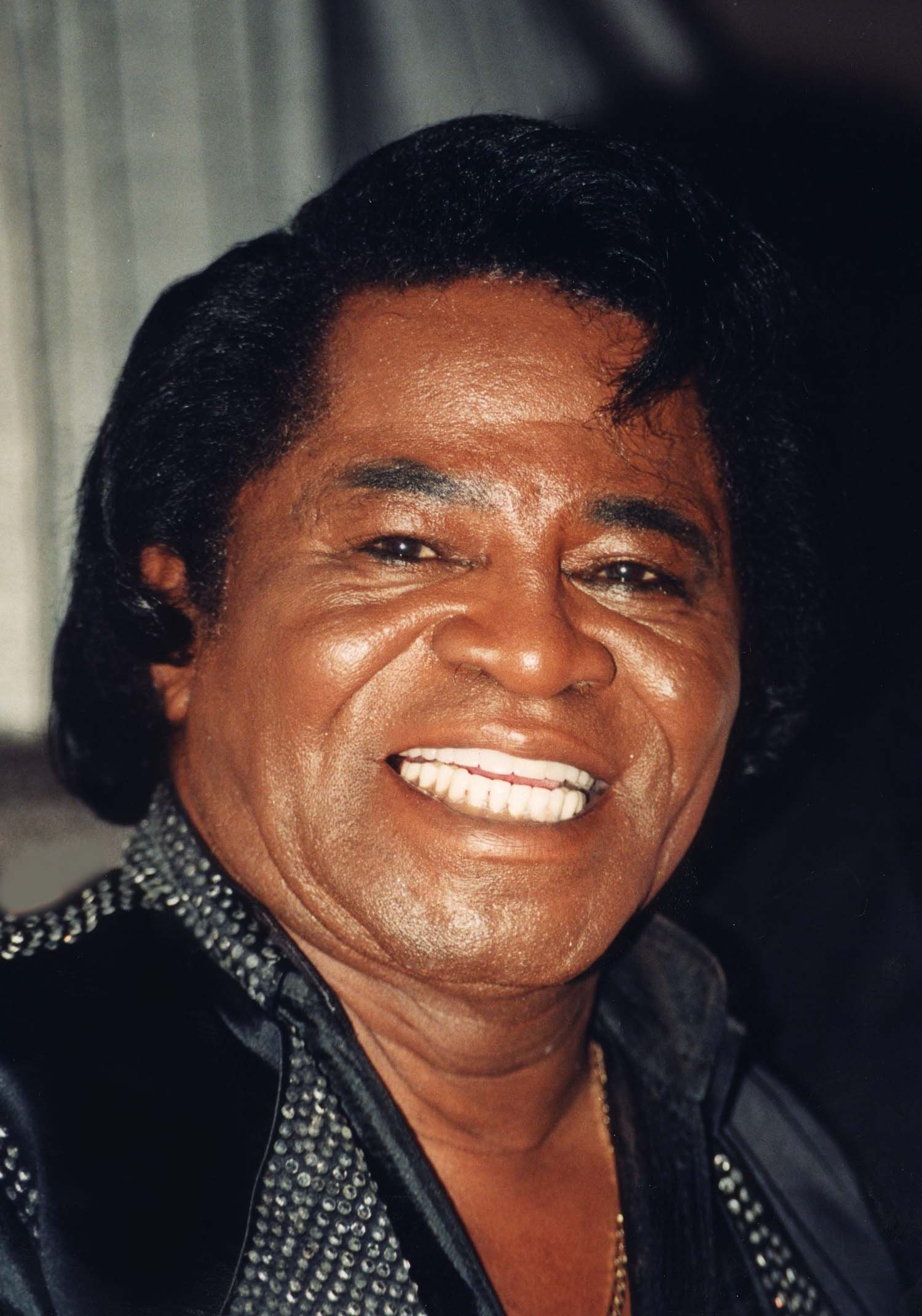
The world knew James Brown as a force of nature — the scream, the splits, the cape, the fines for missed notes, the hardest-working man in show business. He cultivated an image of total control and towering ego, a man who answered to nobody. But there was another James Brown, one the cameras rarely caught: the man who dressed up as Father Christmas for poor children, who handed out turkeys from the back of a truck, who spent his fortune’s interest on other people’s holidays. His generosity wasn’t a publicity strategy. It was a debt he felt he owed — to Augusta, to Christmas, and to the hungry boy he used to be. This is the story of that debt, and how he spent a lifetime repaying it.
Never Forgetting Augusta
James Brown never forgot where he came from, because where he came from never let him forget. He was raised in grinding poverty in Augusta, Georgia — shining shoes, picking cotton, dancing for pennies for soldiers at Camp Gordon. When the money finally came, rivers of it, he didn’t build walls. He built bridges back. Augusta never let him forget where he came from — and he never wanted it to. The town was his origin story and his conscience, the place that measured him not by his fame but by whether he showed up. So he showed up. Every November. Every December. For decades.
Every November, starting in 1990, Brown staged his Thanksgiving Turkey Giveaway in Augusta, personally handing out hundreds of birds to needy families. Every December, he followed it with a Christmas Toy Giveaway that began in the early 1990s as an offshoot of the turkey drive. These weren’t checkbook charities run by assistants. Brown showed up. He handed out the toys himself. The scale of it grew every year: what started as a few hundred turkeys became a civic institution — hundreds of birds every November, hundreds of toys every December, eventually distributed at the James Brown Arena to more than eight hundred children. For the poorest kids in Augusta, he wasn’t a legend. He was the man who made Christmas come. He signed autographs, posed for pictures, led caroling — and on more than one occasion, he put on the red suit and the white beard and became Father Christmas for children who had very little else to believe in that season.
Three Thousand Christmas Dinners
The tradition went back further than most people knew. Brown loved Christmas with an intensity that surprised even those close to him — he recorded a string of Christmas albums in the late sixties and early seventies despite none of them charting particularly well, simply because the season moved him. And shortly after the release of his second Christmas record, 1968’s “A Soulful Christmas,” came his first documented large-scale charity event: Brown donated full Christmas dinners to three thousand needy families in New York.
Three thousand families. Not a photo op — a logistical operation, mounted by a man at the peak of his fame, in the same year he released “Say It Loud — I’m Black and I’m Proud” and played the Boston Garden the night after King’s assassination. 1968 was the year James Brown became, in the fullest sense, a public man. The giving was part of it. It was also, those close to him said, personal. Brown never got over the Christmases of his own childhood — the wanting, the watching other kids. Every dinner he gave away was a dinner he wished someone had given him.
The Christmas Albums
Brown’s love affair with Christmas wasn’t just charitable — it was musical. Starting with 1966’s “James Brown Sings Christmas Songs,” he recorded a string of holiday albums through the late sixties and seventies, long after it was commercially sensible to do so. “A Soulful Christmas” arrived in 1968 — the same year as the Boston Garden triumph, the same year as the first great dinner giveaways. None of these records were hits. That was never the point.
Listen to them now and you hear something the funk records don’t always show: tenderness. The hardest man in show business, singing about the softest night of the year, meaning every word. For a kid who’d grown up with nothing under the tree in Augusta, Christmas wasn’t a marketing opportunity. It was the holiday that proved the world could be kind. He spent the rest of his life trying to prove it to other kids.
School Is In
Brown’s philanthropy had a particular focus: children, and especially their education. He made a habit of giving public speeches in schools, preaching the importance of staying in school with the same fire he brought to the stage. Teachers who booked him never quite knew what they’d get — part concert, part sermon, part tough-love lecture from a man who’d lived every warning he delivered. The kids listened, because you couldn’t not listen to James Brown. And some of them, surely, stayed in school because the hardest-working man in show business told them to. He gave out money and gifts to children whenever he traveled back to Augusta. When he filed his will in 2002, he directed that most of his estate go into creating the I Feel Good, Inc. Trust — named for his most famous exclamation — to benefit disadvantaged children and fund scholarships, including for his own grandchildren.
His final single, released near the end of his life, was called “Killing Is Out, School Is In” — a blunt anti-violence message aimed at the streets where children were dying. It wasn’t a hit. It wasn’t supposed to be. It was a sermon from a man who had lived long enough to know exactly what he was talking about.
The Trust
Brown thought about his legacy the way he thought about everything: as something to be organized, drilled, and set in motion. In his 2002 will, he directed that the bulk of his estate fund the creation of the I Feel Good, Inc. Trust — named for his most famous shout — dedicated to educating disadvantaged children and funding scholarships, including for his own grandchildren.
What followed his death was, frankly, a mess: years of legal battles among heirs, partners, and claimants that tied the estate in knots and delayed the trust’s work. It’s the saddest footnote to the story — a man who’d given so freely in life, whose final wishes got bogged down in courtrooms. But the intention was clear and on the record, in his own hand: the money was for the children. The Godfather’s last arrangement was a scholarship fund.
The Week Before Goodbye
The most telling story of Brown’s generosity comes from the very end. A week before his death — gravely ill, his body failing — Brown went to an Atlanta orphanage and gave out toys and turkeys to the children there. He had done it many times over the years. He did it one last time when he could barely stand.
Think about that. The hardest-working man in show business, seventy-three years old, dying, spending his final days’ energy not on himself but on children he would never see again. His last telephone conversation with his wife, on Christmas Eve, was about Christmas preparations. He died on Christmas Day. He had made the holiday his own long before — and in the end, the holiday kept him. There’s a temptation to call it a coincidence — dying on Christmas Day, the holiday he’d claimed as his own. But Brown didn’t believe in coincidence. He believed in showmanship, in timing, in going out the way you came in. He came in with nothing, on the wrong side of the tracks in Augusta. He went out having given everything away. The last turkey handed out, the last toy delivered, the last child hugged. Curtain.
The Daughters Carry On
Brown didn’t live to see his charitable machinery formalized, but his daughters made sure it survived him. Venisha Brown and Deanna Brown Thomas — Deanna serves as president of the James Brown Family Foundation — fought to keep both annual events running after his death. Every November, the Thanksgiving Turkey Giveaway dishes out hundreds of birds to Augusta families. Three weeks later, the Christmas Toy Giveaway fills the James Brown Arena with bicycles, dolls, board games, and electric keyboards for more than eight hundred underprivileged children.
Deanna also founded the James Brown Academy of Musik Pupils in 2011, a year-round program teaching young students to play instruments, read music, and produce their own recordings — with college scholarships for young musicians as part of the mission. It’s the most fitting memorial imaginable: not a statue, but a classroom. Not a plaque, but a horn section full of kids who might never have touched an instrument otherwise. Deanna has been blunt about the mission — this is what her father wanted, and they’re going to keep doing it as long as they can. The foundation’s work continues the philosophy Brown lived by: that talent is everywhere, but opportunity is not, and that those who make it owe something to those still waiting.
A Complicated Heart
No honest account of James Brown can pretend the man was simple. His life included real darkness — run-ins with the law, money troubles, and relationships with women that were, by many accounts, harsh and sometimes violent. His four marriages ended in divorce or death, and the legal battles over his estate after his passing were long and bitter. The Godfather of Soul contained multitudes, and not all of them were admirable.
But human beings are rarely one thing, and Brown’s generosity was not a mask worn over a harder truth — it was as real as anything else about him. The same man who drilled his band like an army handed out candy to children in Augusta. The same ego that demanded top billing dressed as Santa Claus for kids with nothing. Perhaps the giving was his way of answering the poverty of his childhood, or perhaps it was simply who he was when the cape came off. Either way, it counts. The measure of a life isn’t whether it was flawless. It’s whether, on balance, the world was warmer for it. By that measure — by the turkeys, the toys, the scholarships, the school speeches, the orphans’ Christmas — James Brown’s life counts double.
When James Brown died on Christmas Day, 2006, the tributes rightly celebrated the music — the funk he invented, the breaks that built hip-hop, the greatest live performer of his century. But in Augusta, they mourned something else too: the man who showed up every November with turkeys and every December with toys, who never forgot the streets that raised him, who spent his last week on earth making sure other people’s children had a Christmas. The Godfather of Soul gave the world its groove. The giving Godfather gave his hometown its holidays. Both were James Brown. Both deserve to be remembered.
Leave a Reply