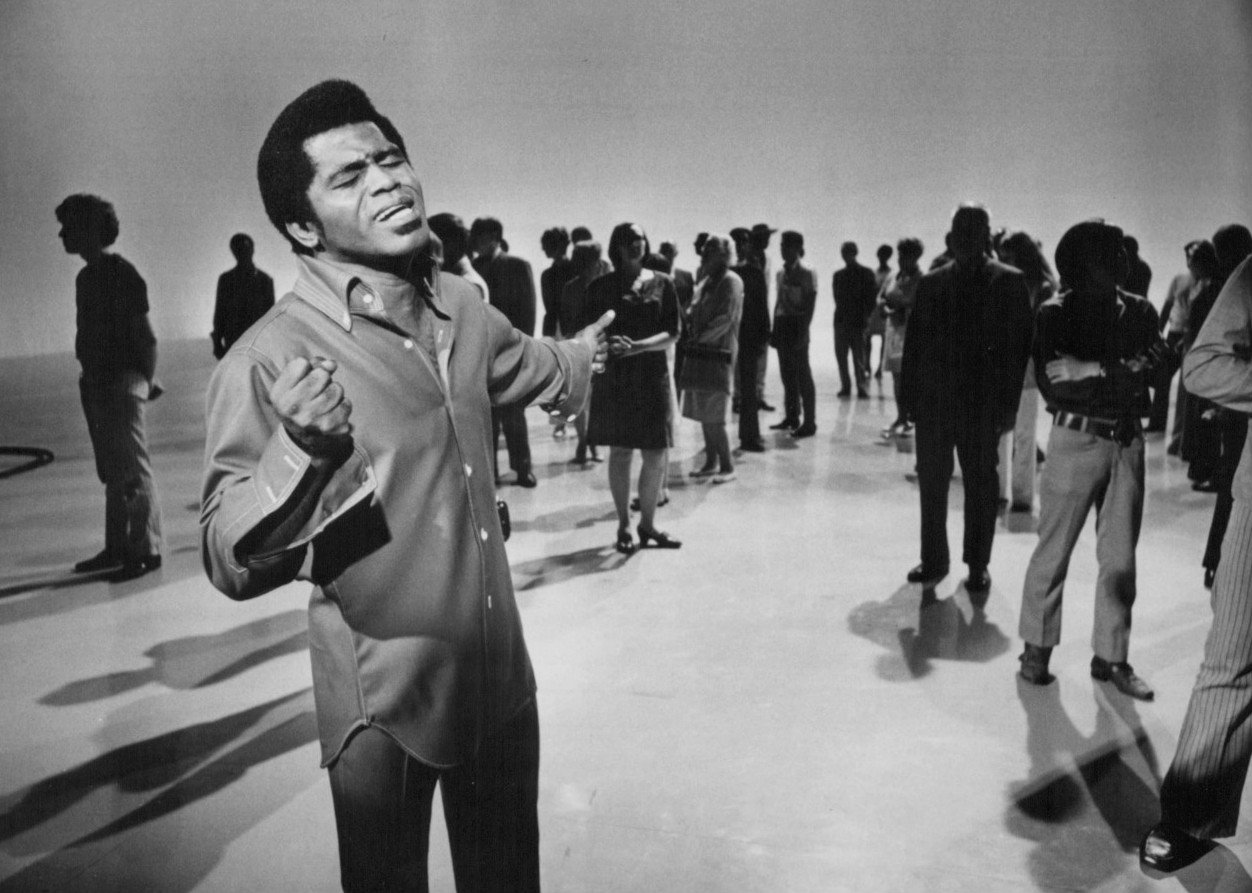
On the evening of April 5, 1968, America was coming apart. Twenty-four hours earlier, Dr. Martin Luther King Jr. had been shot dead on a motel balcony in Memphis, and the country’s cities were burning — Washington, Chicago, Baltimore, Detroit, more than a hundred cities convulsed with grief and rage. In Boston, the night before had already brought rioting to Roxbury, Dorchester, and the South End. The newly elected young mayor, Kevin White, was considering canceling every public gathering in the city. And at the Boston Garden, the hardest-working man in show business was about to give the most important performance of his life — to an arena that was nearly empty, for an audience of millions he couldn’t see. What happened over the next few hours would become one of the defining stories of the civil rights era — and the most important night of James Brown’s life.
The Worst Night in America
To understand what happened in Boston, you have to feel the temperature of the country. King’s assassination didn’t just sadden Black America; it detonated decades of pent-up fury. In city after city, grief turned to fire. The National Guard was moving into Memphis. Smoke was rising over the nation’s capital. Boston had gotten its first taste on the night of April 4th, with unrest spreading through its Black neighborhoods along Blue Hill Avenue and Washington Street.
James Brown had been booked at the Boston Garden for months. It was supposed to be a routine stop — another night, another cape, another screaming crowd. Instead, it became a test: could one entertainer, on one stage, hold a grieving city together for a few hours? Brown himself was grieving — King had been a hero to him, as to every Black American — and he was also, characteristically, furious about the business end of things. Grief and grievance, sorrow and stubbornness: all of it would be on that stage by nightfall.
Cancel the Show?
Inside City Hall, the debate was fierce. Mayor White, who by his own admission had barely heard of James Brown, leaned toward canceling the concert. A packed arena of emotional, angry young people felt like a powder keg. But that Friday morning, his phone rang. On the line was Thomas Atkins, Boston’s first Black city councilman — the only Black member of the council at the time — with an urgent message: something terrible was about to happen, and canceling would make it worse.
Atkins wasn’t just any councilman. As the lone Black voice in city government, he understood the stakes in a way no one else in that building could. He’d spent the day hearing from community leaders, from disc jockeys like the “Early Byrd” James Byrd on WILD, from everyone with an ear to the street. The message was unanimous: the concert was the one bright thing the community had to hold onto. Take it away, and the night would belong to rage.
Atkins had been warned by James Byrd, the beloved “Early Byrd,” a disc jockey on WILD, Boston’s premier Black radio station. The word on the street was clear: if the city took away the one joyful thing the community had to look forward to, on the day after King’s murder, the rage would have nowhere to go but outward. Atkins proposed a bolder idea. Don’t cancel the show. Televise it. Put it on the air live, free, so that instead of gathering in the streets, people would gather around their television sets. White listened. Then he agreed — and took the extraordinary step of recruiting WGBH, Boston’s public television station, to broadcast the concert live that very night.
The $60,000 Problem
There was one problem: James Brown himself. When Brown landed at Logan Airport and learned the details, he was furious. He had just taped a television show in New York under a contract obligating him not to do any more East Coast television until it aired. A live broadcast would cost him, by his calculation, $60,000 — and the announcement of the telecast had already sent ticket holders scrambling for refunds.
Brown confronted Mayor White at the Garden and demanded the city make him whole: $60,000 to cover his losses. White, reluctantly, agreed — though to this day there is dispute about what was actually paid. Brown’s personal manager, Charles Bobbit, later insisted they received only $10,000. To be fair to Brown, his fury was understandable: he was being asked to give away for free the very product he sold — a live television broadcast, in a major market, in apparent violation of an existing contract. Whatever he lost that night in money, he gained a hundredfold in legend — though the man counting his losses backstage can hardly have known it. Whatever the figure, the show would go on. The politics were settled backstage. What remained was the performance.
WGBH Goes Live
What happened next was unprecedented: the first live televised concert broadcast in Boston’s history, carried on public television. In the Garden itself, only about two thousand people showed up in an arena built for fourteen thousand — the refunds had done their work, and many stayed home out of fear or grief. But across Boston’s Black neighborhoods, the television audience was enormous. Families who might have been on the streets that night were in their living rooms instead, watching. It was the first time a city had ever tried anything like it — using a concert as a pressure valve, beaming joy directly into the neighborhoods where rage was building.
WGBH’s crew had no idea what they were in for. Their cameras and engineers were built for the stationary dignity of classical concerts, not for a funk hurricane. The footage is dark, the vocal mic sounds like it’s coming through a telephone, and the cameramen keep losing Brown as he explodes across the stage. But that rawness is exactly what makes the broadcast so electrifying to watch today. This is James Brown at full throttle, unfiltered, in real time.
What the Cameras Saw
The surviving footage — remastered and released in full on Brown’s official YouTube channel in 2023 — is a time capsule of barely controlled chaos. The WGBH cameras, built for sedate classical broadcasts, lurch and hunt as Brown ricochets across the stage; the audio is raw, the vocal mic thin and distant, the whole thing lit like a high school gym. And yet it’s mesmerizing, precisely because of its roughness. There’s no filter between Brown and the moment.
You can see the strategy unfolding in real time. Brown doesn’t preach — he performs, channeling the room’s grief into motion, into sweat, into the sheer physical fact of survival. When he pulls Mayor White onstage, the symbolism is almost too perfect: Black power and white establishment, the funkiest man alive and the most buttoned-down, sharing a microphone and asking a wounded city to choose peace. It shouldn’t have worked. On that stage, on that night, it did.
The Hardest-Working Peacemaker
For roughly eighty minutes, Brown did what only he could do. He tore through “It’s a Man’s Man’s Man’s World,” “There Was a Time,” “Try Me,” “Cold Sweat” — the full arsenal, delivered with an intensity that somehow acknowledged the grief in the room without surrendering to it. Midway through, he did something no one expected: he invited Mayor Kevin White onto the stage. The young white mayor, who had never heard of James Brown that morning, stood beside Soul Brother No. 1 and spoke to the city about peace.
When excited fans began rushing the stage, Brown didn’t panic. He took control the way he took control of everything — with charisma as a physical force, talking the crowd down, turning a potential flashpoint into part of the show. It was, witnesses said, like watching a man defuse a bomb by dancing with it. He’d spent fifteen years learning how to control a room — the cape, the scream, the splits, all of it machinery for commanding attention. That night, the machinery served a higher purpose. Every ounce of showmanship he’d ever developed went into a single task: keeping thousands of grieving people together, moving, breathing, alive to the morning.
A City Spared
The numbers tell the story. While Washington, Baltimore, and Chicago burned that weekend, Boston — which had rioted the night before — saw little violence on the night of April 5th. In fact, the city recorded less crime that night than on a typical Friday in April. The contrast with other cities was stark: in Washington, fires burned within sight of the Capitol; in Baltimore and Chicago, the National Guard patrolled smoking streets. In Boston, the scanners stayed quiet. To this day, historians urge caution — one careful Boston history calls the “saved Boston” claim impossible to substantiate, and cities are complicated; many hands kept the peace that night. Fair enough. But ask the people who were there — the families around their television sets, the two thousand in the Garden, the cops who worked the quietest Friday night in memory — and they’ll tell you what they know. James Brown showed up. And it mattered. People stayed home. They watched. They grieved together, through a television screen, with James Brown as their unlikely minister.
Historians are careful about the legend — as one Boston history notes, it’s impossible to substantiate the popular claim that the concert single-handedly “saved” the city. Many factors were at work. But nobody who was there doubts that it mattered. A Boston University student who watched that night called it one of the most memorable moments of his life, “both for the music and its significance in history,” crediting Brown with handling danger “in such a way as to save Boston from going up in flames.”
The Legend Grows
The concert passed into folklore almost immediately. In 2008, filmmaker David Leaf — who had directed acclaimed documentaries on the Beach Boys and John Lennon — made “The Night James Brown Saved Boston” for PBS, using performance footage and recollections from Brown’s bandmates, Reverend Al Sharpton, Dr. Cornel West, and Mayor White himself. The film cemented the night’s place in the civil rights story. Then, in 2023, Brown’s official YouTube channel released the complete WGBH broadcast, remastered and restored in full for the first time — eighty minutes of history, free for anyone to watch. Watch it, and you’re watching more than a concert. You’re watching a man hold a city together with nothing but a groove.
James Brown spent his life demanding everything from himself and everyone around him — the fines for missed notes, the relentless touring, the cape, the scream. On April 5, 1968, all of that discipline, all of that showmanship, was placed in service of something larger than entertainment. He didn’t plan to be a peacemaker that night. He was angry about the money, wary of the politics, and grieving like everyone else. But when the lights went up and the cameras rolled, he did the only thing he knew how to do: he gave everything he had, and he held a city together with nothing but a groove, a voice, and the sheer force of his will. The Godfather of Soul earned that title in a hundred ways. Boston remembers the night he earned it most.
Leave a Reply