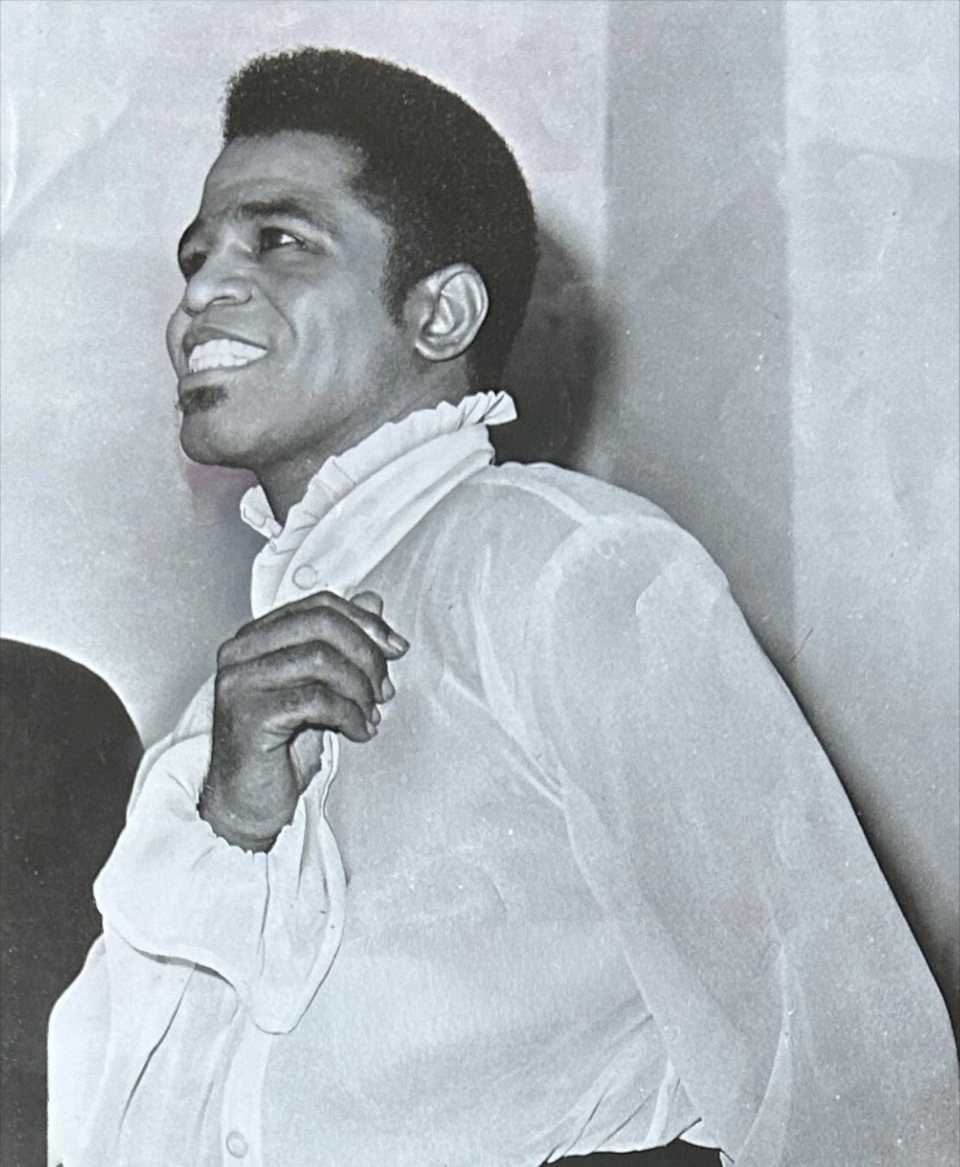
The Night James Brown Saved Boston
On the evening of April 4, 1968, Martin Luther King Jr. was shot and killed on the balcony of the Lorraine Motel in Memphis, Tennessee. Within hours, America was on fire. In Washington, D.C., flames would consume whole blocks. In Chicago, Baltimore, Kansas City, and more than a hundred other cities, rage poured into the streets — grief curdling into fury, fury into arson and looting. The National Guard was mobilized. Curfews were imposed. It was the greatest wave of civil unrest America had seen in a generation, and it was just beginning.
In Boston, Massachusetts, the night of April 4 brought uprisings and fires in the predominantly Black neighborhoods of Roxbury and the South End. The city’s young mayor, Kevin White — newly elected, untested in crisis — faced a second night he dreaded. And on the calendar for April 5, at the Boston Garden in the heart of the city, was a concert that had been scheduled for months: James Brown, the hardest-working man in show business, the Godfather of Soul, playing to a sold-out house.
White’s advisors were split. The police chief wanted the show canceled — thousands of emotional, grieving Black concertgoers packed into an arena, he argued, was a recipe for exactly the kind of violence the city feared. Others warned that canceling would be worse: a slap in the face to Boston’s Black community on the day after King’s murder, a provocation disguised as precaution.
What happened over the next 24 hours — the idea that broke the deadlock, the negotiation with the most business-minded entertainer in America, the broadcast that emptied the streets, and the moment on stage when Brown stood between the police and his people and talked a riot back into its seats — became one of the most extraordinary nights in the history of American music. They called it, ever after, the night James Brown saved Boston.
A City Holding Its Breath
To understand the stakes, you have to understand Boston in April 1968. Kevin White had been elected mayor only months earlier, narrowly defeating Louise Day Hicks, a populist whose opposition to school desegregation and mandatory busing had made her the champion of white backlash. Race was the raw nerve of Boston politics — the busing crisis that would explode in the 1970s was already crackling. White, a reformist liberal, had campaigned on promises of “profound and massive change” in the city’s racial attitudes. Now, with King’s assassination, those promises were being tested by fire — literally.
The night of April 4 was bad. Crowds gathered in Roxbury and the South End. There were confrontations, fires, the particular electricity of a community in shock. White’s instinct, on the advice of aides including a young Barney Frank, was restraint: flooding Black neighborhoods with police, they believed, would make things worse, not better. The mayor leaned on Black ministers and community leaders to help keep tempers from boiling over. It worked — barely. But everyone knew April 5 would be harder. Grief doesn’t peak on the first night. It builds.
And then there was the concert. James Brown at the Boston Garden, April 5. Fourteen thousand tickets, sold long before anyone knew what that date would mean. The police chief’s position was blunt: cancel it. A grieving, angry crowd in an enclosed arena, in the center of the city, with emotions running at flashpoint — to the chief, it looked like a tinderbox with a stage.
But canceling carried its own explosive logic, and a local disc jockey named James “Early” Byrd said so out loud. Byrd warned the mayor’s office what would happen if Brown’s show were called off: thousands of fans — many of them young, many of them already devastated by King’s murder — would show up at the Garden to find a cancellation notice on the door. It would feel like one more door slammed in their faces, on the worst day of their lives. The anger wouldn’t dissipate. It would detonate.
White was trapped between two fears, and both of them were reasonable. He needed a third option. It came from the youngest man in the room.
The Councilman’s Idea
Tom Atkins was young, Black, and — at the time — the only African American on the Boston City Council. He understood, in a way the mayor’s other advisors didn’t, exactly what canceling the concert would mean to the people who’d bought those tickets. And he had an idea that was, in retrospect, brilliantly simple.
Don’t cancel the show, Atkins said. Televise it. Put it on television, live and free, so that instead of fourteen thousand people in an arena, the whole city could watch from home. Give people a reason to stay off the streets — not a curfew, not a police line, but James Brown, live, in their living rooms, on the night they needed him most.
Atkins put the political logic bluntly, in words later quoted by author James Sullivan in “The Hardest Working Man: How James Brown Saved the Soul of America”: “You can’t cancel the James Brown show because if you do that, you’re going to have 14,000 kids showing up at the Boston Garden finding out by a piece of paper stuck on the door that the show has been canceled and, if they’re not already angry and distraught over the murder of Dr. King, now they’re really going to be mad.”
White seized the idea. The next problem was practical: who would broadcast it? The answer was WGBH, Boston’s public television station. On almost no notice, Atkins and White convinced the station to carry the concert live — a staggering logistical feat in 1968, when live remote broadcasts were rare, expensive undertakings. WGBH’s engineers were accustomed to the stationary, predictable setup of classical music concerts. A James Brown show — all sweat, motion, and chaos — was about as far from their experience as television got. They said yes anyway.
Then came the hardest negotiation of all: convincing James Brown himself.
The $60,000 Problem
James Brown was not just a singer. He was an empire — a shrewd, demanding businessman who controlled his touring, his publishing, his image, and his money with legendary ferocity. And he had a problem with the television plan: a non-compete agreement tied to an upcoming televised concert meant that if his Boston show were broadcast, he stood to lose roughly $60,000 — an enormous sum in 1968, and money he had no intention of leaving on the table.
Brown made his position clear to Mayor White with characteristic directness: he would do the broadcast, but he expected to be made whole. White, to his credit, didn’t haggle over principle. He recognized that $60,000 was a small price for a city that wasn’t burning, and he found the money. (The full financial backstory, chronicled in later accounts, involved the city’s behind-the-scenes power brokers and a tangle of gate fees and social-program funding — but the essential fact is simple: Brown named his price, and the city paid it.)
There was also, reportedly, a moment of genuine fury from Brown when he first grasped the plan — anger at being maneuvered, at having decisions made about his show without him. But Brown was, above all, a professional, and he understood the moment’s gravity as well as anyone. He agreed. The show would go on, the cameras would roll, and Boston would watch.
On the evening of April 5, 1968 — less than 24 hours after Martin Luther King Jr. was murdered — James Brown took the stage at the Boston Garden before a live audience, a heavy police presence, and the unblinking eye of WGBH’s cameras, broadcasting to a city holding its breath.
Eighty Minutes on a Tightrope
The concert itself — preserved on film, released on DVD as “Live at the Boston Garden: April 5, 1968,” and remastered in full in 2023 for Brown’s official YouTube channel — is a document of an artist working at the absolute peak of his powers under impossible pressure.
Mayor White took the stage first, offering brief words in honor of Dr. King, framing the evening as a memorial as much as a concert. Then Brown came out, and for roughly eighty minutes he led his enormous band — horns, rhythm section, the full James Brown revue machinery — through a string of his most incendiary songs: “It’s a Man’s Man’s Man’s World,” “There Was a Time,” “Try Me,” “Cold Sweat,” and more. It was, by every account, a ferocious performance. Brown dedicated the show to King’s memory, and he played like a man trying to lift an entire city’s grief with nothing but rhythm.
But the music, extraordinary as it was, isn’t what made the night historic. What made it historic happened near the end, during one of Brown’s famous extended climaxes — the kind of slow-building, never-quite-ending vamp that drove his audiences into a frenzy. The energy in the Garden tipped over. A handful of young fans — then a dozen — began climbing onto the stage, surging toward Brown in a wave of emotion that was equal parts adoration and agitation.
The white Boston policemen stationed at the stage reacted the way police in 1968 reacted: they moved in forcefully, pushing the young men back. And in that instant, everyone in the building understood how thin the line was. One baton swung too hard, one kid hurt on live television, and the Garden — and the city beyond it — could explode. This was the exact scenario the police chief had feared. It was happening on camera.
James Brown saw it coming before anyone else did.
“Wait a Minute — Be a Gentleman”
What Brown did next is the reason we’re still talking about this night. He didn’t freeze. He didn’t flee. He walked directly into the most dangerous square feet in America at that moment — the space between the police and his people — and he took control with nothing but his voice.
“Wait a minute, wait a minute now WAIT!” he commanded — and the room, impossibly, listened. He turned to the young men on the stage: “Step down, now, be a gentleman.” Then he did the bravest thing anyone did in Boston that week: he told the police to back off. “Now I asked the police to step back,” he said, “because I think I can get some respect from my own people.”
Read those words carefully. “My own people.” Brown was claiming something no mayor, no police chief, no television station could claim: the trust of the crowd. He was telling the cops, on live television, that their presence was the danger — and telling the crowd that he believed they would listen to him. Both claims were gambles. Both paid off.
The police stepped back. And Brown kept talking — pleading, cajoling, reasoning with the hyped-up crowd gathered around him on the stage. “Go down and let’s do this show together,” he urged them. “We’re black. Don’t make us all look bad.” It was tough love, delivered at the highest possible volume, in the most public possible forum — and it worked. The fans came down off the stage. The band kicked back in. Brown launched into “I Can’t Stand Myself (When You Touch Me),” and the crisis dissolved into music.
Within seconds, as one account put it, he had dismantled a potentially explosive situation. “Are we together or aren’t we?” he asked the crowd. They were together. The show went on, and finished, without further incident.
Brown’s longtime personal manager, Charles Bobbit, later drew the distinction that defines the night’s legacy: “Mr. Brown did not stop the riot,” Bobbit said. “Mr. Brown stopped it from being a riot.” The violence never started, because one man saw where it was heading and stepped in front of it.
The Quietest Friday Night in Boston
While Brown was defusing the Garden, the broadcast was doing its work across the city. WGBH aired the concert live — and then, crucially, rebroadcast it through the night, giving Bostonians every reason to stay home and keep watching. The plan Tom Atkins had sketched in a crisis meeting worked exactly as designed: the streets stayed quiet because the city was indoors, watching James Brown. It was, in effect, the first great counter-programming operation in American civic history — fighting fire not with force, but with funk.
The numbers told the story. Boston saw less crime on the night of April 5, 1968, than would be expected on a perfectly normal Friday in April — let alone the second night after the most traumatic assassination of the decade. While Washington burned, while Baltimore and Chicago convulsed, while more than a hundred American cities counted their dead and their burned blocks, Boston held.
No single factor gets all the credit, and honest histories say so. Mayor White’s restraint — his refusal, on aides’ advice, to flood Black neighborhoods with police — mattered. The work of ministers and community leaders mattered. But the concert was the centerpiece, the visible symbol, the thing people pointed to. James Brown, on live television, talking his own people down from the ledge, gave the whole city an image of calm to match. The broadcast didn’t just entertain Boston. It steadied it.
In the years that followed, April 5, 1968, acquired its folklore name: “The Night James Brown Saved Boston.” It was the title of David Leaf’s 2008 PBS documentary, which brought the story to a new generation with testimony from everyone who was there — from Brown’s band members, including trombonist Fred Wesley, to Tom Atkins himself, to the Reverend Al Sharpton and Cornel West. The documentary, and the restored concert film, made the case that what happened in Boston wasn’t just good luck. It was leadership — improvised, high-wire, once-in-a-lifetime leadership, from a man nobody had elected to anything.
The Man on That Stage
It’s worth remembering who James Brown was in April 1968, because the night only makes sense if you understand the authority he carried into that arena. He was 34 years old and already a legend — the hardest-working man in show business, a title he’d earned through a touring schedule that would have killed lesser performers. He had invented funk with records like “Papa’s Got a Brand New Bag” and “Cold Sweat,” virtually created the rhythmic language that hip-hop would later build on, and commanded a live show — the famous revue, with its capes, its splits, its inexhaustible precision — that was widely considered the greatest in popular music.
But Brown was something else too, something rarer: a Black entertainer who owned his empire. In an industry built on exploiting Black artists, Brown controlled his touring, negotiated his own deals, and spoke his mind about money with a frankness that made the white establishment deeply uncomfortable. When he told Mayor White he needed $60,000 to cover his television losses, it wasn’t greed. It was the same business clarity that had made him rich and independent in a world designed to keep him neither. The city needed him more than he needed the city, and everyone in the room knew it.
That independence was also moral. Brown had grown up in the Jim Crow South — born in 1933 in Barnwell, South Carolina, raised in Augusta, Georgia, in poverty so grinding it barely counts as a childhood — and he had never forgotten who he was or where he came from. When he told those young men on the Garden stage “I think I can get some respect from my own people,” the emphasis was on “my own.” He wasn’t performing solidarity. He was claiming kinship. The crowd believed him because it was true.
Four months after Boston, Brown made that kinship into a record. In August 1968, he went into Vox Studios in Los Angeles with his bandleader Alfred “Pee Wee” Ellis and cut “Say It Loud – I’m Black and I’m Proud” — recorded on August 7 with some thirty young people from the Watts and Compton neighborhoods chanting the chorus back at him. Released that month as a two-part single, it held the number-one spot on the R&B chart for six weeks and reached number ten on the Billboard Hot 100, becoming an unofficial anthem of the Black Power movement. The Boston experience, by Brown’s own later accounts, echoed heavily in his mind as he made it — the night he had looked into the faces of his grieving people had shown him exactly what they needed to hear. The man who had talked a crowd down from a riot in April spent the summer giving that same crowd — and millions more — something to chant.
What the Cameras Caught
One of the reasons the Boston Garden story has endured is that, unlike most legends, it was filmed. WGBH’s cameras captured the whole thing — the performance, the stage rush, Brown’s intervention, the recovery — and the footage has been pored over ever since like a historical document, which is exactly what it is.
Watching it today is a strange, riveting experience. The broadcast quality is rough; WGBH’s engineers, used to classical concerts, were clearly overwhelmed by the chaos of a James Brown show, and the cameras sometimes seem to be chasing the action rather than capturing it. But that rawness is part of the power. You can see the moment the crowd surges. You can see the police move in. You can see Brown — all 34 years of show-business instinct in his body — walk into the gap and take over. His voice on the recording is calm, firm, paternal: “Wait a minute, wait a minute now WAIT!” It’s the voice of a man who has controlled crowds of thousands for a decade, applied to the highest stakes of his life.
The footage also captures something subtler: the audience’s faces. These were people who had lost Martin Luther King Jr. the day before — the man who had embodied their hopes for a peaceful, just America. They were grieving, and Brown gave them somewhere to put it. The concert became, as one account put it, an unofficial memorial service for King’s memory and a call for city-wide peace. When Brown sang, the Garden wasn’t just a venue. It was a congregation.
David Leaf’s 2008 documentary “The Night James Brown Saved Boston” assembled the witnesses — Fred Wesley, Brown’s trombonist; Tom Atkins, the councilman whose idea started it all; the Reverend Al Sharpton; Cornel West; Boston DJ James “Early” Byrd — and built the definitive account of the evening. In 2023, the full concert was remastered and restored for the first time and released for free viewing on Brown’s official YouTube channel, introducing the night to a generation that had only heard the legend. The legend, it turns out, undersold the reality.
While America Burned
To grasp what Boston avoided, look at what the rest of the country endured. The Holy Week Uprisings — April 4 to 11, 1968 — brought civil unrest to more than a hundred American cities. The toll was staggering: around forty deaths nationwide, more than 2,600 injured, over 20,000 arrested, and tens of millions of dollars in property damage.
Washington, D.C., suffered worst. Thirteen people were killed in the capital, a thousand injured, more than 6,100 arrested. Some 1,200 buildings burned, including 900 stores — many Black-owned. President Lyndon Johnson deployed 13,000 federal troops; soldiers guarded the White House while machine guns were mounted on the Capitol steps. By April 8, 700 businesses had been destroyed and 5,000 jobs permanently lost, devastating the District’s Black neighborhoods for a generation.
Chicago lost eleven people to the violence, with 3,000 National Guard troops called in and more than a hundred buildings destroyed by arson. Baltimore saw six deaths, 4,000 arrests, and over a thousand businesses burned or looted. Kansas City, Detroit, Pittsburgh — the list ran past a hundred cities, each with its own ledger of grief.
Only a few major cities escaped the worst of it. Indianapolis stayed calm — widely credited to Senator Robert F. Kennedy, who was campaigning there on April 4 and delivered an improvised, deeply personal speech announcing King’s death to a largely Black crowd, quoting Aeschylus and pleading for compassion instead of vengeance. Kennedy would himself be assassinated two months later, on June 5.
And Boston stayed calm — credited, then and ever since, to a councilman’s idea, a mayor’s gamble, a television station’s cooperation, and a singer who walked into the most dangerous room in America and talked it down. Two cities, two improvisations, two men who understood that in the worst moments, presence matters more than policy. Kennedy had his speech. Brown had his show. History remembers both.
The Ledger of April 5
Historians are careful people, and they’re right to be careful about April 5, 1968. Boston’s calm that night had many authors: White’s restraint, the ministers’ work, Atkins’ idea, WGBH’s cooperation, Brown’s money and Brown’s nerve. No honest account gives one man all the credit. Cities are complicated; peace is overdetermined.
But there’s a reason the night bears James Brown’s name and not the mayor’s. White made a decision. Atkins had an idea. WGBH pointed cameras. Only Brown stood in the gap — physically, bodily, between the police and the crowd — and talked a riot back into its seats on live television. That’s not administration. That’s courage. And it’s the kind of courage that can’t be planned, only revealed.
Charles Bobbit’s formulation remains the last word: “Mr. Brown did not stop the riot. Mr. Brown stopped it from being a riot.” The distinction matters. Brown didn’t resolve Boston’s racial crisis — nobody could, in one night, and the busing wars of the 1970s would prove how deep the city’s wounds ran. What he did was smaller and more miraculous: he held the line for one evening, in one building, in front of his people, and gave a grieving city one night of peace in the middle of the worst week of the decade.
Think about what was at stake in those seconds on the stage. If the police had swung their batons — if one kid had been bloodied on camera, in front of fourteen thousand witnesses, on the night after King’s murder — the Garden could have become the spark for exactly the conflagration everyone feared. Boston could have been Washington. It could have been Chicago. The difference between those outcomes was a man in a sharp suit saying “be a gentleman” and meaning it.
The Encore That Never Ended
James Brown died on Christmas Day, 2006, at 73. The tributes were enormous — Michael Jackson, Al Sharpton, thousands at the Apollo — and they celebrated the whole of him: the funk inventor, the showman, the businessman, the complicated, contradictory giant. But in Boston, the tributes had a particular texture. The city remembered April 5, 1968, the way you remember someone who was there when it mattered.
The night has only grown in stature since. Every anniversary brings new retellings. The restored footage finds new viewers. And the story keeps its power because it’s not really about music, or even about James Brown. It’s about what one person can do in the worst moment — about the difference between authority and leadership. The mayor had authority. The police had authority. Brown had something else: the trust of the people in that room, earned over a decade of showing up, and the nerve to spend it all in one night.
There’s a moment in the footage, after the crisis has passed and the band is playing again, when Brown looks out at the crowd — his crowd, calm now, his — and you can see the relief and the triumph and the exhaustion all at once. He’d done it. The show went on. The city stayed quiet. The night that could have been a disaster became a legend instead, and the cameras were there to prove it happened exactly the way the witnesses always said it did.
They say James Brown saved Boston. The truth is narrower and greater: on the night America was burning, one man walked into the fire with nothing but a microphone and his word — and walked out with a city’s peace in his hands. No legislation, no proclamation, no show of force. Just a singer who knew his people, a stage, and the courage to stand between.
“Are we together or aren’t we?” he asked. Boston answered. They were together. For one night, that was enough. It had to be. And somehow — impossibly, unforgettably — it was.
Leave a Reply