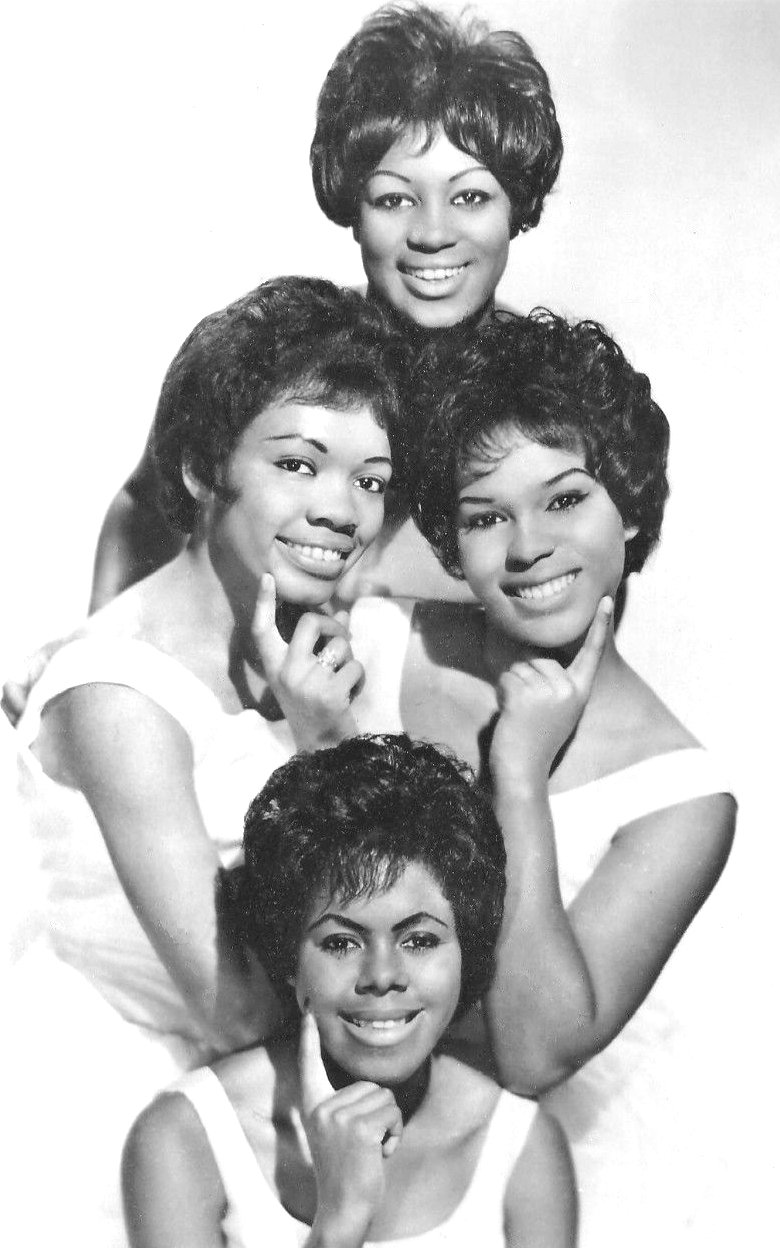

In the winter of 1960 to 1961, a new sound reached the top of the American charts, and it did not come from a solo crooner, a rock-and-roll wild man, or a polished male harmony group. It came from four young women from Passaic, New Jersey, singing a question that millions of listeners recognised at once. The Shirelles asked whether love would last beyond a single night, and they asked it so plainly, and so sweetly, that the record could not be ignored. “Will You Love Me Tomorrow” became the first song by a girl group to reach number one on the Billboard Hot 100, and in doing so it changed what a group of young women could say on a pop record, and what the pop charts would make room for.
That achievement is often stated as a single line in music histories, as if the chart position were the whole story. It was not. Behind the record lay a school talent show, a determined woman who built a record label around a group of teenagers, a songwriting partnership that was itself barely out of its teens, and a recording session in which strings were added to soften a song that its singer at first did not want to sing. The Shirelles were not manufactured in a boardroom and handed a hit. They were school friends who wrote a song together, were heard by a classmate’s mother, and then learned their trade single by single, in public, until one record caught the mood of a country on the edge of a new decade.
Four school friends from Passaic
The Shirelles began as Shirley Owens, Doris Coley, Addie “Micki” Harris, and Beverly Lee, four friends at Passaic High School in New Jersey. In 1957, still teenagers, they performed a song they had written together, “I Met Him on a Sunday,” at a school talent show, calling themselves the Poquellos. The name did not last, but the song did. A classmate, Mary Jane Greenberg, heard them and introduced them to her mother, Florence Greenberg, who ran a small record label called Tiara Records. Florence Greenberg was impressed enough to record them, and she gave them a more commercial name, combining lead singer Shirley Owens’s first name with the name of the popular girl group the Chantels to make the Shirelles.
Their first recording of “I Met Him on a Sunday” found a local audience, and Tiara leased it to Decca Records for national distribution. In 1958 it reached the national Top 50, peaking in the high forties on the Billboard Hot 100. For a group of schoolgirls with no previous recording experience, that was already remarkable, and it is often described as one of the first hits of the girl-group era. The follow-up singles, however, did not repeat that success, and Decca did not take up further releases. The group could easily have become a footnote, a talented school act with one modest hit and no second act. What saved them, and shaped the rest of their career, was Florence Greenberg herself. Rather than letting the group go, she formed a new label, Scepter Records, in 1959, and signed the Shirelles to it. She also brought in Luther Dixon, an experienced songwriter and producer, to work with them. Dixon’s arrangements, often built around soft harmonies and, at times, strings, would become a central part of the Shirelles’ sound.
The early Scepter singles showed a group still searching for the right material. A remake of the Five Royales’ “Dedicated to the One I Love,” with Doris Coley singing lead, reached only the lower reaches of the Hot 100 in 1959. Two further singles failed to chart. Then, in 1960, came “Tonight’s the Night,” a song written by Dixon and Shirley Owens, with Owens singing lead. It reached the Top 40 on the pop chart and the Top 20 on the rhythm-and-blues chart. It was progress, but it was not yet a breakthrough. The group had a distinctive sound — gentle, close harmonies, a lead voice that sounded young without sounding childish, and rhythms that borrowed from doo-wop and from Latin-influenced patterns — but they had not yet found the song that would let that sound speak to the whole country.
A song from the Brill Building
That song came from a different part of New York’s music world. Gerry Goffin and Carole King were a young married songwriting team working for Aldon Music, in the Brill Building orbit around Broadway, where publishers employed staff writers to turn out songs for whoever needed them. King was eighteen when she wrote the music for “Will You Love Me Tomorrow,” and Goffin wrote the words. Their publisher, Don Kirshner, assigned them to write a follow-up single for the Shirelles, and the song they produced was unlike the cheerful, uncomplicated teen songs that filled much of the charts at the time. It was, at heart, a serious question. A young woman, on the verge of a decision about intimacy, wonders whether the man beside her will still love her in the morning, and whether what feels true tonight will still feel true when daylight returns.
The story often told about the session is that Shirley Owens, the group’s lead singer, was at first reluctant to record the song. Accounts of the session say that producer Luther Dixon persuaded her, in part by adding a string arrangement that softened the song and gave it a more polished, almost orchestral feel. Whether every detail of that story can be recovered after more than sixty years is another matter, but the shape of it rings true: a song this direct would have felt risky in 1960, especially for a group of young Black women whose audience included teenagers, parents, and radio programmers with very different ideas about what young women should sing about. The strings did not hide the question. They framed it, making a frank song sound elegant rather than confrontational, and allowing listeners to hear the emotion before they worried about the subject matter.
The Shirelles recorded the song in 1960 at Bell Sound Studios in New York City, and Scepter released it as a single in November 1960, with “Boys” on the B-side. “Boys” would later become famous in its own right, when the Beatles covered it on their first album, but at the time it was the A-side that mattered. The record entered the Billboard Hot 100 on 21 November 1960, and climbed steadily through December. Some conservative radio stations reportedly refused to play it, or treated it with suspicion, because of its subject matter. That resistance, if anything, underlined the point of the song: it was saying something that polite pop had largely avoided saying, and it was saying it in a voice that could not be dismissed as crude or sensational. By 30 January 1961, “Will You Love Me Tomorrow” had reached number one on the Hot 100, where it stayed for two weeks. It also reached number two on the rhythm-and-blues chart, and it became the group’s biggest hit in Britain, reaching number four there.
Why the question mattered
To understand why this record mattered so much, it helps to remember what pop music sounded like in 1960. Teenage songs were often about crushes, dances, and heartbreak in the abstract. A girl singer might pine, or wait by the phone, or dream about a boy. She rarely asked, in so many words, what would happen after a night together, and she rarely sounded as if she were thinking through a real decision. “Will You Love Me Tomorrow” did both. Its narrator is not a passive figure waiting to be chosen. She is weighing a choice, and she wants an honest answer before she makes it. The song does not preach, and it does not moralise. It simply lets a young woman speak for herself, in the first person, about a subject that affected young women far more directly than it affected the men who wrote most of the songs they sang.
That directness is part of why the record has lasted. Later listeners, hearing it through the changes of the 1960s and beyond, have often noted how modern it sounds — not in its arrangement, which is unmistakably of its time, with its strings and its gentle beat, but in its point of view. The singer is not asking for permission. She is asking for respect, and for a promise that means something in the morning as well as at night. In a decade when young women were beginning to demand more control over their own lives, in ways that would become far more visible later in the 1960s, a pop song that took a young woman’s interior life seriously was more than a hit. It was a small, early sign of a larger change.
The record also mattered because of who sang it. The Shirelles were a Black girl group, and their number one was the first by a Black all-female group on the Hot 100, and the first by any girl group on that chart. In 1960, American radio and the record business were still divided in ways that limited Black artists’ access to the mainstream pop charts, even when their records sold well in rhythm-and-blues markets. A Black group reaching number one on the pop chart, with a song written by a young white songwriting team and produced for an independent label run by a woman, cut across several of those divisions at once. It did not end segregation in the music business, and it would be wrong to claim that it did. But it proved, in the most public way possible, that a Black girl group could command the centre of American pop, and it opened a door that other groups — the Marvelettes, the Crystals, the Ronettes, and, above all, the Supremes at Motown — would walk through in the years that followed.
The run of hits that followed
Success, when it came, came quickly and in quantity. On the strength of “Will You Love Me Tomorrow,” Scepter re-released “Dedicated to the One I Love,” this time with a new arrangement, and it reached number three on the Hot 100. “Mama Said,” written by Luther Dixon and released in 1961, became the group’s third consecutive Top Five hit. Then came “Baby It’s You,” written by Burt Bacharach, Mack David, and Luther Dixon, which reached the Top Ten in late 1961. The Beatles, who were open admirers of the Shirelles, covered both “Baby It’s You” and the B-side “Boys” on their debut album, Please Please Me, in 1963 — a tribute that tells its own story about how widely the Shirelles’ records were heard, even in Liverpool.
The group’s second number one came in 1962 with “Soldier Boy,” written by Luther Dixon and Florence Greenberg. The song, a tender ballad addressed to a boyfriend in uniform, was reportedly recorded as an album track and released as a single almost as an afterthought, yet it became the biggest-selling single of the group’s career, reaching number one on the pop chart and number three on the rhythm-and-blues chart. It was followed by further hits, including “Foolish Little Girl,” written by Howard Greenfield and Helen Miller, which reached the Top Five in 1963. For a brief period, the Shirelles were the most successful girl group in America, and their sound — sweet harmonies, a clear lead voice, and arrangements that balanced pop polish with rhythm-and-blues feeling — became a template for the girl-group era.
That template was widely copied, but it was not easy to sustain. Luther Dixon left Scepter, and the group became involved in a dispute with the label over money and over the handling of their earnings. Accounts of the dispute differ in detail, but its effect is clear: in the mid-1960s, the group’s recording schedule was tied up, and Scepter continued to release previously recorded material while the Shirelles were unable to move freely to another label. By the time the legal problems were settled, the musical landscape had changed. The British Invasion, Motown’s polished Detroit sound, and the rise of folk-rock and soul had all reshaped the charts, and the Shirelles, like many early-1960s groups, found it hard to regain their earlier position. They left Scepter in the late 1960s and signed with Mercury Records in 1967, but they never again reached the Top Twenty. They continued to record and to tour, with changes in the line-up over the years, and they remained a beloved live act, but their chart career, in commercial terms, belonged to the years between 1958 and 1963.
Carole King’s second version, and a lasting legacy
The song itself, meanwhile, took on a second life. In 1971, Carole King recorded her own version of “Will You Love Me Tomorrow” for her album Tapestry, one of the best-selling albums of the decade. King’s version is slower and more reflective than the Shirelles’ recording, sung by a woman in her late twenties looking back on a question she first posed as a teenager, with harmonies from Joni Mitchell and James Taylor. The contrast between the two versions is instructive. The Shirelles’ record sounds like a young woman asking a question in the moment, urgently and hopefully. King’s version sounds like a woman who already knows how complicated the answer can be. That both versions work, and that both are still played, says something about the strength of the song itself: it was written well enough to survive being sung from two very different points in a life.
Other artists have recorded the song many times since, and it has appeared in films, television programmes, and stage shows, including the musical Beautiful, based on Carole King’s life, in which the writing of the song is dramatised. Dave Mason’s 1978 version reached the American Top Forty. The song’s place in critical lists has also endured: Rolling Stone has ranked the Shirelles’ recording among its 500 greatest songs of all time, and the Rock and Roll Hall of Fame has highlighted it as the first girl-group number one. In 1996, the Shirelles themselves were inducted into the Rock and Roll Hall of Fame, a recognition that came more than three decades after their chart peak, but that placed them where they belonged, among the founding acts of rock-and-roll-era pop. Before the induction ceremony, the surviving members returned to Passaic High School, where the school auditorium was renamed in their honour, with a plaque reading “Dedicated To The Ones We Love” — a neat, affectionate echo of one of their own hits.
There is a temptation, when writing about a record like this, to treat it only as a milestone, a first that opened a door. That is true, but it is not the whole truth. “Will You Love Me Tomorrow” endures because it is a good song, beautifully sung, and because the question at its centre has not dated. Every generation of listeners has had to ask, in its own way, whether love will last beyond the first rush of feeling, and whether a promise made at night will hold in the morning. The Shirelles asked that question first, on a pop record, at number one, and they asked it with a clarity and a tenderness that still stops listeners today. Four school friends from Passaic did not set out to make history. They set out to sing a song they believed in, and history, for once, kept up with them.
Sources
- Rock and Roll Hall of Fame, “Sonic Connections: From Teen Pop to Timeless Standard” — on “Will You Love Me Tomorrow” as the first girl-group number one
- Billboard Book of Number One Hits, cited in the chart history of “Will You Love Me Tomorrow”
- The Second Disc, “Back Tracks: The Shirelles on Scepter” — on Florence Greenberg, Scepter Records, Luther Dixon, and the group’s early singles
- Classic Bands, “The Shirelles” — on the Passaic talent show, the name change, the Decca and Scepter years, “Soldier Boy,” and the 1996 Hall of Fame induction
- Donald Clarke’s Encyclopedia of Popular Music, entry on The Shirelles — on the line-up, chart positions, and the Beatles’ covers of “Baby It’s You” and “Boys”
- Parade, on Carole King and Gerry Goffin writing “Will You Love Me Tomorrow” at Aldon Music and the song’s radio reception
- Stereogum, “The Number Ones: The Shirelles’ Will You Love Me Tomorrow” — on the 30 January 1961 number one and Carole King’s Tapestry version
Image credit: Photograph by Mika Lika, via Pexels, free licence (thematic vinyl image only, not a photograph of The Shirelles).
Leave a Reply