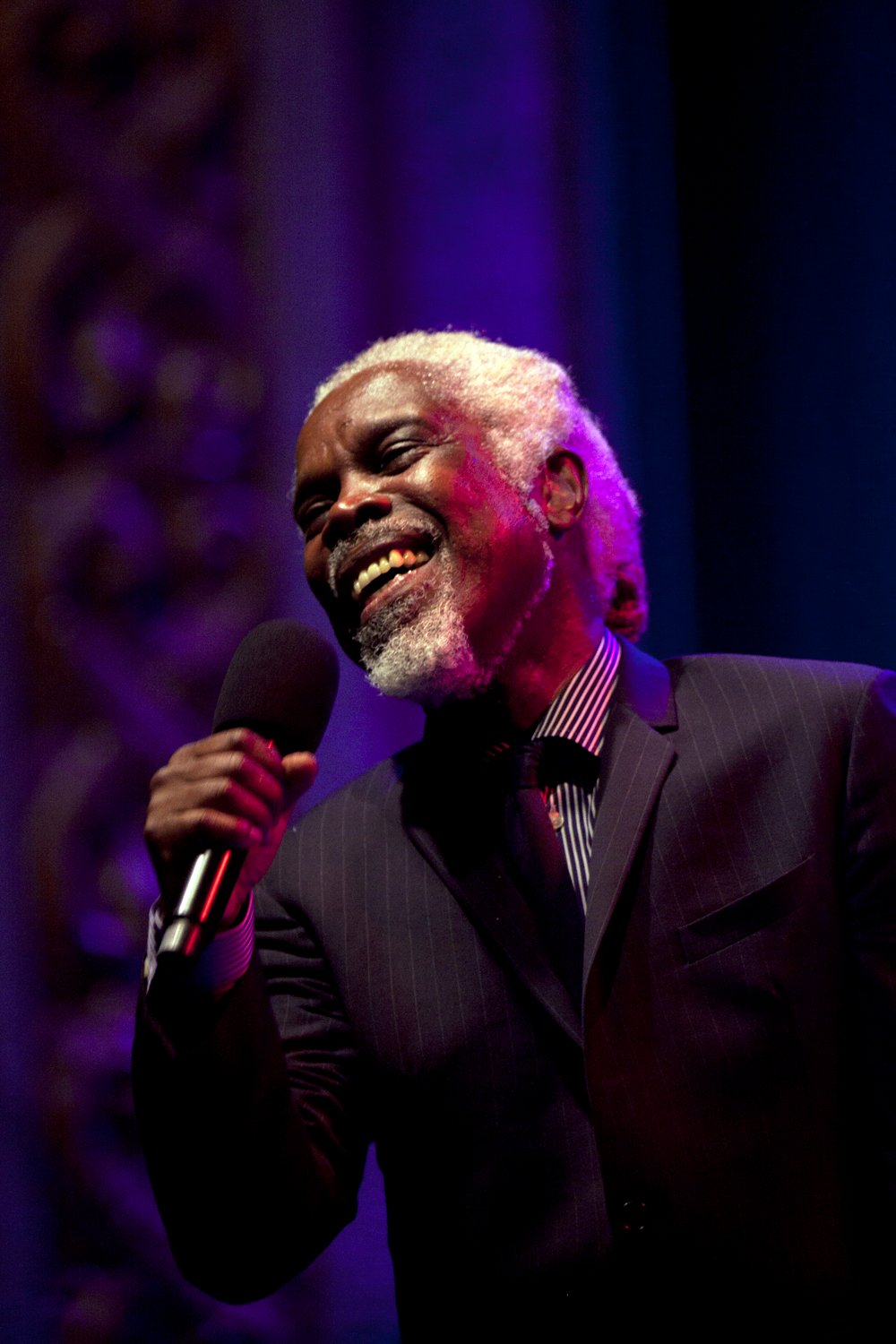
In the mid-1980s, there was no smoother voice on the radio. “Caribbean Queen,” “Suddenly,” “When the Going Gets Tough,” “Get Outta My Dreams, Get into My Car” — Billy Ocean stacked up seven Top 10 hits in four years, three of them number ones, and became the most popular British R&B singer of his era. But the man behind the silk shirts and the silky voice had spent fifteen years failing first. He was a tailor on London’s most famous street, a ballad singer nobody wanted, and an artist who once named himself after a football team back home. And at the absolute peak of his fame, he did the unthinkable: he walked away. This is the story of Leslie Sebastian Charles, the boy from Trinidad who became Billy Ocean — and then had the courage to become himself again.
From Fyzabad to Savile Row
Billy Ocean was born Leslie Sebastian Charles on January 21, 1950, in Fyzabad, Trinidad and Tobago. Music was in his blood: his father, Hainsley Charles, was a Grenadian calypso musician who would take young Leslie along to gigs. The family was poor — when money and food ran short, they made their own entertainment, singing together at home. When Leslie was ten, his parents moved the family to Romford, Essex, chasing a better life in England, arriving just before Trinidad and Tobago’s independence in 1962.
Leslie told his parents he wanted to be a singer, with a boy’s grand ambition: if he ever made it, he’d buy his mother a lovely house. His mother believed in the dream — but she was practical too. “If you’re interested in music, you really ought to get a trade,” she told him, and sent him to take a tailoring course as insurance. The insurance paid off in an unexpected way: young Leslie ended up working as a tailor on Savile Row, the most prestigious address in menswear, cutting cloth by day while singing in London clubs by night. When a neighbor was refurbishing her house and getting rid of a piano, the teenage tailor borrowed £23 from his boss, bought it, and squeezed it into his tiny council flat. That secondhand piano became his songwriting school.
The Name Game
For years, nobody wanted what Leslie Charles was selling. His first manager, John Morphew, recorded him at Pye Studios with a full orchestra as a traditional ballad crooner — but ballads were going out of fashion, and no major label would touch the records. He cut his first single, “Nashville Rain,” for Spark Records in 1972 under the name Les Charles. It went nowhere.
Then came the reinvention. In 1975, he decided to start over completely: new sound, new image, new name. Where did “Billy Ocean” come from? For years, the story went that he took it from the Ocean Estate in Stepney, the East London housing estate where he was living at the time. But Ocean himself later set the record straight in an interview with ABC Radio Melbourne: that story was wrong. The name actually came from a local football team back in his hometown in Trinidad that called themselves “Oceans 11.” As he explained it, “Ocean came first. And then I messed around with the Christian name, and Billy was the one that I landed on. ‘Billy Ocean — that sounds good.’” He kept the name in his back pocket until he wrote a song worthy of it.
Seven Years in the Wilderness
The new name worked like magic — almost. In 1976, the newly christened Billy Ocean released “Love Really Hurts Without You,” an exuberant pop-soul stomper that shot to number two in the UK and cracked the American Top 25. It should have been the launch of a superstar. Instead, it was a false start.
For the next seven years, Ocean released four albums that barely made a ripple. There were flickers of life — “Red Light Spells Danger” gave him a UK hit in 1977 — but the momentum kept stalling, and by the early 1980s he was back to grinding: a respected session singer with a famous name and a fading career. His 1981 single “Nights (Feel Like Getting Down)” gave him a modest R&B hit in America, but in Britain he was becoming a trivia question: whatever happened to Billy Ocean? He was 33 years old, a veteran of a decade in the business, and the industry had all but written him off. What happened next is one of the great second acts in pop history.
“Caribbean Queen”: Three Queens, One Crown
The turnaround began when Jive Records founder Clive Calder took an interest and paired Ocean with a young American producer and songwriter named Keith Diamond. Calder did something bold: he sent Ocean to America. Billy found himself living in a flat above the record company on Lexington Avenue in New York City, using it as a writing room, a boy from the East End of London thrown into the deep end of the American music machine.
At Unique Recording Studios in New York, Ocean and Diamond wrote and cut “Caribbean Queen (No More Love on the Run),” a sleek, pulsing club track built around one of the most recognizable saxophone riffs of the decade — played by Vernon Jeffrey Smith — with a then-unknown Lisa Fischer singing backing vocals. Ocean later said he didn’t realize at the time that he was working with top-notch American session musicians; he just showed up and gave them respect.
Here’s the part most fans never knew: there wasn’t one queen, there were three. The song was first released in Europe as “European Queen,” where it flopped. Undaunted, Ocean and Diamond simply swapped out the key word and released it as “African Queen” in some markets and “Caribbean Queen” in America — same track, three titles. The American version exploded. “Caribbean Queen” hit number one on the Billboard Hot 100 on November 3, 1984, and stayed there for two weeks, topping the R&B chart too and reaching number six back home in Britain. It won Ocean the 1985 Grammy for Best Male R&B Vocal Performance — making him the first British artist ever to win in that category. The album “Suddenly” went double platinum and spun off two more Top 10 hits, including the slinky “Loverboy.” Overnight, the forgotten ballad singer was the biggest British soul star on the planet.
The Movie Years
What followed was a hit streak most artists would kill for. In 1986, “When the Going Gets Tough, the Tough Get Going” — recorded for the soundtrack of “The Jewel of the Nile,” the sequel to “Romancing the Stone” — reached number two in America and number one in Britain. Its music video was pure 1980s joy: Ocean performing in a white tuxedo alongside the film’s stars, Michael Douglas, Kathleen Turner, and Danny DeVito, all dressed to match. That same year, the “Love Zone” album gave him another chart-topper with “There’ll Be Sad Songs (To Make You Cry).”
Then came 1988 and the crowning moment. “Get Outta My Dreams, Get into My Car” — an irresistible fusion of dance grooves and rock attitude, built around a line borrowed from an old Sherman Brothers tune — became his third American number one, topping both the pop and R&B charts. Its playful video, full of cartoon characters, was featured in the teen comedy “License to Drive.” In the space of four years, Billy Ocean had scored seven Top 10 hits, including three number ones, by applying glossy pop production to R&B and dance material — songs that worked as well on the dance floor as on the car radio. He was untouchable.
Walking Away from It All
And then, at the peak, he stopped. After the “Tear Down These Walls” album and a platinum “Greatest Hits” collection in 1989, Billy Ocean simply stepped back. The reason was heartbreakingly simple: his mother, Violet, fell ill and died. Appearing on “Live with Regis and Kathie Lee” in 1993, Ocean explained it with disarming honesty. “My mother got ill, and eventually she died,” he said. “Then after she died I sort of stopped and looked at my situation — my family. I have three kids and a wife, and for years I’d been writing and recording and touring, and I thought it’s not fair. Something was missing, so I stopped for a while, recharged the battery, and had a chance to watch my kids grow up for a while.”
His 1993 comeback album, “Time to Move On” — recorded in Chicago with a then-unknown young producer named R. Kelly — failed to recapture the magic, though it did mark a visible reinvention: Ocean traded his famous Jheri curl for the dreadlocks he still wears today, and leaned into a more rootsy, new-jack R&B and reggae sound. Then the machinery of his career fell apart: he’d fallen out with his manager, and Jive founder Clive Calder decamped to America. “Instead of beating my head against a brick wall,” Ocean later recalled, “I thought, ‘Maybe I’ll just spend some time with my family.’ Of course, it sort of drifted into nearly 15 years, because, you know, time flies!” While the charts moved on, Billy Ocean was in Sunningdale, Berkshire, raising Cherie, Anthony, and Rachel with his wife Judy, playing steel drums he’d taken up during the hiatus, and collecting honors including an honorary doctorate of music from the University of Westminster. He didn’t need the spotlight. He had something better.
The Quiet Comeback
He never really left, though — he was just waiting. In 2007, Ocean returned to the road with a worldwide tour, and in 2009 he released “Because I Love You,” his first album of new material in sixteen years. The industry welcomed him home: in 2010, he received the Lifetime Achievement Award at the MOBO Awards in London, and he was later appointed an MBE for his services to music. Through it all, he has remained in Berkshire with Judy, the wife he married back in the late 1970s, long before the fame arrived. In 2020, he reunited with his longtime writing partner Barry Eastmond for “One World,” proving the voice — that warm, unmistakable tenor — hadn’t lost a step.
Billy Ocean’s story isn’t really about the hits, though the hits were glorious. It’s about a tailor’s son who learned a trade, borrowed £23 for a piano, named himself after a football team, failed for a decade, conquered the world in four years — and then had the wisdom to walk away and watch his children grow up. In an industry that devours its stars, Billy Ocean did something rarer than scoring a number one: he kept his soul intact, his family close, and his dignity whole. And whenever “Caribbean Queen” comes on the radio, all these years later, it still sounds like sunshine.
Leave a Reply