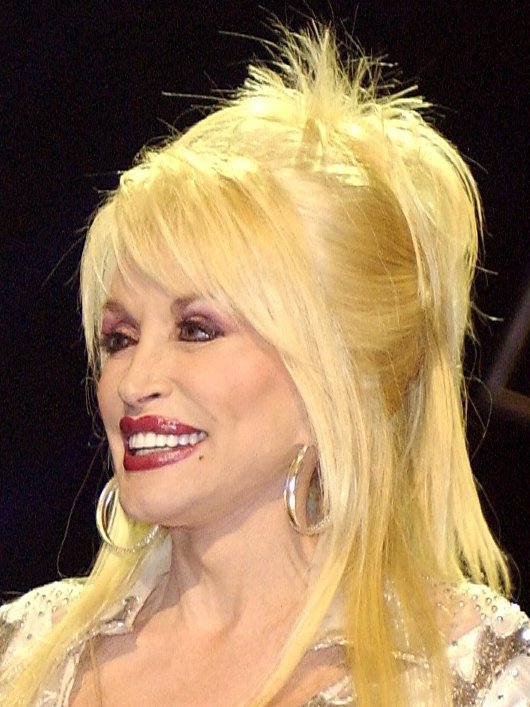
On August 25, 2026, the world lost Dolly Parton. She was eighty years old, and she left the way she lived: quietly, on her own terms, after a brief battle with cancer she had chosen to keep private. The tributes poured in from every corner of the planet, from presidents to pop stars to the millions of children who learned to read because of her. But the most remarkable thing about Dolly Parton was never the wigs, the rhinestones, or the jokes. It was that the poorest girl in the room turned out to be the smartest businesswoman in the history of country music, and the most generous.
The Cabin on the Little Pigeon River
Dolly Rebecca Parton was born on January 19, 1946, in a one-room cabin in Pittman Center, Tennessee, the fourth of twelve children. Her father, Robert Lee Parton, was a tobacco farmer who could neither read nor write. Her mother, Avie Lee, kept the sprawling family together with faith, music, and ferocious love. There was no electricity, no running water, and no money. There was, however, a guitar, and by the time Dolly was ten she was performing on local radio and television in Knoxville. At thirteen, she cut her first single. The day after she graduated from high school in 1964, she moved to Nashville.
She never forgot where she came from, and she never let anyone else forget either. One of her most beloved songs, “Coat of Many Colors,” tells the true story of the winter her mother sewed her a coat from rags, and the rich kids at school laughed at her for wearing it. The coat now sits in the Chasing Rainbows museum at Dollywood, a shrine to the idea that love matters more than money. Her father’s illiteracy haunted her too. Decades later, it would become the reason she gave away hundreds of millions of books.
The Night She Wrote Two Immortals
In 1973, Dolly Parton sat down for a writing session and produced, in a single day, two of the most famous songs of the twentieth century. She has told the story many times, and confirmed it while going through her old tapes for her 2020 book “Songteller”: “Jolene” and “I Will Always Love You” were recorded back to back on the same cassette. She may have written “Jolene” later that same night. Songwriters dream their whole lives of a day like that. Dolly had it on a random evening in Nashville.
“Jolene” came from two real encounters. The name belonged to a beautiful little red-haired girl who came onstage for an autograph; Dolly loved the sound of it so much she chanted it over and over so she wouldn’t forget, and the chant became the chorus. The jealousy in the song came from a red-headed bank clerk who flirted with her husband, Carl Dean, early in their marriage. Dolly later joked that she put a stop to that in a hurry, and thanked the woman anyway: without her, there would be no “Jolene.”
“I Will Always Love You” was a professional breakup letter. After seven years as the star of “The Porter Wagoner Show,” Dolly needed to leave, and Wagoner wouldn’t hear of it. So she did what she did best: she wrote him a song. She sang it to him in his office the next day. He cried, told her she could go, and asked only that he be allowed to produce the record. She recorded it at RCA Studio B in Nashville on June 12, 1973. It went to number one on the country chart in 1974. She would take it to number one again with a 1982 re-recording for “The Best Little Whorehouse in Texas,” the only song in history to top the country chart in two different decades for the same artist.
The Song She Wouldn’t Sell to the King
Elvis Presley heard “I Will Always Love You” and wanted to record it. Dolly was thrilled; she was invited to the session. Then, the night before, Colonel Tom Parker called. His terms were non-negotiable: anyone who recorded an Elvis song signed over half the publishing rights. Standard practice for the King. Dolly said no.
She owned her own publishing company. She knew the song was one of the best she had ever written. And she told Parker she was leaving the money for her family. She cried all night afterward while friends told her she was crazy. But she held firm, and Elvis never recorded it.
Nineteen years later, Whitney Houston recorded it for “The Bodyguard.” It became one of the best-selling singles of all time, and because Dolly had refused to give up a single percentage point, every penny of the publishing royalties flowed to her. She once joked that Whitney’s version made her enough money to buy Graceland. The Country Music Hall of Fame has estimated the song has generated more than $250 million. All because a twenty-eight-year-old woman from the Smoky Mountains told the most powerful manager in music business history that the answer was no.
The Hit She Played on Her Fingernails
In 1980, Jane Fonda recruited Dolly for her film debut in the comedy “9 to 5,” alongside Fonda and Lily Tomlin. Dolly agreed on one condition: she got to write the theme song. The problem was that between takes on a film set, there was nowhere to play a guitar without disrupting the crew.
So she wrote it on her nails. Her long acrylics made a percussive clicking sound, and as she tapped them together on the set, she realized it sounded exactly like a typewriter. She built the rhythm of the song around that clicking, scribbling lyrics between setups and working them out on guitar back at her hotel at night. The opening lines came to her over a cup of coffee: a woman tumbling out of bed, stumbling to the kitchen, pouring herself a cup of ambition. She liked the nail-percussion so much she recreated it on the actual recording, and the album “9 to 5 and Odd Jobs” carries the credit “Nails by Dolly!”
“9 to 5” hit number one on the pop, country, and adult contemporary charts in early 1981, won her two Grammys, and earned an Oscar nomination. It became an anthem for working women everywhere, and it remains the only chart-topper she ever played on her own fingernails.
The Businesswoman in the Wig
Behind the cartoon image was one of the sharpest minds in entertainment. Dolly wrote some 3,000 songs. She built Dollywood in Pigeon Forge, Tennessee, in 1986, turning her home county into an economic engine. She founded her own record label. She earned a Tony nomination for writing the Broadway musical version of “9 to 5.” She became Miley Cyrus’s godmother and recorded the Grammy-winning “Trio” albums with Linda Ronstadt and Emmylou Harris.
In 2022, she was nominated for the Rock & Roll Hall of Fame and promptly asked to be removed from the ballot, saying she didn’t feel she had earned it as a non-rock artist. The Hall told her the honor was about influence, not genre, and her name was already on the ballots. She accepted with grace, declared onstage that she was going to earn it, and then released “Rockstar” in 2023, her first rock album, featuring Paul McCartney, Ringo Starr, Elton John, and Stevie Nicks. She was seventy-seven. Most legends coast. Dolly released a forty-nine-track rock record.
The Book Lady
Her greatest achievement had nothing to do with music. In 1995, inspired by her father’s inability to read, she founded the Imagination Library through her Dollywood Foundation, mailing a free book every month to every child from birth to age five in her home county of Sevier County, Tennessee. The program exploded worldwide. It has now mailed more than 200 million free books to children across the globe.
The giving never stopped. After the devastating 2016 wildfires in the Smoky Mountains, her My People Fund raised and distributed more than $12 million to displaced families. In 2020, she donated $1 million to Vanderbilt University for COVID-19 vaccine research, funding that helped develop the Moderna vaccine. In 2025, the film academy honored her with the Jean Hersholt Humanitarian Award. She liked to say it was easier to be generous than to be rich and miserable. She proved it, monthly, for thirty years.
Goodbye to an Icon
Her final years were full of work and love. Her husband of fifty-nine years, Carl Dean, the asphalt-paving businessman she married in 1966 and shielded from fame with legendary devotion, died in March 2025 at eighty-two. Tennessee declared her eightieth birthday Dolly Parton Day. She made her last public appearance in June 2026, then withdrew as her health failed. On August 25, 2026, she died at Vanderbilt University Medical Center in Nashville, surrounded by loved ones. Her family asked for donations to the Imagination Library in lieu of flowers. She was laid to rest beside Carl in a private service, as she had requested.
The Actress Who Stole Every Scene
“9 to 5” was only the beginning of Dolly’s second career. She had never acted before Fonda cast her, but she stole the film so completely that Hollywood kept calling. In 1989, she played the beautician Truvy in “Steel Magnolias,” holding her own against Sally Field, Shirley MacLaine, and Julia Roberts, and turning the salon into the warmest room in the movie. She headlined “The Best Little Whorehouse in Texas” with Burt Reynolds, a film built around her 1982 re-recording of “I Will Always Love You.”
Music remained her first language. In 1987, she joined Linda Ronstadt and Emmylou Harris for the album “Trio,” three of the greatest voices in American music singing mountain harmonies together, a collaboration fans had dreamed about for a decade. And in 2009, she earned a Tony Award nomination for writing the music and lyrics to the Broadway musical version of “9 to 5,” the song she had once tapped out on her fingernails now being sung by a full chorus line. From a one-room cabin to a Broadway marquee: only Dolly.
Dolly Parton was born in a cabin with dirt floors and died as one of the most beloved human beings on earth. She wrote two of the greatest songs ever written in a single day, told Elvis Presley’s manager no, played a number-one hit on her fingernails, built a theme park, gave away 200 million books, and helped fund a vaccine that saved countless lives. She used to joke that it took a lot of money to look as cheap as she did. The truth was simpler and far more impressive: it took a lot of heart to do as much good as she did. The rhinestones will keep sparkling. The books will keep arriving. And we will always love her.
Leave a Reply