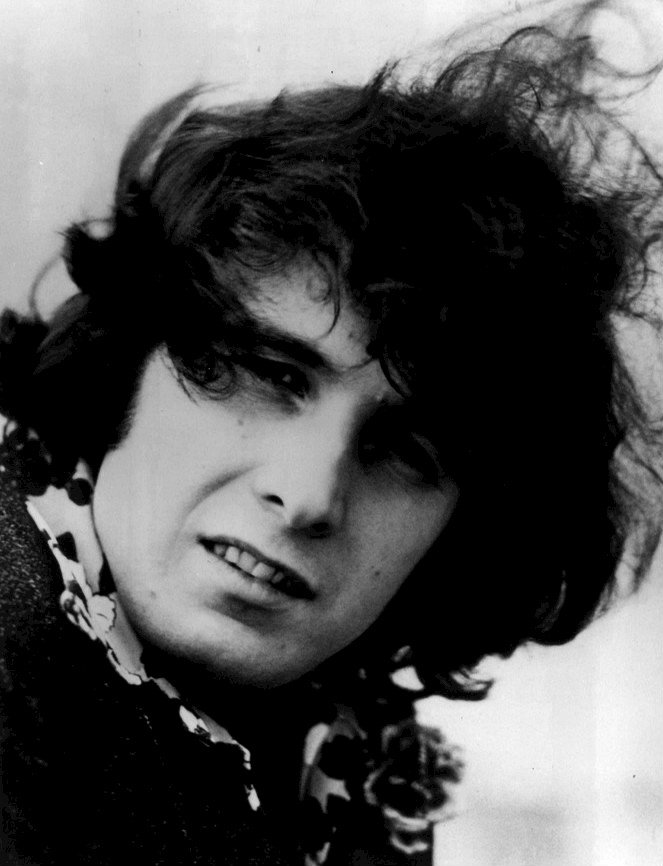
Eight minutes and forty-two seconds. That’s how long “American Pie” runs — a folk-rock epic so sprawling it had to be split across both sides of a 45-rpm single, so dense with riddles that fans have been arguing about it for more than half a century, and so beloved that it held the record as the longest song ever to top the Billboard Hot 100 for fifty years. Its writer was a twenty-five-year-old former paperboy from New Rochelle, New York, who claimed the whole thing took him about an hour to write.
Don McLean has spent the rest of his life being asked what it means. He’s answered some of the questions, dodged most of the rest, and watched his three-chord folk song become a national monument — added to the Library of Congress’s National Recording Registry, voted one of the top five songs of the twentieth century, and covered by everyone from Madonna to “Weird Al” Yankovic. But the real story of “American Pie” isn’t in the decoded references. It’s in the paper route, the folk hero who befriended him, the two dead heroes he couldn’t stop mourning, and the song he wrote in one sitting that nobody — least of all McLean — expected to change his life.
The Paperboy of New Rochelle
Don McLean was born October 2, 1945, in New Rochelle, New York, a sickly kid whose asthma kept him out of school for long stretches. While other boys played ball, Don stayed inside and fell in love with the radio — with Buddy Holly above all. He taught himself guitar with three chords, E, A, and B-seventh, and got a job delivering newspapers.
On February 3, 1959, thirteen-year-old Don was out on his morning route when he cut open the bundle of papers and saw the headline: a plane crash outside Clear Lake, Iowa, had killed Buddy Holly, Ritchie Valens, and J.P. “The Big Bopper” Richardson. His idol was dead. McLean would later say he cried for two years — a grief compounded when his own father died suddenly in front of him when Don was fifteen. The two losses fused together in his memory until he couldn’t separate them. “American Pie,” he eventually admitted, is a biographical song, and its emotional core is that double wound: the day his hero died, and the day his father did.
That winter morning on the paper route became the opening image of the most famous song he would ever write. He just didn’t know it yet. It would take twelve years.
Pete Seeger’s Protégé
In 1967, McLean was a business student at Iona College with a guitar and a hero — not Holly this time, but Pete Seeger, the godfather of the folk revival. He spotted a tiny ad in the New York Times for a folk festival at Castle Rock Farm in Garrison, New York, organized by Seeger to raise money to build a seventy-five-foot Hudson River sloop. McLean borrowed his mother’s car, got lost on the back roads, and finally found the place — where Seeger himself was standing by the stage. McLean walked up and introduced himself. Seeger remembered him: Don was the kid who had written him letters back in junior high.
That chance meeting changed his life. Seeger took the young singer under his wing, brought him along to gigs — including benefits and rallies, and once a trip to sing for presidential hopeful Eugene McCarthy — and put him to work on the sloop that became the Clearwater, the floating classroom of the Hudson River environmental movement. McLean sailed it, sang on it as part of the Sloop Singers, and absorbed Seeger’s great lesson: that a song could be personal and civic at the same time, intimate and historical, a campfire singalong and a chronicle of a nation.
You can hear Seeger all over “American Pie” — in its singalong chorus, in its plainspoken storytelling, in its faith that a folk song can carry the weight of history. McLean spent four years living in the Hudson Valley towns of Cold Spring and Garrison, and he later said it was the most creative period of his life. He wrote “American Pie” there. He wrote “Vincent” there, too.
The Song That Took an Hour
Here’s the part that drives songwriters crazy. McLean had been turning fragments of “American Pie” over in his head for months — images, phrases, a chorus. But when he finally sat down to write it, the actual pen-to-paper work happened in two short sessions, one in Cold Spring, New York, and one in Philadelphia, and McLean has always insisted it took about an hour in total.
The opening verse, he revealed in the 2022 documentary The Day the Music Died — produced by Spencer Proffer and released on Paramount+ — came to him in one piece — melody and words together — while he was singing into a tape recorder. He had a practical reason for wanting the song, too. He needed a closer for his live set, a big number that would pull the whole show toward it. “If I sang ‘American Pie’ at the end,” he said, “all roads would lead to that song.”
When he took it to producer Ed Freeman, he was almost shy about it. He played just the first verse and chorus. “That’s all I’ve done so far,” he said. Freeman told him it sounded like a hit. McLean, by his own later admission, had already finished the whole eight-and-a-half-minute thing — he just didn’t want to impose it on a producer by singing the entire epic in one sitting.
They recorded it live in the studio — at New York’s famous Record Plant, over May and June of 1971 — the whole band playing together in one room instead of layering tracks one by one. That’s why the record breathes the way it does. Listen closely to the chorus and you’ll hear an unlikely choir: the credits list the “West 44th Street Rhythm and Noise Choir,” a ragtag group of friends and hangers-on drafted to sing along. That’s why, fifty years later, it still sounds like a group of people in a room telling you a story — because it was.
The Day the Music Died
The plane crash at the song’s heart is one of the most mythologized nights in rock history, and the details are genuinely chilling. Buddy Holly’s Winter Dance Party tour was a rolling disaster of broken-down buses in subzero weather. After a show at the Surf Ballroom in Clear Lake, Holly chartered a small plane to get to the next gig. His bass player, a young Texan named Waylon Jennings, gave up his seat to the flu-ridden Ritchie Valens, who was terrified of flying and desperate to get warm. At the airport, Holly teased Jennings about the freezing bus: “I hope your old bus freezes up.” Jennings shot back, “Well, I hope your ol’ plane crashes.”
The plane went down minutes after takeoff, killing Holly, Valens, and the Big Bopper, along with the pilot. Jennings carried those last joking words for decades.
McLean spent years refusing to explain the song’s thicket of allusions, and he’s still cagey about most of them. But in the 2022 documentary he finally confirmed a few: “Lenin read a book on Marx” refers to both Vladimir Lenin and John Lennon, a jab at Lennon’s flirtation with radical politics. He’s denied some of the most popular guesses — no, Elvis isn’t the king, Janis Joplin isn’t the girl who sang the blues — while leaving the door open for fans to find their own meanings. One verse he cut entirely before recording described a prayer for the music’s return, answered by the Beatles; he took it out because, as he put it, things weren’t going that way.
The original lyric sheets — sixteen pages of drafts, cross-outs, and second thoughts, including the deleted verse about the Beatles — sold at Christie’s in 2015 for $1.2 million.
“Vincent”
Lost in the shadow of its giant sibling is the other masterpiece on the American Pie album. “Vincent” — often called “Starry, Starry Night” — is McLean’s tender, aching portrait of the painter Vincent van Gogh: a song about genius misunderstood, beauty unrecognized, and a world that failed its most sensitive souls. Where “American Pie” is sprawling and riddling, “Vincent” is simple and devastating, and it proved McLean was no one-song wonder. It reached number twelve in America and went all the way to number one in Britain.
McLean wrote it after immersing himself in van Gogh’s life and letters, and the song’s compassion feels personal — the folk singer recognizing a fellow outsider across a century. Released as a single in 1972, “Vincent” went to number one in Britain and became a top-fifteen hit in America, proving McLean was no one-song wonder. It’s the quiet heart of his catalog, and for many fans, it’s the greater song.
The Record That Stood for Fifty Years
“American Pie” was released in October 1971 and did the impossible: an eight-minute folk elegy with no chorus to speak of entered the Billboard Hot 100 at number sixty-nine and, just eight weeks later, became the number-one song in America — holding the top spot for four weeks starting in January 1972. The single was even released as “American Pie (Parts I & II),” with the first half pressed on side A of the 45 and the rest on side B — the only way to squeeze eight and a half minutes onto a seven-inch record. Radio stations, faced with furious listeners demanding the whole thing, soon gave up trying to play an edited version and just played all of it. It remained the longest number-one single in Billboard history until 2021, when Taylor Swift’s ten-minute “All Too Well” finally broke the record — half a century later.
The song’s afterlife has been almost as strange as its birth. Madonna took a dance-pop version to the top of the charts around the world in 2000. “Weird Al” Yankovic wrote a Star Wars parody, “The Saga Begins,” and McLean not only gave his blessing but admitted he nearly sang Al’s lyrics by accident on stage because his kids played it so much. In 2017, the Library of Congress enshrined the original recording in the National Recording Registry, and the Recording Industry of America named it one of the top five songs of the twentieth century.
And McLean? He keeps touring, keeps singing it, and keeps refusing to fully explain it. In a way, that’s the point. “American Pie” isn’t a puzzle to be solved; it’s a eulogy — for Buddy Holly, for a father, for a version of America that a thirteen-year-old paperboy believed in on a cold February morning in 1959. The music died that day, the song says. But the kid on the paper route grew up, picked up his guitar, and made sure we’d never forget the sound of it living.
Leave a Reply