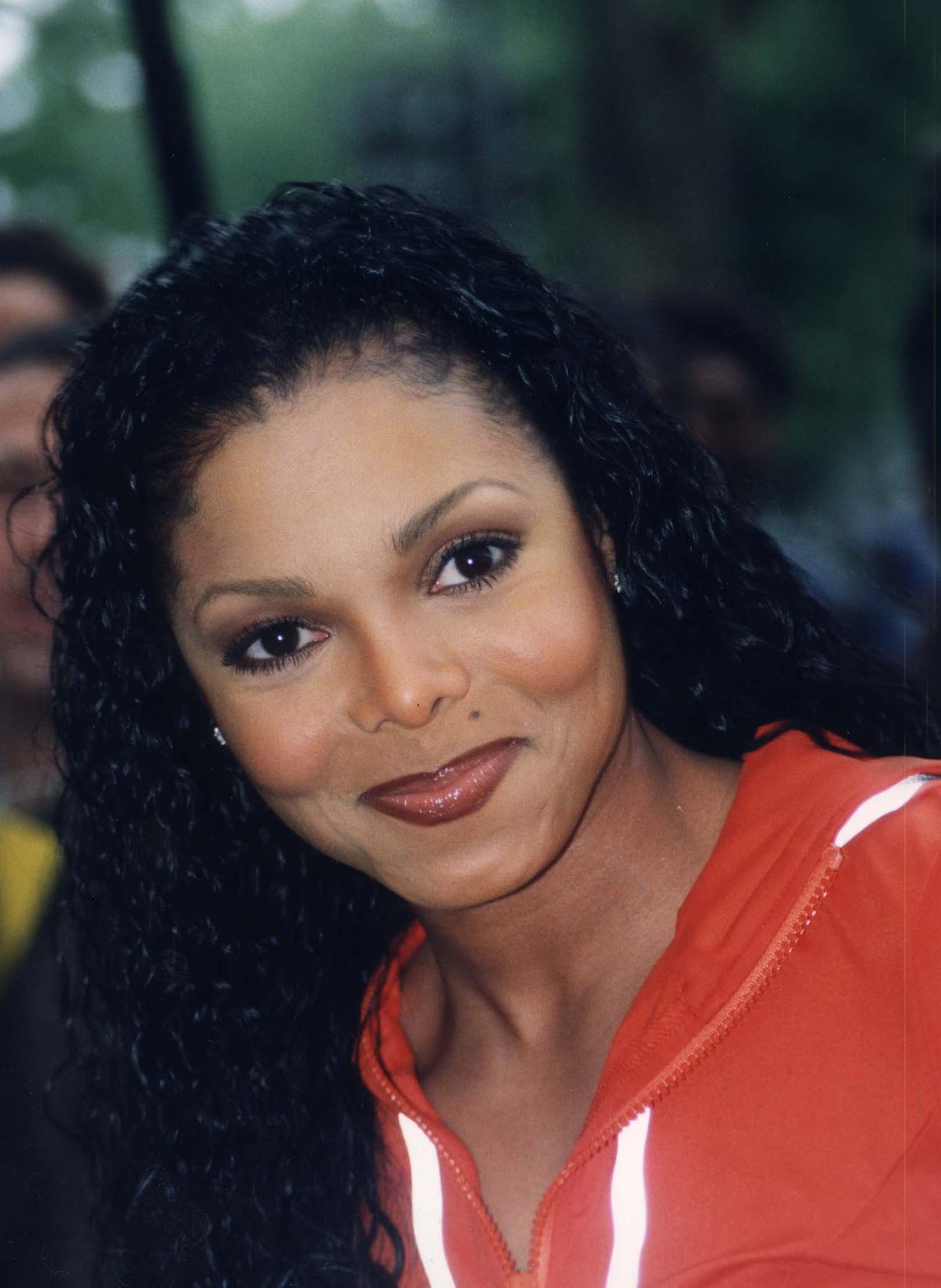
It is hard to imagine a tougher act to follow than the Jackson family. By the time Janet Damita Jo Jackson was born on May 16, 1966, in Gary, Indiana — the youngest of ten children — her older brothers were already becoming the Jackson 5, one of the most famous groups on earth. She could have spent her life as a footnote to that legend, the cute kid sister on television. Instead, she built one of the most influential careers in popular music history: more than 100 million records sold, six Grammy Awards, a Rock and Roll Hall of Fame induction in 2019, and a sound and style that shaped Beyoncé, Britney Spears, Rihanna, TLC, and Aaliyah. The word that defines her story isn’t talent, though she has that in abundance. It’s control — of her music, her image, and her life.
The Youngest Jackson
Janet’s show business education began almost as soon as she could walk. At age seven she was appearing on stage with the Jackson 5, and at ten she was cast by producer Norman Lear in the sitcom “Good Times,” playing Penny through 1979. She went on to roles on “Diff’rent Strokes” from 1980 to 1984 and the musical series “Fame” from 1984 to 1985. To millions of television viewers, she was simply the sweet-faced kid from America’s most famous musical family.
Her father pushed her toward a singing career, and in 1982 she released her self-titled debut album on A&M Records. The single “Young Love” reached No. 6 on the Billboard R&B chart — a respectable start, but the album never crossed into the pop mainstream. Her second album, “Dream Street” (1984), sold even less. Both records were shaped by other people’s visions. Janet was singing, but she wasn’t yet herself. She later decided that had to change — and that her family’s management of her career had to end.
“Control”: The Declaration of Independence
Everything changed in 1986. Working with producers Jimmy Jam and Terry Lewis — former members of the Minneapolis funk band The Time, whom she’d spotted performing — Janet cut “Control” at their Minneapolis studio. The album fused crisp Minneapolis funk, state-of-the-art drum programming, and a new, unmistakably assertive voice. Songs like “Nasty” and “What Have You Done for Me Lately?” announced a young woman taking charge of her life for the first time, and the public responded in a way nobody had predicted. The album’s first five singles — “What Have You Done for Me Lately?” (No. 4), “Nasty” (No. 3), “When I Think of You” (her first No. 1), “Control” (No. 5), and “Let’s Wait Awhile” (No. 2) — all reached the Top Five of the Billboard Hot 100, making “Control” the first album by a woman ever to produce five Top Ten singles. Its singles also set a Billboard record, spending 65 consecutive weeks on the Hot 100. “Control” sold more than 10 million copies worldwide and is often cited as one of the most significant albums of the 1980s.
What made it revolutionary wasn’t just the sound, though the sound was groundbreaking. It was the persona: tough-minded, independent, funny, and entirely her own. She wasn’t Michael’s little sister anymore. She was Janet, and she was telling the world — and, pointedly, the men in it — that she called the shots now.
Rhythm Nation: Pop With a Conscience
For the follow-up, her label wanted a direct sequel to “Control.” Janet had other ideas. She collaborated with Jam and Lewis on socially conscious material addressing racism, poverty, drug abuse, and other issues dominating the headlines, and in September 1989 released “Janet Jackson’s Rhythm Nation 1814.” The “1814” was widely understood to reference the year “The Star-Spangled Banner” was written — a statement that this was music with something to say about America.
The results were historic. “Rhythm Nation 1814” hit No. 1 on the Billboard 200, was certified six-times Platinum by the RIAA, and sold over 12 million copies worldwide. Its seven singles — “Miss You Much,” “Rhythm Nation,” “Escapade,” “Alright,” “Come Back to Me,” “Black Cat,” and “Love Will Never Do (Without You)” — all reached the Top Five of the Hot 100, making it the only album in history to achieve that feat. Note that “Black Cat,” the album’s rock-edged single, was written by Janet alone — a reminder that behind the powerhouse production team stood a genuine songwriter. Her debut world tour in 1990 broke attendance records, and she emerged not just as a pop star but as a cultural force whose look and moves were copied by fans around the world.
The Shape-Shifter
What separates legends from hitmakers is reinvention, and Janet made it a habit. In the 1990s she signed two of the largest recording deals in history with Virgin Records and entered her most explicitly sensual era, cementing her sex-symbol status while continuing to grow artistically. Her 1993 album “janet.” explored desire and intimacy with a newfound openness, and “The Velvet Rope” (1997) confronted depression, identity, and vulnerability with a candor rare for a mainstream star of her stature.
She also built a serious acting career alongside the music, earning acclaim for her leading role in John Singleton’s film “Poetic Justice” (1993) opposite Tupac Shakur, and later appearing in “Nutty Professor II: The Klumps.” Few pop stars of her generation moved so fluidly between the recording studio, the concert stage, and the movie screen.
A Woman in Control of Her Own Legend
Janet’s influence is woven into the fabric of modern pop. The militaristic, precision choreography of her videos and tours, her fusion of R&B, funk, pop, and new jack swing, her willingness to pair socially conscious messages with irresistible hooks — all of it became the template for the generation of female superstars who followed. Artists from Beyoncé to Britney to Rihanna have acknowledged the debt. Her elaborate stage shows helped MTV evolve, breaking gender and racial barriers along the way.
She has weathered storms, too. A 2004 Super Bowl halftime performance became a national controversy that stalled her career momentum for years — a setback many artists would never have recovered from. She kept recording, kept touring, and in 2015 launched her own label, Rhythm Nation Records, completing a journey that began when she fired her father’s management: full ownership of her art. In 2019, the Rock and Roll Hall of Fame made official what fans had long known.
The Last Word
The title of her 1986 breakthrough said it all, and nearly forty years later it still does. Janet Jackson’s career is the story of a person who refused every script handed to her — the kid sister, the sitcom actress, the label’s product — and wrote her own. She took control of her music in 1986, and she has never given it back. For oldies fans who remember when “Control” and “Rhythm Nation” ruled the airwaves, here’s the deeper truth those records carried: behind the perfect choreography and the flawless hooks stood one of the bravest artists of her generation. She didn’t just survive the shadow of the most famous family in music. She stepped out of it and became a giant in her own right.
Leave a Reply