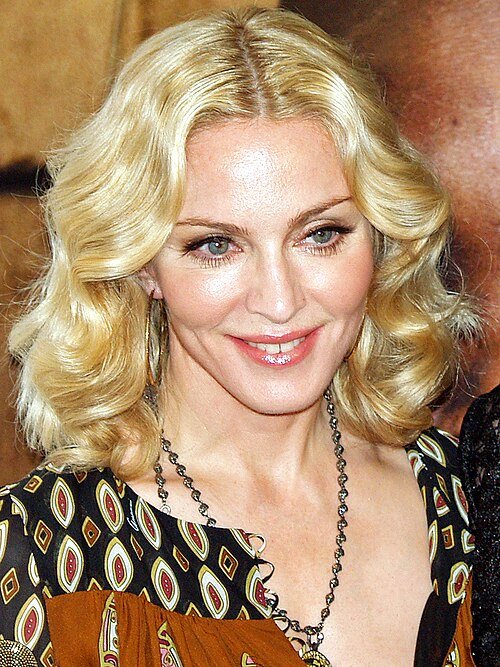
No one in pop history has been underestimated more often, or proven the doubters wrong more spectacularly, than Madonna Louise Ciccone. She arrived in New York with $35 in her pocket, no connections, and a ferocious certainty that she was going to be somebody. Four decades later she is the best-selling female recording artist of all time, the first woman to gross a billion dollars from concerts, a seven-time Grammy winner, and the owner of twelve American number ones. But the statistics are the least interesting part. The real story is how a disciplined Catholic schoolgirl from Michigan became the most deliberately provocative artist of her century — and made the Vatican, the Toronto police, Pepsi-Cola, and MTV all blink first.
The $35 Arrival
Madonna was born on August 16, 1958, in Bay City, Michigan, and raised in the Detroit suburbs of Pontiac and Rochester Hills. When she was five, her mother died of breast cancer — a wound Madonna has said shaped everything that followed, including, decades later, an entire album dedicated to her memory. Her father, an engineer for Chrysler Defense, raised six children with strict discipline; Madonna responded by becoming a straight-A student, a cheerleading squad member, and, in the hallways between classes, a small whirlwind of cartwheels, handstands, and lifted skirts.
She talked her father out of classical piano lessons and into ballet, and her teacher, Christopher Flynn, told her she was the best student in the class — the first person, she later said, who made her believe she could be an artist. A dance scholarship took her to the University of Michigan, but in 1978 she dropped out and flew to New York City. It was the first time she had ever flown or taken a taxi. She arrived with $35, settled in the East Village’s Alphabet City, and survived as a hatcheck girl at the Russian Tea Room and an elevator operator while studying with the Alvin Ailey company and Martha Graham. “The bravest thing I’ve ever done,” she called the move. She had no plan B.
Drums, Demos, and Danceteria
Before she was a pop star, Madonna was a drummer. She sang and played drums and guitar in a band called Breakfast Club, rehearsing in an abandoned synagogue in Queens with her then-boyfriend Dan Gilroy. When that ended, she formed Emmy with drummer Stephen Bray, an old boyfriend from Michigan, and the two wrote songs in a rehearsal room at Manhattan’s Music Building, cutting a four-track demo.
The break came the old-fashioned way: she haunted nightclubs, pressing her demo on DJs. Mark Kamins, the DJ at Danceteria, bit — and began a romance with her for good measure. Kamins arranged a meeting with Seymour Stein, president of Sire Records, who signed her to a two-single deal. “Everybody” came out in October 1982, followed by the double A-side “Burning Up” / “Physical Attraction” in March 1983; both reached number three on the dance chart.
Warner assigned producer Reggie Lucas to her debut album, but Madonna hated many of the tracks and brought in DJ John “Jellybean” Benitez to salvage it. He remixed most of the record and produced “Holiday,” her breakthrough. Released on July 27, 1983, “Madonna” peaked at number eight on the Billboard 200 and spun off two top-ten singles, “Borderline” and “Lucky Star.” She was twenty-five, a year into a recording career, and already rewriting the rules of how a female pop star presented herself.
The Virgin Who Rolled on a Wedding Cake
“Like a Virgin,” released November 12, 1984, made her a phenomenon. The album hit number one in seven countries including the US and UK, spent three weeks atop the Billboard 200, became the first album by a woman to sell five million copies in America, and has sold more than twenty-one million worldwide. The title single spent six weeks at number one — and drew the first organized wave of moral outrage, with conservative groups claiming it promoted premarital sex.
Madonna answered the way she always would: with theater. At the inaugural MTV Video Music Awards in 1984, she emerged from a giant wedding cake in a wedding gown and white gloves, then writhed across the stage in a performance MTV News would later call one of the most iconic in pop history. “Material Girl” peaked at number two; on its video shoot she began a romance with actor Sean Penn, marrying him on her twenty-seventh birthday in 1985. “Crazy for You,” sung as a nightclub singer in the film “Vision Quest,” became her second chart-topper. And her turn as the free-spirited drifter in “Desperately Seeking Susan” — named one of 1985’s ten best films by the New York Times — gave her “Into the Groove,” her first British number one.
The Virgin Tour began in April 1985, and with it came the “Madonna wannabe” phenomenon: thousands of teenage girls in lace tops, skirts over capri pants, fishnet stockings, crucifix jewelry, stacked bracelets, and bleached hair, styled by Maripol. Madonna wasn’t just selling records; she was issuing a uniform for a generation of girls who wanted to be loud.
Burning Crosses and a $5 Million Goodbye
In 1989, she picked a fight with the Catholic Church — and won, expensively, on both sides. The video for “Like a Prayer,” directed by Mary Lambert, told a story of racial injustice: Madonna witnesses a white woman murdered by white supremacists, sees a Black man wrongfully arrested, hides in a church, and finds the courage to testify. Along the way came the imagery that detonated the controversy: burning crosses, stigmata on her palms, and Madonna kissing a Black saint, played by Leon Robinson as a living statue of Saint Martin de Porres.
The Vatican formally condemned the video. Pope John Paul II urged Italians to boycott her concerts. Religious groups demanded a boycott of Pepsi — which had just signed Madonna to a $5 million sponsorship deal built around the song, with a wholesome all-American commercial. The commercial aired exactly once. The day after, the real video premiered on MTV, and Pepsi, facing a global boycott of its brands, canceled the campaign. The kicker: Pepsi was so desperate to escape the blast radius that it let her keep the entire $5 million fee. “Art should be controversial, and that’s all there is to it,” Madonna told the New York Times. The video won MTV’s Viewer’s Choice Award, the single hit number one, and the album — dedicated to her late mother — sold fifteen million copies. She had monetized a papal condemnation.
The B-Side That Conquered the World
If “Like a Prayer” was a war, “Vogue” was a heist. Madonna and producer Shep Pettibone cooked it up quickly as a mere B-side for “Keep It Together,” the final single from the “Like a Prayer” album. Pettibone built a deep-house groove; Madonna wrote the lyrics on a flight to New York, naming the song after the dance she had seen performed by Jose and Luis Xtravaganza of Harlem’s House of Xtravaganza at the Sound Factory club. Pettibone thought voguing was already semi-passé in the underground; Madonna disagreed.
When Warner Bros. executives heard it three weeks later, they refused to waste it on a flipside. Released in March 1990, “Vogue” became one of the defining singles of the decade, bringing the Black, Latino, and queer ballroom scene into mainstream living rooms — with Jose and Luis themselves in the video and on the subsequent tour. David Fincher directed the clip, shot in two days at Burbank Studios in black and white, styled like 1930s Hollywood glamour. It earned nine MTV Video Music Award nominations and won three. A throwaway B-side had become immortal — though, as critics noted, Malcolm McLaren had gotten there a year earlier with “Deep in Vogue,” a debt the history books rarely mention.
The Night Toronto Tried to Arrest Her
The Blond Ambition World Tour of 1990 — fifty-seven dates across ten countries — was designed as a deliberate provocation, and it worked. Madonna performed in Jean Paul Gaultier’s now-legendary cone-bra corset, blended Catholic iconography with frank sexuality, and simulated masturbation on a velvet bed during “Like a Virgin.” The Pope branded it “one of the most satanic shows in the history of humanity.” Boycotts forced the cancellation of a Rome concert.
The most theatrical confrontation came in Toronto. At the second of three sold-out SkyDome shows on May 28, 1990, plainclothes officers took offense at the “Like a Virgin” sequence. Before the third show, Madonna’s brother Christopher walked into her dressing room, switched off her radio, and told her the Metropolitan Toronto Police would arrest her for “lewd and obscene behaviour” if she repeated the scene. Her response, captured in the “Truth or Dare” documentary: “I’m not changing my fucking show.” Her tour manager gave the police an ultimatum — cancel the show and explain it to 30,000 people. The show went on, unaltered; no one was arrested. On her way in that night, concertgoers were handed $1-off coupons for condoms, and Madonna paused mid-show to urge her male dancers to practice safe sex — a pointed gesture at the height of the AIDS crisis. Defiance, with a public-health message.
Banned, Bound, and Bestselling
MTV’s revenge came later in 1990, when it banned the video for “Justify My Love” — all smoky black-and-white androgyny, same-sex kissing, and suggested S&M — as too sexually explicit. Madonna simply invented a new format: the video single. Released on VHS, it sold hundreds of thousands of copies, the first video single in history, while the song itself hit number one.
Then came the masterstroke of her provocateur years. In October 1992, her own Maverick entertainment company released the album “Erotica” and, a day later, the book “Sex” — 128 pages of Steven Meisel photographs, bound between aluminum covers, sealed in a Mylar bag like a condom wrapper, stamped “Adults Only.” It sold 150,000 copies on its first day at $50 apiece, topped the New York Times bestseller list for three weeks, and sold out its 1.5-million-copy print run. Critics called it the end of her career. It wasn’t, of course. She followed it by winning the Golden Globe for Best Actress for “Evita,” reinventing herself yet again.
Madonna’s numbers are almost boring in their enormity: best-selling female artist of all time, twelve Hot 100 number ones, ten number-one albums, twenty-seven MTV Video Music Awards, Rock and Roll Hall of Fame in her first year of eligibility. She even found time to become a serious film actress on her own terms, endured a tabloid marriage to Sean Penn and a later one to director Guy Ritchie, raised six children, and built the Raising Malawi charity — all while remaining, into her sixties, the hardest-working live performer of her generation, with the Celebration Tour of 2023–2024 grossing hundreds of millions.
But the numbers were never the point. The point was the girl who arrived with $35 and decided that the world’s rules were suggestions. Every boundary she crossed — the wedding cake, the burning crosses, the Toronto stage, the banned video — was a door kicked open for everyone who came after. The Queen of Pop didn’t just break the mold. She made a career out of breaking it, publicly, on purpose, and getting paid $5 million to keep the pieces.
Leave a Reply