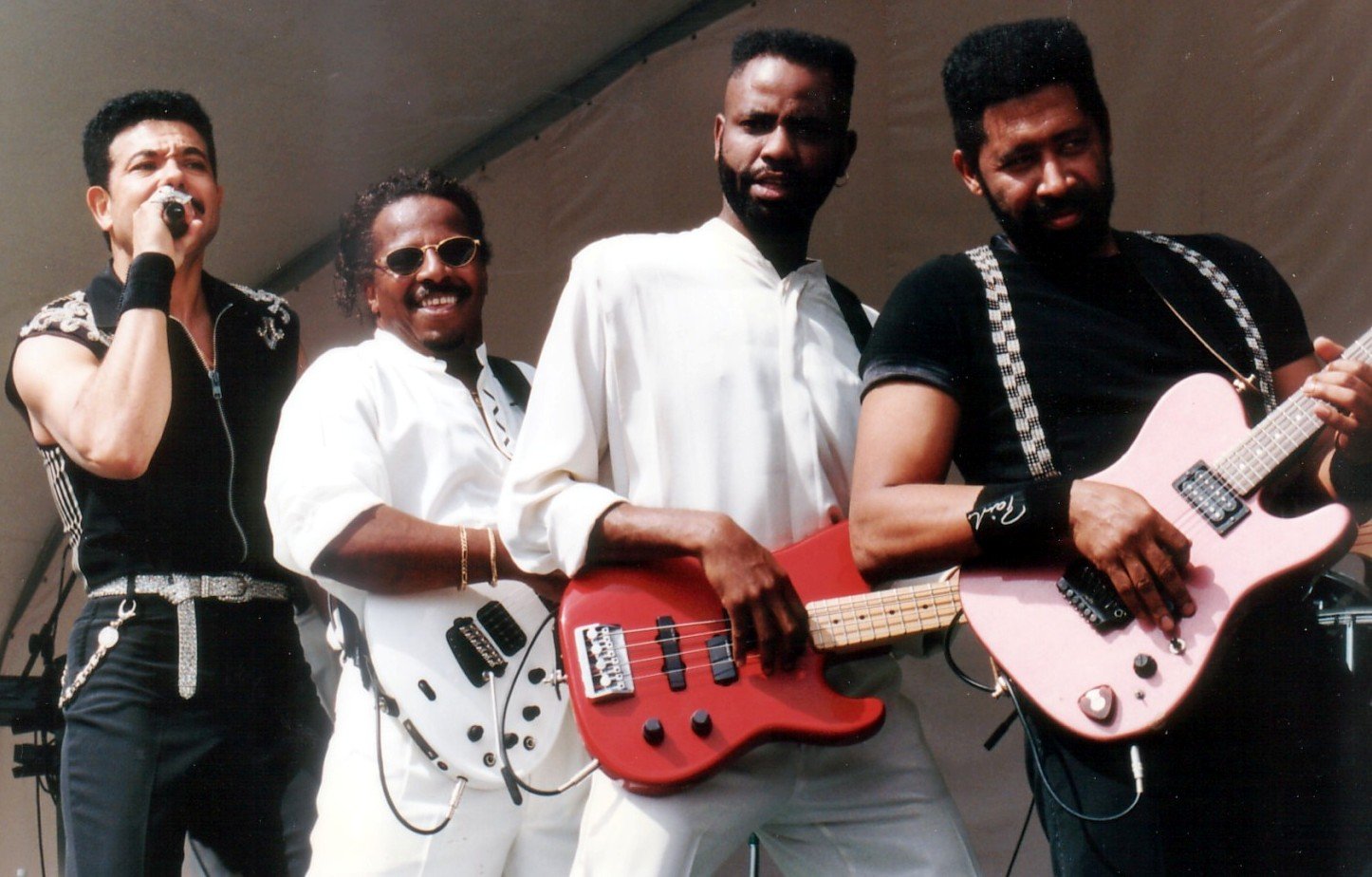
They were the funkiest band to ever wear tuxedos — and the smoothest band to ever play funk. The Commodores could shake a stadium with “Brick House” and melt it with “Three Times a Lady,” sometimes in the same set. But behind the silk and the swagger was one of the great do-it-yourself stories in soul music: six college kids from Alabama who picked their name from a dictionary, talked their way onto a Jackson 5 tour, and built a hit machine so precise that even the band’s drummer ended up singing lead. This is how the Commodores did it — and what it cost them.
A Dictionary, a Blindfold, and Almost “The Commodes”
In 1968, six freshmen at Tuskegee Institute in Alabama were trying to build the hottest band on campus. Lionel Richie, Thomas McClary, and William King played in a jazz-leaning group called the Mystics; Milan Williams, Ronald LaPread, and Walter “Clyde” Orange came from a rival outfit called the Jays. When the two groups merged, they needed a new name — and nobody could agree on one.
So William King did what any sensible college student would do: he flipped open a dictionary and ran his finger down the page. His finger landed on “commodore,” the old naval rank. “We lucked out,” King later laughed, telling the story to People magazine. “We almost became ‘The Commodes.’”
It’s a good thing the finger landed where it did. Imagine slow-dancing at your wedding to “Three Times a Lady” by the Commodes. The name stuck, and so did the lineup — for over a decade, those six young men would not change.
The Jackson 5’s Opening Act
The Commodores’ big break came through hustle, not luck. Their early manager was Benny Ashburn, a liquor marketing man so devoted to the band that he became known as “the seventh Commodore.” Ashburn drove them to gigs, talked them into clubs, and never stopped believing. When the band hauled their van to New York and walked into Small’s Paradise in Harlem asking for a job, the club’s owner took one look at these Alabama college boys and told them to go back to school and come back when they’d learned something.
They didn’t go back. Ashburn had a connection to Suzanne de Passe, a rising executive at Motown who needed an opening act for the Jackson 5’s 1971 tour. The Commodores got the slot — and spent the tour watching the most electrifying young group in America from the side of the stage every night, learning showmanship the hard way. Motown signed them in November 1972. The college boys were officially in the big leagues.
Machine Gun Funk
Here’s what people forget about the Commodores: before the ballads, they were a ferocious funk band. Their 1974 debut album’s title track, “Machine Gun,” was a lean, mean instrumental that became a staple at American sporting events — you’ve heard it in stadiums for fifty years even if you never knew who played it. Early singles like “Slippery When Wet” and “Too Hot ta Trot” were pure dance-floor fire.
The tension between their two identities — the hardest funk band at Motown and Lionel Richie’s smooth ballad machine — would define their entire career. Their producer, James Anthony Carmichael, understood both sides, co-producing every major Commodores album from 1974 to 1981 and helping them thread the needle. But nobody, not even Carmichael, could have predicted how their biggest funk anthem would actually get written.
The Night “Brick House” Almost Didn’t Happen
“She’s a brick house” — one of the most famous opening boasts in funk history — was an accident. In late 1976, the band was recording their fifth album and needed one more song. During a break in the session, bassist Ronald LaPread started messing around with a riff. The groove was so infectious that the rest of the band jumped in and jammed. Carmichael heard it through the studio monitors and told them to keep going. There was just one problem: they had no lyrics.
Trumpet player William King took the tape home to work on it. He fell asleep with it playing. When he woke up, he found a pad of paper and a pencil on his chest, covered in lyrics — in his wife’s handwriting. Shirley Hanna-King, unable to sleep through the endless loop of the tape, had gotten up and written the words just to make it stop. King took the lyrics to the next session and presented them as his own. His bandmate Milan Williams told him they were the best lyrics he’d ever written.
It took years for the band to learn the truth: the words to “Brick House” were written by Shirley. She remains officially uncredited, though the band now acknowledges her part. And in a final twist, when it came time to cut the vocal, the band realized Richie’s silky tenor wasn’t right for the gritty groove. Drummer Walter Orange secretly took an assistant engineer into an adjacent studio, sang the lead himself, and brought the finished vocal back to a stunned band. “Brick House” — sung by the drummer, written in large part by the trumpet player’s wife — went to No. 5 on the pop chart in August 1977 and became immortal.
“Easy Like Sunday Morning”
If “Brick House” was the band’s body, “Easy” was its soul. Released in March 1977, Richie’s gentle ballad — with its now-legendary opening line about Sunday morning — went to No. 1 on the R&B chart and No. 4 on the pop chart, and it announced the Commodores as masters of the slow jam.
Richie has said the song grew out of his Alabama upbringing. In small Southern towns, he explained, Saturday night burned bright and then everything went quiet — and Sunday morning in Tuskegee had a particular stillness that he carried with him into the studio. That stillness became one of the most covered, most slow-danced-to songs of the decade. The funk band from Tuskegee had a second identity now, and it was about to swallow the first one whole.
“Three Times a Lady”: The Waltz Nobody Wanted
The story of “Three Times a Lady” starts at a family anniversary. Richie was inspired by watching his father toast his mother at their wedding anniversary — decades of marriage distilled into a few heartfelt words. He went home and wrote a waltz on the piano, slow and vulnerable and unlike anything on R&B radio.
Here’s the remarkable part: Richie didn’t think the Commodores should record it at all. He was convinced it was a Frank Sinatra song and wanted to pitch it to Ol’ Blue Eyes. Producer James Carmichael disagreed, and the band cut it for their 1978 album “Natural High.” The single, released in June 1978, did what nobody expected: it knocked the Rolling Stones’ “Miss You” off the top of the American chart, spent five weeks at No. 1 in Britain — becoming Motown’s biggest-selling UK record to that date — and turned the Commodores into global superstars. (The album version runs nearly seven minutes; some Motown executive earned his salary by chopping three minutes off for the single.)
The ballads were now the tail wagging the dog. The band that had opened for the Jackson 5 as a funk act was increasingly seen as Richie’s velvet backing group — and Richie knew it.
The Split and the “Nightshift”
The end came in stages. Richie’s 1981 duet with Diana Ross, “Endless Love,” was one of the biggest hits of the decade, and by 1982 he was gone, launching a solo career that would dominate the 1980s. Most bands would have folded. The Commodores refused.
They brought in British singer J.D. Nicholas in 1984, and a year later they released the single that proved they were still alive: “Nightshift.” Written as a tribute to Marvin Gaye and Jackie Wilson — two giants of soul who had both died in 1984 — “Nightshift” was a warm, mournful, utterly gorgeous record. It went to No. 3 on the pop chart, won the Grammy for Best R&B Performance by a Duo or Group, and gave the Commodores their biggest hit of the post-Richie era. It was also their last release for Motown; in 1986 they signed with Polydor and kept going.
Think about that for a moment. The Commodores lost the biggest solo star of the decade and answered with a tribute to two dead legends — and it worked. That’s not luck. That’s craft.
The Scholarship Kid and the Quiet Genius
Before he was a superstar, Lionel Richie was a Tuskegee student on a tennis scholarship, working toward a degree in economics — which he earned in 1974. Music was, by his own admission, partly a social strategy; as he later told Rolling Stone, the reason to start a band was that “the best way to get girls was to play every party on campus.” He played saxophone in the Mystics, sang a little, and wrote songs on the side — never imagining he’d become the defining balladeer of a generation.
It’s worth remembering how unlikely the whole thing was. A tennis-playing economics major from Alabama ends up fronting one of the biggest groups in the world, then walks away at the peak to become even bigger alone.
And then there was the other quiet genius: James Anthony Carmichael. From 1974 to 1981, every major Commodores album carried the same co-production credit: Carmichael and the band. He arranged the horns, shaped the grooves, and — crucially — understood both halves of the group’s split personality. He could make “Brick House” hit like a sledgehammer and “Easy” float like smoke, often on the same record.
Carmichael was the one who talked Richie out of giving “Three Times a Lady” to Frank Sinatra, and the one who heard a hit in a bass player’s warm-up jam. The Commodores wrote the songs and played the notes, but Carmichael built the frame they hung on. When people talk about the “Commodores sound” — that impossible blend of grit and velvet — they’re talking about him, too. The band’s story is full of happy accidents — a dictionary, a sleeping songwriter’s wife, a drummer on lead vocals — but the biggest accident of all might be that Lionel Richie picked up a saxophone instead of a tennis racket for good.
The Commodores never stopped. Original members William King and Walter Orange still lead the group today, touring the world on the strength of a catalog that spans the hardest funk and the softest ballads of two decades. They’ve sold tens of millions of records, been inducted into the Alabama Music Hall of Fame and the Vocal Group Hall of Fame, and launched one of the most successful solo careers in music history.
It all started with a finger on a dictionary page in a Tuskegee dorm room. They almost became the Commodes. Instead, they became immortal — one funk riff, one Sunday morning, one brick house at a time.
Leave a Reply