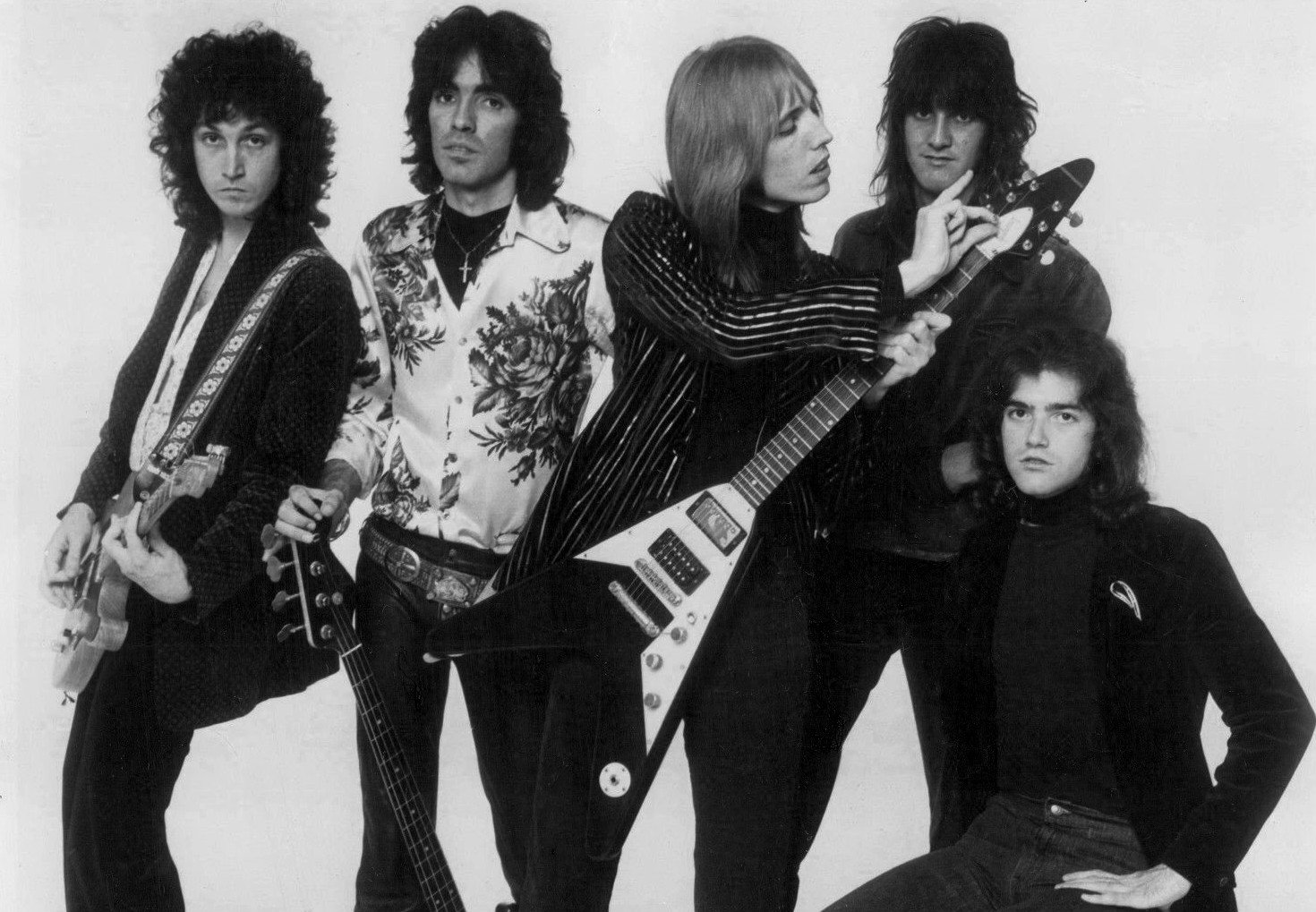
Some bands burn bright and flame out. Tom Petty and the Heartbreakers did something rarer: they stayed true, stayed together, and stayed great for four decades. From a small college town in northern Florida, this band of friends built one of the most beloved catalogs in American rock, and they did it without ever chasing trends. Theirs is a story of jangly guitars, stubborn integrity, and a frontman who treated rock and roll like a sacred trust.
The Day Elvis Changed Everything
Tom Petty was born on October 20, 1950, in Gainesville, Florida, a sleepy town surrounded by pine forests and peanut farms. He was just an ordinary kid until the summer Elvis Presley came to town — or rather, to the neighboring town of Ocala, where Elvis was filming the movie “Follow That Dream.” Petty’s uncle was working on the film set, and young Tom got to visit. He met the King himself, and the experience rewired his brain. He came home, traded his slingshot for a box of Elvis and Little Richard 45s, and never looked back.
By his teens, Petty was playing in local Gainesville bands, even sitting in with a bar band called The Epics when he was technically too young to be inside a bar. He picked up guitar tips from a fellow Gainesville kid named Don Felder, who would later join the Eagles. And then, in 1970, he put together the band that would change his life: Mudcrutch. Alongside guitarist Mike Campbell and keyboardist Benmont Tench, Mudcrutch packed up and drove to Los Angeles in 1974 to chase a record deal. They got one — with Shelter Records, founded by Leon Russell and Denny Cordell — but their one single, “Depot Street,” flopped in 1975, and the band fell apart.
Most stories would end there. Petty’s was just getting started.
Five Friends and a New Name
In 1975, Petty heard a demo tape that Campbell and Tench had been working on with bassist Ron Blair and drummer Stan Lynch. The music clicked. The five of them started playing together, and because Petty was still under contract to Shelter, the group simply assumed his deal. In 1976, Tom Petty and the Heartbreakers were born, releasing their self-titled debut album that same year.
Here’s the funny thing: America ignored it. But England didn’t. When the band toured Britain opening for Nils Lofgren, something about their lean, jangling sound — part Byrds, part Stones, with a punk-ish snap that fit right in with the new wave moment — caught fire. The album cracked the U.K. Top 30, and they headlined their own tours over there. Prompted by that British buzz, Shelter re-released “Breakdown” in America, and it climbed to #40 on the Billboard Hot 100 in early 1978. “American Girl,” though it never charted as a single, became a rock radio staple — you’d later hear it in movies like “FM,” “Fast Times at Ridgemont High,” and “The Silence of the Lambs.”
Their second album, “You’re Gonna Get It!” (1978), reached #23 and earned the band’s first gold record. The table was set. Nobody was ready for what came next.
“Damn the Torpedoes” and the Bankruptcy That Set Them Free
Before the band could record its third album, the music business nearly swallowed them whole. Shelter Records’ distribution changed hands, and the band’s contract landed with MCA Records in a way Petty believed was unfair. His response was pure Petty: he declared bankruptcy in 1979 to block the transfer of his contract. It was a staggering gamble — a rock star going broke on purpose to win his freedom — and it worked. The dispute settled, and the band landed on MCA’s Backstreet label with far better terms.
The album that came out of that fight, “Damn the Torpedoes” (1979), was the breakthrough. Produced by Jimmy Iovine, it was sleek, urgent, and packed with hits: “Don’t Do Me Like That” (the band’s first Top 10 single, peaking at #10), “Refugee” (#15), and “Here Comes My Girl.” The album spent seven weeks at #2 on the Billboard 200 — kept from the top spot only by Pink Floyd’s “The Wall” — and eventually sold more than two million copies. Petty had turned a legal war into a masterpiece. It was the first of many times he would fight the industry and win.
The Man Who Fought for the Fans
Petty kept fighting. When the band prepared “Hard Promises” (1981), MCA floated the idea of a $9.98 list price — a dollar more than the standard at the time. Petty publicly refused, threatening to name the album “Eight Ninety-Eight” in protest. The label backed down, and the album arrived at the normal price. It peaked at #5, powered by “The Waiting” (#19).
The hits kept coming through the 1980s: “You Got Lucky” and “Change of Heart” from “Long After Dark” (1982), and the gloriously weird “Don’t Come Around Here No More” from “Southern Accents” (1985), a psychedelic swirl that became one of the most memorable videos of the MTV era. But behind the scenes, the lineup shifted. Bassist Ron Blair left in 1982 and was replaced by Howie Epstein. Drummer Stan Lynch would depart in 1994, eventually replaced by Steve Ferrone. Through it all, Petty, Campbell, and Tench remained the unshakable core.
Few people outside the business realize just how much Petty’s bandmates contributed to other artists’ classics. Mike Campbell co-wrote “Refugee,” “You Got Lucky,” and “Here Comes My Girl” with Petty — and he also co-wrote Don Henley’s smash “The Boys of Summer” and “The Heart of the Matter.” Benmont Tench became one of rock’s most in-demand session keyboardists, recording with everyone from U2 and Aretha Franklin to the Rolling Stones. These were not hired hands; they were world-class musicians who happened to be best friends.
Wilburys, Stevie, and “Free Fallin’”
In 1988, Petty joined the most unlikely supergroup in rock history: the Traveling Wilburys, alongside Bob Dylan, George Harrison, Roy Orbison, and Jeff Lynne. The collaboration loosened him up, and his first proper solo album, “Full Moon Fever” (1989), became his biggest seller — home to “Free Fallin’,” “I Won’t Back Down,” and “Runnin’ Down a Dream.” (The Heartbreakers played all over it, of course; “solo” was always a loose term with Petty.)
He also had a famous musical friendship with Stevie Nicks, duetting with her on “Stop Draggin’ My Heart Around” for her debut solo album “Bella Donna” in 1981. And in 1993, the band’s “Greatest Hits” collection introduced “Mary Jane’s Last Dance,” which became one of their signature songs — proof that Petty could still write a stone-cold classic nearly twenty years in.
Four Decades, One Final Bow
The band was inducted into the Rock and Roll Hall of Fame in 2002, but they never became a nostalgia act. Albums like “Wildflowers” (1994) and “Echo” (1999) showed an artist still growing, and in 2014, “Hypnotic Eye” gave the Heartbreakers their first-ever #1 album on the Billboard 200 — thirty-eight years after their debut. They even played the Super Bowl XLII halftime show in 2008.
In 2017, the band celebrated its 40th anniversary with a triumphant tour, closing with three nights at the Hollywood Bowl. The final show was September 25. One week later, on October 2, 2017, Tom Petty died at age 66 from an accidental overdose of prescribed medications. The news landed like a punch to the gut for millions of fans.
What remains is the music — more than 80 million records sold worldwide, three Grammy Awards, and a catalog that sounds like America itself: defiant, tender, and free. Tom Petty once sang about not backing down, and he never did. Not to record labels, not to trends, not to anyone. The Heartbreakers were his band, his brothers, and his legacy. And every time “American Girl” crackles out of a car radio on a summer night, he’s still here.
Leave a Reply