
A crisis in the American countryside
In the early 1980s, American family farmers were in crisis. Farm prices had fallen, debts had risen, interest rates were high, and thousands of families who had farmed the same land for generations were losing their farms to foreclosure. The crisis was not only economic; it was cultural. The family farm was, and remains, a powerful symbol in American life, representing independence, hard work, and a connection to the land, and its decline felt, to many people, like the loss of something essential. Yet for much of the country, the crisis was invisible, reported in agricultural journals and local newspapers but rarely on national television. Willie Nelson, Neil Young and John Mellencamp decided to change that, and the way they did it changed benefit concerts in America.
Nelson was, by 1985, already a country-music legend, known for his braids, his battered guitar Trigger, and his outlaw image. He was also a man who had grown up in Texas, who understood farm life, and who had a long history of supporting causes he believed in. The idea for Farm Aid is usually traced to Live Aid, the huge famine-relief concerts held in July 1985, and to a remark by Bob Dylan during his Live Aid performance suggesting that some of the money raised should go to American farmers. Dylan’s remark has been reported in different forms, and it was, by most accounts, a passing comment rather than a plan. But Nelson heard it, or heard about it, and took it seriously. Within weeks, he, Young and Mellencamp were organising a concert of their own, specifically for American family farmers.
One day in Champaign, Illinois
The first Farm Aid concert took place on 22 September 1985 at Memorial Stadium in Champaign, Illinois, on the campus of the University of Illinois. It was a marathon: a full day of music, running for many hours, with a line-up that crossed genres and generations. Willie Nelson, Neil Young and John Mellencamp headlined, but they were joined by a remarkable range of performers, including Johnny Cash, Waylon Jennings, Bob Dylan, B.B. King, Billy Joel, Tom Petty, Merle Haggard, Emmylou Harris, Joni Mitchell, John Denver, Loretta Lynn, George Jones and many others. The breadth of the line-up was itself a statement. Farm Aid was not a country-music event only; it was an American music event, bringing together rock, country, blues, folk and pop artists who shared a belief that family farmers deserved support.
The concert was organised quickly, and its logistics were, by the organisers’ own later accounts, chaotic in places. Artists donated their performances, and the money raised went to farm organisations and to a new foundation. The exact amount raised on the day has been reported in different figures, and this article does not rely on a single total, because the more important fact is what happened next. Farm Aid did not end after one day. Unlike many benefit concerts, which are one-off events, Farm Aid became an annual concert and an ongoing organisation, holding a festival almost every year since 1985 and raising money, in total, in the tens of millions of dollars for family-farm programmes. That longevity is Farm Aid’s real achievement, and it is why the 1985 concert is remembered not just as a show, but as the start of a movement.
Willie Nelson at the centre
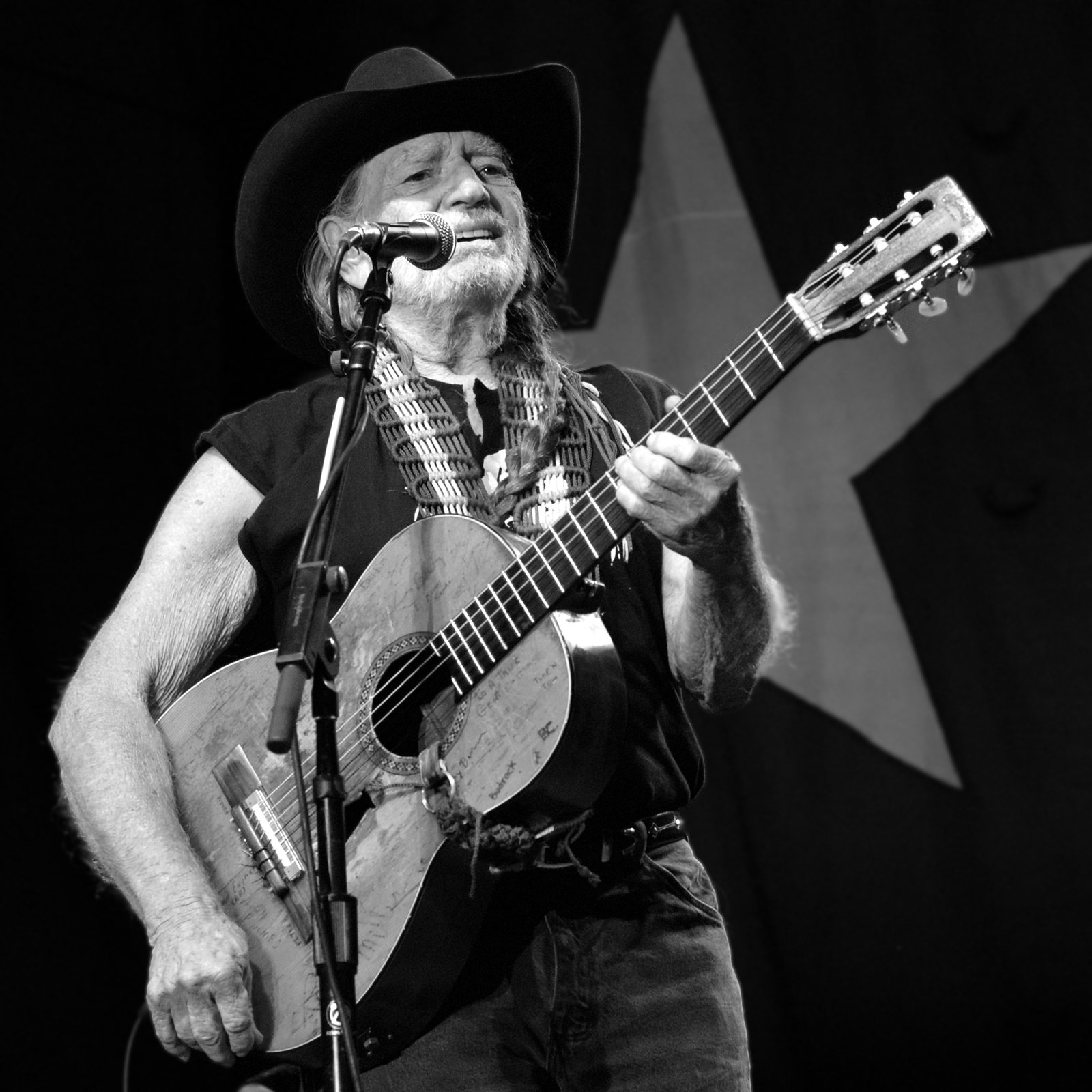
Nelson has been at the centre of Farm Aid from the beginning, and his role has been more than ceremonial. He has performed at almost every Farm Aid, he has spoken for the organisation, and he has used his fame to keep family-farm issues in the public eye when they might otherwise have faded. His own music made him a natural figurehead. Songs like “On the Road Again”, which he performed at the first Farm Aid, are about travelling, working, and keeping going, and they resonated with an audience of farmers and farm supporters who were themselves trying to keep going. Nelson’s image, the outlaw who had fought his own battles with the music industry and with the tax authorities, also resonated. He was not a distant celebrity lending his name to a cause; he was a man who had lived through hard times and who understood what it meant to fight to keep what you had built.
Young and Mellencamp have been equally important, and Farm Aid’s board has grown over the years to include other artists, but Nelson’s name remains most closely associated with the event. That is partly because he co-founded it, and partly because his annual presence has given Farm Aid continuity. Fans who attend Farm Aid expect to see Nelson, and his closing sets have become a ritual. He often performs with family members, and the atmosphere is less like a conventional rock festival and more like a gathering, with food, farm exhibits, and a sense of community that reflects the organisation’s mission. Farm Aid is, in that sense, a concert that tries to practise what it preaches: it celebrates family farms not only by raising money for them, but by creating a space where farmers, musicians and eaters can meet.
What Farm Aid actually does
It is easy, with benefit concerts, to focus only on the music and to forget the work that follows. Farm Aid’s work, as described by the organisation itself, has several strands. It provides grants to farm organisations, it runs a hotline and resources for farmers in crisis, it advocates for policies that support family farms rather than industrial agriculture, and it promotes food from family farms through its HOMEGROWN programme and through the food served at its festivals. The organisation’s stated mission is to build a vibrant, family-farm-centred system of agriculture in America, and its concerts are a means to that end, not an end in themselves. That distinction matters, because it explains why Farm Aid has lasted. A concert can raise awareness for a day; an organisation can change policy, support farmers, and build networks over decades.
The impact of Farm Aid is difficult to measure in a single number, and this article does not pretend otherwise. Farm policy is shaped by many forces, and family farms still face enormous pressures from consolidation, climate change, and market volatility. What Farm Aid has clearly done is to keep the issue visible, to give farm organisations a platform and funding they would not otherwise have had, and to create a cultural space where the family farm is valued. It has also influenced other benefit concerts. The idea that musicians can organise around a specific, ongoing cause, rather than a single emergency, owes something to Farm Aid’s example, and later artist-led foundations have followed a similar model.
The music and the meaning
The music of Farm Aid is also part of its meaning. The first concert’s line-up, and the line-ups that have followed, have deliberately mixed genres, generations, and regions. A Farm Aid stage can feature a country legend, a rock star, a folk singer, and a young Americana artist in a single afternoon, and that mixture reflects the organisation’s belief that the family farm is not a regional or genre-specific issue. It is an American issue, and it deserves an American musical response. The performances themselves are often stripped down, with artists playing acoustic sets or collaborating in ways they would not at their own concerts, and that informality is part of the event’s charm. Farm Aid feels less like a corporate festival and more like a family gathering, albeit one with tens of thousands of people.
Willie Nelson’s own performances at Farm Aid have become legendary in their own right. He typically closes the show, often late at night, with a set that mixes his hits, gospel songs, and collaborations with whoever is still on stage. The atmosphere, by many accounts, is joyful rather than sombre, even though the cause is serious. That joy is deliberate. Farm Aid is not a funeral for the family farm; it is a celebration of it, and a statement that it is worth fighting for. Nelson, with his red bandanna, his guitar, and his unhurried singing, embodies that spirit. He does not preach, and he does not lecture. He plays, he sings, and he lets the music make the case.
Why Farm Aid endures
Farm Aid endures because it is rooted in something real. Willie Nelson, Neil Young and John Mellencamp did not invent the family-farm crisis, and they did not solve it with a single concert. What they did was to give it a stage, a name, and a yearly reminder that it had not gone away. In a culture where news cycles move quickly and causes come and go, that persistence is rare and valuable. Farm Aid’s fortieth anniversary, marked in 2025, was a reminder of just how long the organisation has lasted, and of how many artists, farmers, and fans have been part of it. It is now the longest-running benefit concert series in America, and that record is itself a kind of achievement.
If you watch footage from the first Farm Aid today, you will see a stadium full of people, a stage full of stars, and a man in a bandanna singing about being on the road again. It is easy to see it as nostalgia, but it is better understood as a beginning. The road Nelson was singing about was not only a musician’s road; it was the road that family farmers were travelling, trying to hold on to their land and their livelihoods. Farm Aid gave that road a soundtrack, and it has kept playing it ever since. That is why, forty years on, the concert still matters, and why Willie Nelson’s decision to organise it remains one of the most consequential acts of his long career, not just as a musician, but as a citizen.
The concerts that followed
The first Farm Aid was followed by a second concert in 1986, and then by concerts in most years since, in cities across America, from Indianapolis to Chicago to Kansas City to New York. Each concert has its own line-up and its own character, but the format has remained recognisably the same: a full day of music, a mixture of genres and generations, food from family farms, and information about farm issues. Artists who have performed at Farm Aid over the years include, alongside the founders, performers as varied as Dave Matthews, who joined the board in the early 2000s, John Mellencamp’s fellow rockers, country stars of successive generations, and folk and Americana artists. The breadth of those line-ups is itself an argument: the family farm is not the concern of one genre, one region, or one generation, and Farm Aid’s stage reflects that.
Some Farm Aid moments have become famous in their own right. The 1985 concert’s sheer scale, with its marathon running order and its cross-genre bill, set a template that other benefit concerts have followed. Later concerts have featured collaborations that would not happen elsewhere: country legends sharing a stage with rock stars, young Americana singers opening for the founders, and closing sets in which Nelson, Young, Mellencamp and Matthews perform together. Those collaborations are not staged for television; they are the product of a community that has grown up around the event, with artists returning year after year because they believe in the cause and because they enjoy the gathering. For many performers, Farm Aid is now a fixture in their calendar, and for many fans, it is a pilgrimage, a chance to see great musicians in a setting that feels purposeful as well as entertaining.
The organisation’s work between concerts is less visible but equally important. Farm Aid’s hotline, which farmers in crisis can call for advice and referrals, has helped thousands of families navigate debt, foreclosure, and disaster. Its grants support organisations that work directly with farmers, from legal aid to cooperative development to training for new farmers. Its advocacy in Washington has pushed for farm policies that favour family-scale agriculture over consolidation, and its HOMEGROWN programme has promoted the idea that eaters, as well as farmers, have a role to play in building a better food system. That work does not make headlines in the way a concert does, but it is the reason Farm Aid has lasted when other benefit concerts have faded. A concert can raise money; only an organisation can spend it wisely, year after year, and Farm Aid has tried to do both.
Image credit: Wheat field near Ketsch, Germany, by AnRo0002, released under CC0 1.0 Universal Public Domain Dedication, via Wikimedia Commons (thematic image only, not a photograph of Farm Aid)
Sources / further reading
- Farm Aid official history and mission
- Contemporary reporting on the first Farm Aid concert, September 1985
- Willie Nelson, Neil Young and John Mellencamp interviews on Farm Aid’s founding
- Histories of the American family-farm crisis in the 1980s
Leave a Reply