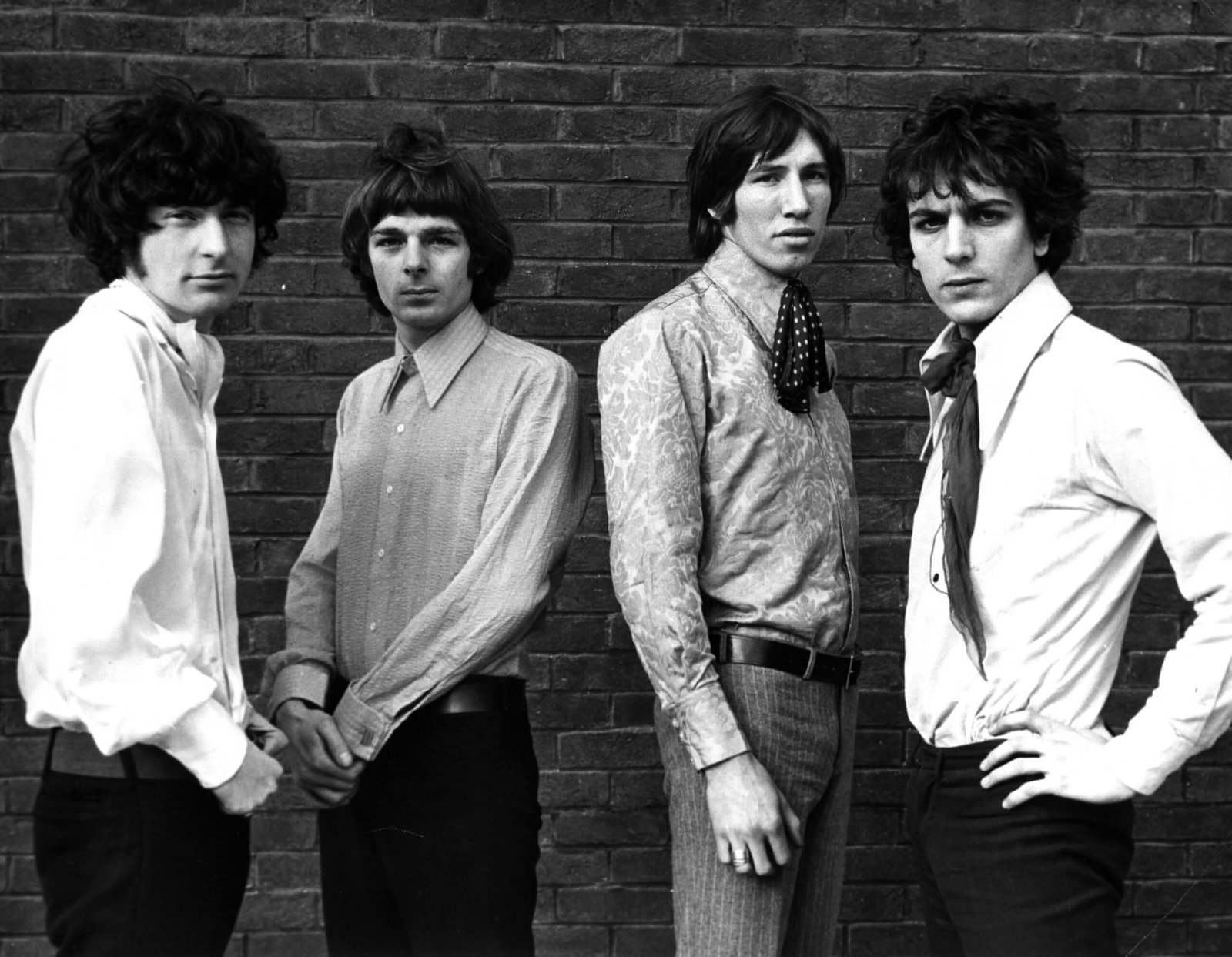
Most bands announce themselves with a love song or a statement of intent. Pink Floyd announced themselves with a miniature character study about a man who stole women’s underwear from washing lines in Cambridge. “Arnold Layne,” released on 10 March 1967, was the group’s first single, and remains one of the most improbable debuts in British pop: two minutes and fifty-seven seconds of cheerful, chiming psychedelia devoted to a petty thief with, as Syd Barrett’s lyric puts it, “a strange hobby.” It reached No. 20 in Britain, was banned by a pirate radio station that considered it too strange for its listeners, and never appeared on a studio album at all. Yet without it there is no record deal, no debut album, and arguably no Pink Floyd as the world came to know them.
A Thief on the Washing Lines of Cambridge
Barrett, Pink Floyd’s founder, guitarist and first songwriter, did not invent Arnold Layne from nothing. According to Roger Waters, the character was based on a real person who preyed on the washing lines of the Cambridge streets where both musicians grew up. “Both my mother and Syd’s mother had students as lodgers because there was a girls’ college up the road,” Waters recalled, “so there were constantly great lines of bras and knickers on our washing lines and ‘Arnold’ or whoever he was, had bits off our washing lines.” The lodgers hung their laundry in the back gardens, and items kept vanishing. The thief was never caught, and his real name, if the band ever knew it, was not Arnold Layne.
Barrett supplied the name himself because, as he told Melody Maker in 1967, he thought it “was a nice name and fitted well into the music I had already composed.” He also admitted borrowing from Waters: “I pinched the line about ‘moonshine washing line’ from Rog, our bass guitarist, because he has an enormous washing line in the back garden of his house. Then I thought, ‘Arnold must have a hobby,’ and it went on from there.” The lyric that resulted is a small masterpiece of English understatement. Arnold collects clothes by moonlight, admires himself in a tall mirror, and is finally caught — “a nasty sort of person,” the song concludes. Barrett sings it all with a straight face and obvious affection, and that tension between the sordid little story and the bright, skipping music is the record’s whole charm. He also treated his subject without mockery. Asked about the cross-dressing theme, he answered simply: “Arnold Layne just happens to dig dressing up in women’s clothing. A lot of people do, so let’s face up to reality.” In 1967, that was a remarkably matter-of-fact thing for a twenty-one-year-old pop singer to say.

Three Minutes at Sound Techniques
By the winter of 1966–67, Pink Floyd were stars of London’s psychedelic underground, famous at the UFO Club for long, improvised performances and a liquid light show. “Arnold Layne” in concert could run for ten or fifteen minutes, producer Joe Boyd later recalled. A single, however, demanded three minutes, and the band knew the song was their best candidate. As Nick Mason put it, “We knew we wanted to be rock’n’roll stars and we wanted to make singles, so it seemed the most suitable song to condense into 3 minutes without losing too much.”
In January 1967 the band went to Sound Techniques, a small studio in a converted dairy in Old Church Street, Chelsea, with Boyd producing and John Wood engineering. There they recorded “Arnold Layne” alongside early versions of “Matilda Mother,” “Chapter 24” and “Interstellar Overdrive,” plus the intended B-side, then called “Let’s Roll Another One.” The recording was not simple. Boyd remembered tricky editing: the middle section carrying Richard Wright’s swirling Farfisa organ solo was recorded separately as an edit piece and spliced into the master. The backing track was built across multiple takes on four-track tape, then bounced down so Barrett’s vocal could be overdubbed, with take seven becoming the master. Both sides were mixed in mono, and neither has ever received a true stereo mix, though the four-track tapes survive in EMI’s archive.
The two finished tracks were, in effect, an audition: the Sound Techniques recordings proved these underground improvisers could also make a pop record.
EMI Signs — and Boyd Steps Aside
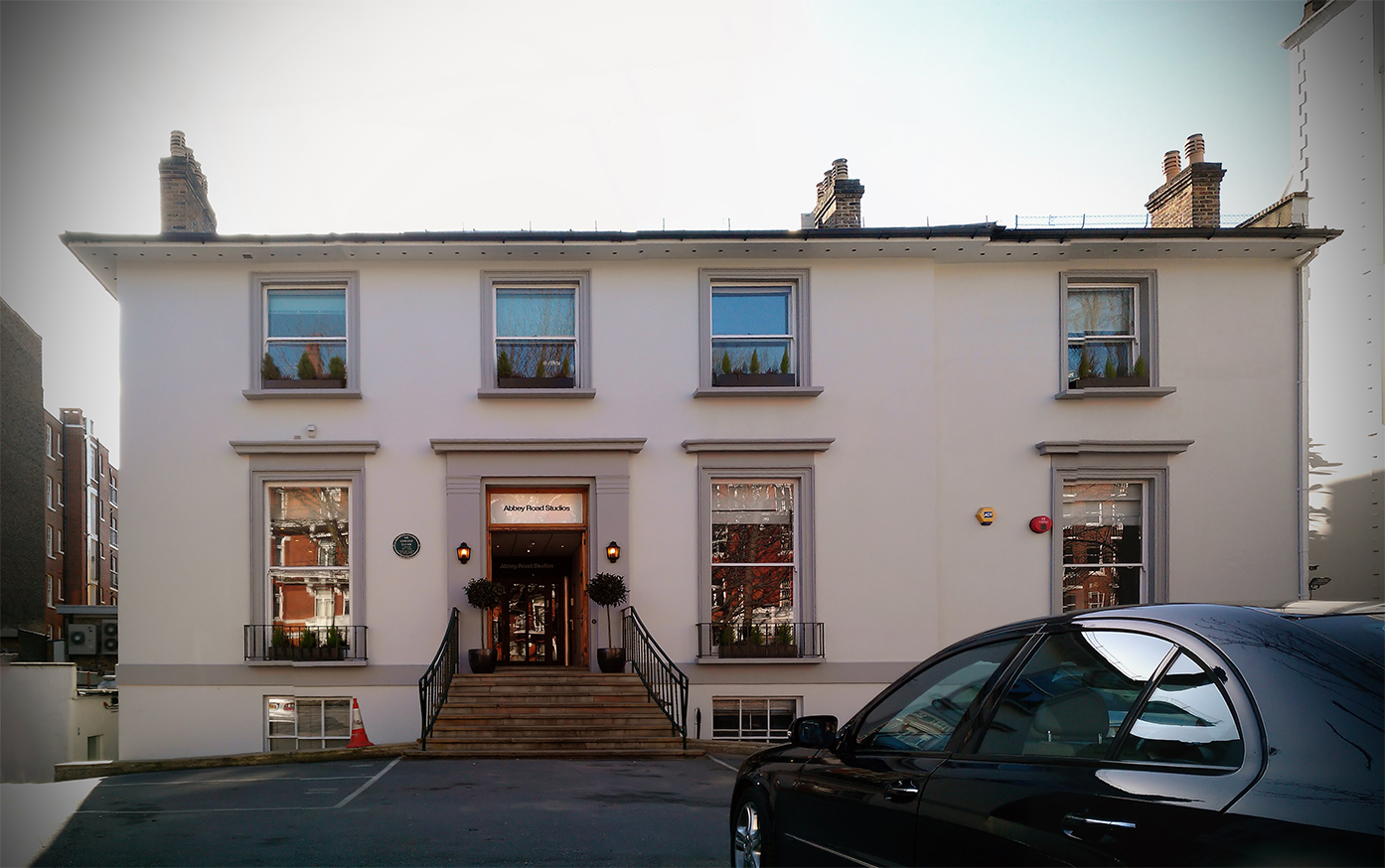
EMI won the contest. The band signed in late February 1967, with an advance widely reported at £5,000 — a striking sum for an unproven act — and the single was scheduled on EMI’s Columbia label. But the deal came with a condition. EMI’s policy was to use its own staff producers, so Boyd was sidelined. In his place came Norman Smith, a senior EMI engineer who had worked on the Beatles’ recordings up to Rubber Soul. Smith would produce the band’s debut album, The Piper at the Gates of Dawn, at EMI Studios on Abbey Road.
Before the single appeared, the band attempted to re-record “Arnold Layne” under the new regime. The experiment failed to improve on Boyd’s original: the released single is the Sound Techniques recording, airy and unhurried, with Barrett’s vocal floating over Wright’s organ. It was Boyd’s last production for Pink Floyd — made not in the famous rooms at Abbey Road, but in a former Chelsea dairy.
The B-side needed work of a different kind. “Let’s Roll Another One” was a drug reference no 1967 record company would release, so the song was rewritten and retitled “Candy and a Currant Bun,” a change Waters is generally credited with steering.
Banned, Charting, and Briefly American
“Arnold Layne” was released in the UK on 10 March 1967, credited to “The Pink Floyd” — the definite article the band would soon drop. The band’s management, Blackhill Enterprises, spent a couple of hundred pounds, by manager Andrew King’s own account, trying to help buy the record into the charts. Help or not, the single climbed to No. 20 on the UK singles chart — a genuine hit for a song about a Cambridge underwear thief.
Not everyone was charmed. The pirate station Radio London decided the song’s transvestism theme placed it too far outside “normal” society for its audience and banned it from airplay altogether. The ban cost the record momentum and, with it, a planned television moment: a black-and-white promotional film shot in late February 1967 at East Wittering in West Sussex — directed by Derek Nice, costing around £2,000, and showing the band dressing up and carrying a mannequin around a beach — was meant for the BBC’s Top of the Pops on 3 April, but the screening was cancelled as the single slipped down the chart. A second film, shot on 29 April near St Michael’s Church in Highgate, survives as the only known footage of Barrett lip-synching to the song.
America, meanwhile, barely noticed. The single was issued in the United States on Tower Records, Capitol’s subsidiary, as Tower 333 on 24 April 1967, but made no impression on the American charts. In the spring of 1967 Pink Floyd were still just an English curiosity with one English hit.
A Song That Would Not Stay a Single
Because “Arnold Layne” was a standalone single, it was left off The Piper at the Gates of Dawn when that album appeared in August 1967, following British practice of keeping singles and albums separate. For years the only way to own it on an LP was the budget compilation Relics, released on 14 May 1971, which opened with “Arnold Layne” and gave the Barrett-era singles a permanent album home. It later opened the 1983 American compilation Works, and returned in 2016 in the Early Years box set, complete with a replica of the original seven-inch single.
Its most touching chapter came four decades on. During his On an Island tour, David Gilmour unexpectedly added “Arnold Layne” to his set on 17 April 2006 in Oakland, with Richard Wright singing lead. At the Royal Albert Hall the following month, David Bowie — himself a Barrett devotee from the very beginning — guested on vocals. Two live versions were released as a single on 26 December 2006, and the song climbed to No. 19 in Britain, one place higher than the original had managed in 1967; both performances appear on Gilmour’s live film Remember That Night (2007). Then, on 10 May 2007, Gilmour, Wright and Nick Mason performed it together at the Barbican in London for The Madcap’s Last Laugh, the Syd Barrett tribute concert organised by Joe Boyd — the producer who had started it all, bringing the song home eleven months after Barrett’s death.
Few debut singles carry so much history in under three minutes: a real thief, a borrowed washing line, a converted dairy, a record deal and a ban. “Arnold Layne” is where Pink Floyd began — strange, funny and quietly defiant, with its hobby still intact.
Leave a Reply