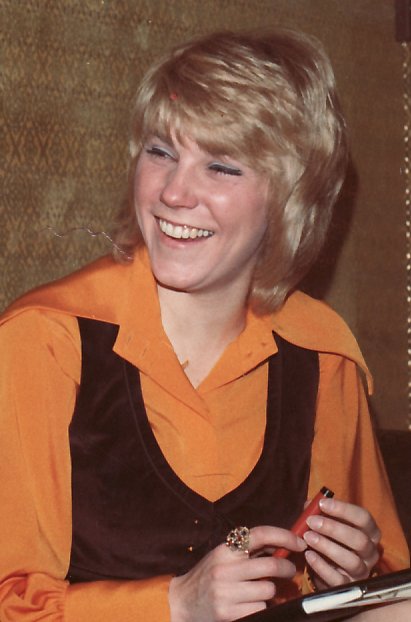
For four decades, Anne Murray was the calmest superstar in popular music. No scandals, no reinventions, no meltdowns — just a clear voice, a steady career, and a life lived almost entirely out of the spotlight’s glare. But behind the serene image was a woman who made complicated, courageous choices: a love affair with her married boss that she hid for seven years, a marriage she balanced against the guilt of an absent mother, a daughter’s battle with an eating disorder she fought in public, and a quiet retirement spent giving back to the small Canadian towns that made her.
This is the Anne Murray the gold records don’t show — the wife, the mother, the neighbor, the homebody who conquered the world and then, characteristically, came home.
The Seven Years Nobody Saw
Long before she was Canada’s first lady of song, Anne Murray fell in love with the one man she shouldn’t have. In 1968, back on “Singalong Jubilee” after her year teaching gym class, she began an affair with Bill Langstroth — the show’s co-host and producer, the man who had called her back for that second audition. He was nearly fifteen years older than her. He was her boss. And he was married, with two small children.
Murray has written about those years with unusual honesty. She fell fast and could not stop, and for seven years the relationship stayed hidden from public view — a complicated, sometimes painful secret carried by a young woman whose public image was all Maritime wholesomeness. It was not a neat romance. It was the kind of love that asks everything and promises nothing.
They finally married on June 20, 1975 — Murray’s thirtieth birthday. Langstroth gave up his own strong career in Canadian television to support hers, becoming the kind of partner touring performers usually leave behind: the one who holds the household together while the star is gone. He managed her business affairs, raised their children through her long absences, and stayed, year after year, in the background of a fame that was technically his wife’s but practically the family’s.
The marriage lasted nearly twenty-three years. When it ended in 1998, there was no public war, no tell-all — just two people who had grown apart and said so. They remained friends. Langstroth got sober through Alcoholics Anonymous and stayed sober for the rest of his life; he later married a third wife, Frances, whom he met at a watercolour class in Maine. In 2011, he was inducted into the Canadian Country Music Hall of Fame under his own name — a late recognition that he was more than a famous spouse. When he died in a Moncton hospital on May 8, 2013, at eighty-one, the woman he had divorced fifteen years earlier was still his friend. Anne Murray had the grace to say so publicly, and the dignity to mean it.
William and Dawn
Their son William was born in 1976; their daughter Dawn arrived in 1979. For a few years after her marriage, Murray essentially stepped back from the music world to focus on her family — a remarkable decision at the height of her powers, and one she has never seemed to regret. But the road always called her back, and with it came the particular ache she described in her 2009 memoir “All of Me”: the terrible guilt and loneliness of being away from two young children while strangers’ applause filled the rooms she sang in.
Dawn Langstroth inherited the family gift. She became a singer-songwriter and painter in her own right, and in 1999 she recorded the duet “Let There Be Love” with her mother for Murray’s “What a Wonderful World” album — a moment of harmony, literally and otherwise, between two generations.
But the Langstroth women shared something harder, too. Dawn suffered from anorexia for several years before seeking treatment, and mother and daughter chose to fight it in the open. In January 1998, they performed together at a benefit concert for Sheena’s Place, an eating-disorder treatment centre, and appeared on television talk shows to warn other young women away from the disease. It was classic Anne Murray: no drama, no euphemism, just a mother standing next to her daughter saying, this happened to us, don’t let it happen to you.
The Doctor and the Nurse
To understand Anne Murray’s compass, you have to meet her parents. Her father, Dr. James Carson Murray, was the town doctor of Springhill — the man who treated miners and their families in a town built on coal and scarred by disaster. Springhill suffered two of the worst mining catastrophes in Canadian history in the 1950s, and the Murrays lived at the center of the town’s grief and resilience. Her mother, Marion, was a registered nurse and homemaker who raised six children — Anne the only girl among five brothers — with the brisk competence of a woman used to being needed.
It was, by every account, a happy, noisy, loving household, and it gave Murray two things that never left her: a work ethic forged in a community where people earned everything, and a complete immunity to pretension. When interviewers asked how she stayed grounded through forty years of fame, she always pointed home — to a father who sang while he shaved, a mother who sang around the house, and parents who treated everyone in Springhill the same whether they were in the pit or the pulpit. The town loved them back: Springhill’s community centre is named for Dr. Carson and Marion Murray, a permanent reminder that the most famous daughter in Nova Scotia came from people who spent their lives taking care of their neighbors.
The Girl Who Never Left
For all her American triumphs — four Grammys, three American Music Awards, three CMA Awards, more Junos than anyone in history — Anne Murray never became an American star. She stayed Canadian in the most literal ways: she lived in Canada, raised her family in Toronto, paid Canadian taxes, and flew home to Nova Scotia every summer as reliably as the seasons. While other Canadian artists relocated to Los Angeles or Nashville and assimilated, Murray commuted to fame and came home for dinner.
It was a deliberate philosophy, not an accident. She ran her own company, Balmur Ltd., out of Canada. She recorded where she wanted. And she kept her private life so private that generations of fans know her voice better than her face — which is exactly how she liked it. The gym teacher from Springhill never developed a taste for celebrity’s machinery. She sang, she went home, she played golf.
That steadiness was recognized at the highest levels. She was appointed an Officer of the Order of Canada and later elevated to Companion, the country’s highest civilian honor. Canada Post put her on a postage stamp in 2007, alongside Paul Anka, Gordon Lightfoot, and Joni Mitchell — the Mount Rushmore of Canadian song, lick-and-stick edition.
Giving It Back
If Murray’s fame stayed Canadian, so did her generosity. In 1989, her hometown of Springhill opened the Anne Murray Centre, a museum devoted to her life and career, on Main Street — and she has shown up for it year after year, greeting fans in the town where she once rode the bus to voice lessons. It’s one thing to lend your name to a museum. It’s another to keep coming back for nearly four decades.
Her charitable instincts ran wide. A fiercely competitive golfer — Golf For Women magazine once named her the world’s best female celebrity golfer — she lent her name and her swing to countless charity tournaments. She performed at benefits, supported community causes across the Maritimes, and used her platform for the unglamorous work of showing up. There was nothing strategic about it. Small-town people take care of their own, and Anne Murray never stopped being a small-town person.
The Anne Murray Centre itself was an act of civic love, not vanity. When Springhill’s coal mines shut down for good in 1958 after the disasters, the town lost its economic heart. Murray opened the Centre in 1989 partly to give her struggling hometown a new industry — tourism — and a new story to tell about itself. Before her, Springhill was the town Canada knew for tragedy. After her, it was also the town that raised Anne Murray. She understood that a museum could be a kind of rescue, and she has treated it like one ever since.
The Quiet Goodbye
Around 2008, after more than thirty studio albums and seventy-six singles, Anne Murray simply stopped. No farewell tour, no tearful press conference, no “final” album marketed as an event — just a quiet exit, entirely in character. She published “All of Me” in 2009, a memoir remarkable for its candor about the costs of her career: the battles with record companies, the band members lost to drugs and alcohol, the guilt of the road, the divorce, the deaths of close friends — the unvarnished truth from a woman who had never traded in varnish. Then she settled in Halifax and got on with the rest of her life.
The honors kept finding her anyway. In 2010, she was one of eight Canadians chosen to carry the Olympic flag at the opening ceremony of the Vancouver Winter Games — a nice symmetry, the girl from a coal town carrying the flag for the whole country. The tributes, the hall of fame inductions, the documentaries — including the CBC’s “Anne Murray: Full Circle” in 2021 — have continued, each one a reminder of how much she meant and how little she ever asked for in return.
Still Nova Scotia
There is a particular kind of courage in Anne Murray’s story, and it has nothing to do with hitting high notes. It took courage to love a married man and wait seven years. It took courage to step away from a white-hot career to raise children, and courage to admit in print how much the road cost her family. It took courage to talk about her daughter’s eating disorder on television, and grace to stay friends with the husband she divorced.
The music business rewards hunger — the desperate, devouring kind. Anne Murray succeeded on the opposite fuel: steadiness, decency, home. She was the only girl among five brothers, the doctor’s daughter from a mining town, the gym teacher who could sing, and she never pretended to be anything else. The voice was the gift. The character was the choice. And somewhere in Springhill, in a museum on Main Street, they are both on display — right where they belong, in the town she never really left, among the people she never stopped loving.
Leave a Reply