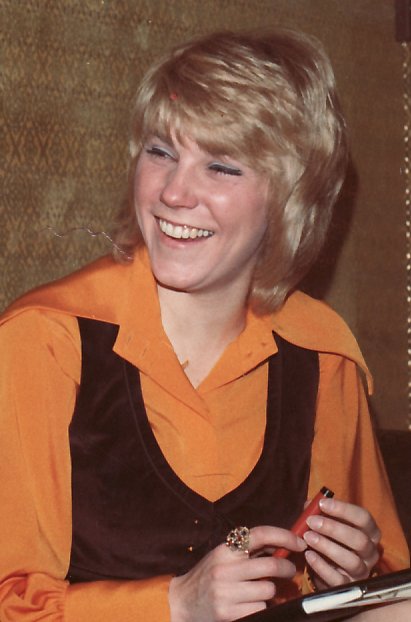
Some songs are built. “Snowbird” was barely even written — it fell out of the sky. In the winter of 1969, a soft-spoken Maritime songwriter named Gene MacLellan watched a flock of snow buntings scatter across a beach on Prince Edward Island, went home, and scribbled out a melody in about twenty minutes. It was only the second song he had ever written. He could not have known that the gentle tune about a bird too fragile to fly south would carry a twenty-four-year-old gym teacher from Springhill, Nova Scotia, all the way to the top of the American charts — and kick open a door that every Canadian woman in pop music has walked through since.
This is the story of how the most consequential song in Canadian pop history came to be: a chance sighting, a television variety show, a feather-light recording session in Toronto, and a voice so clear it made a whole continent stop and listen.
The Snow Buntings of Prince Edward Island
Gene MacLellan was not, by his own cheerful admission, much of a songwriter when inspiration struck. He was a singer and guitarist from Prince Edward Island, a regular on the CBC’s maritime music show “Singalong Jubilee,” where he strummed alongside a young Anne Murray. One winter’s day, walking a PEI beach, he watched snow buntings — small, hardy Arctic birds that winter on the island — and something about their restless, fluttering presence lodged in his mind.
He went home and wrote “Snowbird” in roughly twenty minutes. Think about that for a moment. The song that would sell more than a million copies in a single year, earn two Grammy nominations, and become the first gold record ever awarded to a Canadian woman in the United States was dashed off faster than most people eat lunch — and it was only the second song its author had ever completed. MacLellan also gave the song an extra verse when he recorded it himself for his 1970 album “Street Corner Preacher,” but it was Murray’s version the world would remember.
MacLellan’s gift to Murray didn’t end there. He also wrote “Just Bidin’ My Time,” which she recorded for the same album. But “Snowbird” was the miracle — a song so unassuming that its own writer never seemed to fully grasp what he had made.
The Songwriter’s Other Miracle
Gene MacLellan was no one-song wonder, though history has largely filed him that way. A year after “Snowbird” took flight, he wrote another song that became a phenomenon: “Put Your Hand in the Hand,” a gospel-infused anthem that Anne Murray herself recorded first, on her 1970 album “Honey, Wheat and Laughter,” before the Canadian band Ocean took it to number two on the American charts in 1971. It finished the year among the biggest-selling singles in the United States, and MacLellan won the Juno Award as Canada’s composer of the year. Two songs, two smashes, back to back — from a man who had barely considered himself a songwriter at all.
There is a sadder coda to MacLellan’s story, and it deserves telling honestly. He struggled with depression for much of his adult life, and in January 1995, shortly after leaving hospital, he died by suicide at his home in Summerside, Prince Edward Island. He was fifty-six. Anne Murray, who owed him the foundation of her career, never forgot what he gave her — and neither did his daughter Catherine, herself a gifted singer-songwriter, who has spent years celebrating her father’s songs on stage. When “Snowbird” entered the Canadian Songwriters Hall of Fame in 2003, it was as much his honor as hers — a twenty-minute song that outlived its writer by decades and will outlive everyone who ever sang it. The bird, it turns out, was stronger than anyone knew.
The Night She Heard It on Television
Anne Murray and Gene MacLellan were colleagues before they were collaborators. Both were regulars on “Singalong Jubilee,” the CBC variety hour that beamed Maritime folk music into living rooms across Canada. One evening, Murray watched MacLellan perform his new song on Canadian television, and she was transfixed. There was something in its wistful, drifting melody — a bird that can’t make the journey south, a heart that can’t make the journey home — that matched her voice perfectly.
She asked if she could record it. In the music business, moments like that are usually the beginning of long negotiations. This one was simple: a singer heard a song, loved it, and asked. MacLellan said yes. It remains one of the great “right place, right ear” stories in pop history — if Murray hadn’t been watching that night, or hadn’t had the confidence to ask, the song might have stayed a quiet album cut on a Maritime songwriter’s debut LP.
Instead, it went into the studio with her.
The Feather-Light Session
The recording of “Snowbird” was overseen by Brian Ahern, the “Singalong Jubilee” musical director who had become Murray’s producer and guiding light. Ahern understood something essential about his singer: her voice didn’t need scaffolding. It needed air. So he kept the arrangement almost weightless — a gentle acoustic bed, a soft rhythm, and above it all Murray’s luminous alto, unhurried and unadorned.
The song was cut for Murray’s second solo album, “This Way Is My Way,” released in Canada in 1969. Capitol Records, which had taken notice of the young singer, picked up the album for American release. When “Snowbird” was issued as a single in the summer of 1970, nobody at the label was predicting history. It was a quiet song in a loud year — 1970 belonged to Simon and Garfunkel’s “Bridge Over Troubled Water” and the Jackson 5’s effervescent pop. A wistful ballad about a bird, sung by an unknown Canadian, seemed like a long shot.
It wasn’t.
The Long Climb to Number Eight
“Snowbird” rose slowly and then all at once. On the Billboard Hot 100, it climbed to number eight — the first time a Canadian woman had ever cracked the American Top 10. On Billboard’s Adult Contemporary chart, it went all the way to number one. In Canada, it reached number two on the pop chart and topped both the country and adult contemporary rankings.
The numbers behind it were staggering. “Snowbird” sold more than a million copies in 1970 alone. It earned Murray two Grammy nominations. And it brought her something no Canadian female solo artist had ever received in the United States: a gold record. Think about what that meant in 1970. Canada had produced international stars before — Paul Anka, for one — but never a woman who had conquered the American charts on her own terms, without moving to New York or Los Angeles, without changing her sound or her story. Murray did it from Toronto, singing a song written in twenty minutes by a friend from Prince Edward Island.
https://www.youtube.com/watch?v=KflHStusG4Q
Even Elvis Sang It
The ultimate compliment a song can receive is to be borrowed by the greats, and “Snowbird” was borrowed by just about everybody. Elvis Presley recorded it. So did Bing Crosby and Lynn Anderson. It became one of those rare standards that belonged to no genre — country stations played it, pop stations played it, easy-listening stations played it, and every one of them felt like it had been written just for their audience.
The song’s official honors kept accumulating long after its chart run. In 2003, “Snowbird” was inducted into the Canadian Songwriters Hall of Fame, with singer-songwriter Ron Sexsmith performing it at the ceremony — one generation of Canadian music tipping its hat to another. Decades later, the song was still turning up in unexpected places, from film soundtracks to television dramas, its calm surface belying the strange power it has always had to make listeners stop what they’re doing.
And Murray herself never let it go. In 2007, she re-recorded “Snowbird” as a duet with Sarah Brightman for her “Duets: Friends & Legends” album — the girl from Springhill, nearly forty years on, singing the song that started everything with one of the world’s great sopranos, her voice as pure as ever. It sounded as natural as the day she first heard it on television.
The Door Marked “Snowbird”
Here is the true measure of what that twenty-minute song accomplished. Before “Snowbird,” no Canadian woman had ever had a Top 10 hit in America. After it, the floodgates opened: Celine Dion, Shania Twain, k.d. lang, Alanis Morissette, Sarah McLachlan, Nelly Furtado — every one of them walked through a door that “Snowbird” kicked open. Murray didn’t just have a hit; she proved a thesis. A Canadian woman, singing in her own voice, about something gentle and true, could conquer the biggest market in the world without apology and without reinvention.
She would go on to sell more than fifty-five million albums, win four Grammys, and collect firsts the way other singers collect platinum discs — first woman to win the CMA’s Album of the Year, first Canadian woman with an American gold record, the most Junos in history. But everything traces back to that one song, that one beach, those twenty minutes.
Why It Still Lands
More than half a century later, “Snowbird” remains one of the most quietly radical hits in pop history. It has no big chorus, no dramatic key change, no vocal fireworks. It is a small song about a small bird, sung by a woman who never raised her voice to get your attention. And yet it did what a thousand louder records couldn’t: it made a whole continent feel something.
Maybe that’s the secret Gene MacLellan stumbled onto in twenty minutes on a Prince Edward Island beach. The snow bunting doesn’t migrate because it can’t — it stays, it endures, it survives the winter on its own terms. Anne Murray did the same. She stayed Canadian. She stayed herself. And on the wings of the smallest, gentlest song imaginable, she flew further than anyone from her corner of the world had ever flown before.
There is one more thing worth saying about “Snowbird,” and it’s the simplest. In an era when hits were getting louder, longer, and more produced by the month, this one whispered — and the whisper carried. Producers in Nashville and Los Angeles studied it. Radio programmers who had never played a Canadian record in their lives made room for it. And a young woman who had been teaching gym class four years earlier learned that she didn’t have to shout to be heard. She just had to be true. The bird never did make it south. It didn’t need to. It had already arrived.
Leave a Reply