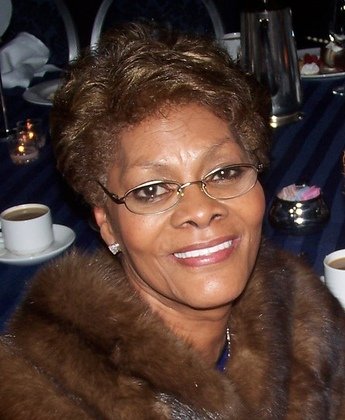
The voice is cool, precise, almost regal — the sound of a woman who never had to raise it to be heard. But behind Dionne Warwick’s immaculate public image lies a life of extraordinary emotional depth: a twice-married, twice-divorced love story with the same man, a family dynasty of gospel singers, a cousin she shepherded to stardom and then eulogized, and a lifetime of humanitarian work that has earned her honors from presidents and the United Nations.
The hits tell you what she could do. The life tells you who she is.
The Man She Married Twice
Dionne Warwick has been married twice — both times to the same man. She met William “Bill” Elliott, an actor and jazz drummer, in the mid-1960s when she was singing background vocals with his band. He had a reputation as a ladies’ man. She didn’t care. They married in 1966, in a ceremony he arrived late to — an omen, perhaps, of the turbulence to come.
The marriage lasted barely a year. Warwick later admitted she regretted the wedding within days — Elliott even arrived late to the ceremony, an omen she chose to ignore — and by May 1967 they were divorced. But the story didn’t end there. Drawn back together, they reconciled and remarried in Milan, Italy, in August 1967. “It was a case of can’t do with, can’t do without,” Warwick said, “so I married him again.” It remains one of the great romantic contradictions in show business: the most composed woman in pop, living the most tumultuous love story.
The second marriage lasted longer and produced the two great loves of her life: her sons David, born January 18, 1969, and Damon, born in 1973. But the pressures of her skyrocketing career — the constant travel, the studio hours, the fame — proved too much. The couple separated in May 1975 and divorced that December. Elliott died of a heart attack in 1983, at just 49.
Warwick never remarried. “Bill died in 1983, so I’m a widow,” she has said. “I decided I didn’t really need to be married.” It is a quietly devastating line — and a window into a woman who loved deeply, lost completely, and chose to carry the love rather than replace it.
The Sons Who Inherited the Music
Both of Warwick’s sons inherited the family gift. David Elliott became a singer, songwriter, and percussionist, carrying the family’s rhythmic DNA into his own career. Damon Elliott became a Grammy-winning music producer, working with artists like Mýa, Pink, and Keyshia Cole — and, in a lovely full-circle moment, producing his mother’s own 2006 album “My Friends and Me.” The student became the producer; the son became the shepherd of his mother’s sound.
The Drinkard-Warwick-Houston musical dynasty is one of the great family trees in American music. Warwick’s mother managed the Drinkard Singers; her aunt was Cissy Houston; her cousin was Whitney Houston; her sister was Dee Dee Warwick, a soul singer in her own right who died in 2008. Music wasn’t a career choice in this family. It was the family business, the family language, the family church — passed down the way other families pass down recipes or land.
The Cousin She Carried
Of all Warwick’s family relationships, none has been more public — or more painful — than the one with Whitney Houston. Warwick’s mother Lee and Whitney’s mother Cissy were sisters, which made Dionne and Whitney first cousins. When Whitney was young, Warwick took her on the road, letting the girl travel with her and absorb the life of a touring singer. After Whitney’s debut album exploded in 1985, the cousins made their television duet debut together, singing “You’re a Friend of Mine” on “Solid Gold” in 1986. In 1997, Whitney returned the honor, performing a medley of Dionne’s songs in tribute.
Then came February 11, 2012. Whitney Houston died in Beverly Hills at 48, on the eve of the Grammy Awards. A week later, at the New Hope Baptist Church in Newark — the church where Whitney had first sung as a girl — Dionne Warwick presided over the funeral. She was the de facto host of the service: introducing the speakers and singers, reading a poem for her cousin, keeping the nearly four-hour homegoing on track. She had personally called Kevin Costner, Whitney’s “Bodyguard” co-star, to ask him to speak. He told her he didn’t know what to say. “Just speak from your heart,” she told him.
It was the hardest performance of her life, and there was no applause at the end — just grief, and family, and faith. Warwick has spent the years since fiercely protecting Whitney’s legacy, speaking out against projects she felt exploited her cousin’s memory. Family, for Dionne Warwick, is not a talking point. It’s a duty.
The Ambassador
Long before celebrity activism was fashionable, Dionne Warwick was doing the work. In 1987, President Ronald Reagan appointed her a United States Ambassador of Health. In 2002, she became a United Nations Global Ambassador for the Food and Agriculture Organization. These weren’t honorary titles she dusted off for photo ops — she took them seriously, campaigning on issues from world hunger to AIDS to disaster relief.
Her charitable record is staggering in its breadth. She has supported the Starlight Foundation and children’s hospitals for decades — in 2009, she released the song “Starlight,” pledging its royalties to the Starlight Children’s Foundation, saying she hoped it would bring hope “to even just one sick child.” In 2011, she made the Hunger Project her charity on “Celebrity Apprentice,” and in 2012 she headlined the World Hunger Day concert at London’s Royal Albert Hall, singing an anthem written specially for the cause. She performed on “We Are the World” and at Live Aid. She has campaigned for music education and disaster relief.
The honors for this work have piled up alongside the music awards. In 2011, the Desert AIDS Project gave her its Steve Chase Humanitarian Arts & Activism Award. She was recognized by AMFAR at a gala reunion performance alongside Elton John, Gladys Knight, and Stevie Wonder — the “That’s What Friends Are For” family, back together, raising money for the cause that had brought them together a quarter-century earlier. In 2017, she received the Marian Anderson Award for philanthropy. And in recent years she has lent her voice on Capitol Hill to the American Music Fairness Act, which would ensure artists are paid when their music plays on terrestrial radio — earning SoundExchange’s Music Fairness Award in 2023. At an age when most legends are coasting, she was lobbying Congress.
The Institute That Bears Her Name
In East Orange, New Jersey — the town where Marie Dionne Warrick was born in 1940 — there is a school called the Dionne Warwick Institute. It was named in her honor, in recognition of her accomplishments and her support of education. And Warwick, to her enormous credit, treats the honor as an obligation: she routinely visits the students and faculty, walking the halls, talking to the kids, encouraging them.
Picture it: one of the most charted female vocalists of the rock era, a Kennedy Center honoree, sitting in a classroom in East Orange, telling teenagers that the girl from their neighborhood did it and so can they. No cameras necessary — though there are usually cameras. She goes anyway. Through her Kind Music Academy, she mentors young people with musical talent directly, passing the family trade to a new generation the way her mother passed it to her.
The throughline of it all is simple: she believes a voice is a responsibility. Not a brand. Not a platform. A responsibility.
The Faith That Held Her
Through every upheaval — the broken marriage, the lost fortune, the bankruptcy, the death of her cousin — Warwick has been sustained by a deep and private faith. She was raised in the gospel church, singing her first solo at six, and she has never strayed far from those roots. The Drinkard Singers were a gospel group; the church was her first stage and her first audience. Those who know her describe a woman of profound spiritual conviction, someone who sees her talent as a gift she was given, not an achievement she earned. When she presided over Whitney’s funeral, introducing the speakers and reading the poem, she wasn’t performing. She was doing what the church had trained her to do: holding a grieving family together with faith and order.
“I am a messenger,” she has said, “and I’m carrying messages of love and hope.” It’s a humble self-description from a woman who has sold over 100 million records — but it explains everything about the way she has lived. The messengers don’t get to choose the message. They just have to deliver it faithfully. And Warwick has delivered it in every arena she ever entered: the recording studio, the concert hall, the United Nations, the classroom in East Orange, and the pulpit of a Newark church on the hardest day of her life.
At an age when most legends are resting, she is still working — still touring, still recording, still advocating, still carrying the message. The voice may have deepened, but the composure never cracked. That was always the point. Not perfection, but presence. Not the throne, but the work. And when the history of pop music is written, Dionne Warwick will be there not just as a voice, but as a force — the messenger who never stopped delivering.
The Woman the Voice Belongs To
Dionne Warwick’s public persona has always been one of unflappable elegance — the queen on her throne, the voice of perfect composure. But the life behind the persona is anything but composed. It’s a life of passionate mistakes and fierce loyalties: marrying the same man twice, raising two sons alone, carrying a young cousin onto the stage and then carrying her memory off it, giving away her voice to every cause that asked for it. It’s the life of a woman who was appointed by a president, honored by the United Nations, named on a schoolhouse, and celebrated at the Kennedy Center — and who still shows up in East Orange to talk to teenagers, because somebody once showed up for her.
The cool precision of her singing was never coldness. It was control — the control of a woman who felt everything deeply and chose, note by note, to shape it into beauty. The heartbreak in “Walk On By,” the hope in “I Say a Little Prayer,” the questioning in “Alfie” — those weren’t performances. They were dispatches from a life fully lived.
Dionne Warwick once said she was a messenger carrying love and hope. Six decades on, the message has been delivered — in song, in service, and in a family’s unbreakable bond. The voice was the instrument. The heart was the point all along.
[END EXTERNAL CONTENT: source=file file=~/workspace/blog-drafts/artists260/82c-dionne-warwick.md tool_name=read]
Leave a Reply