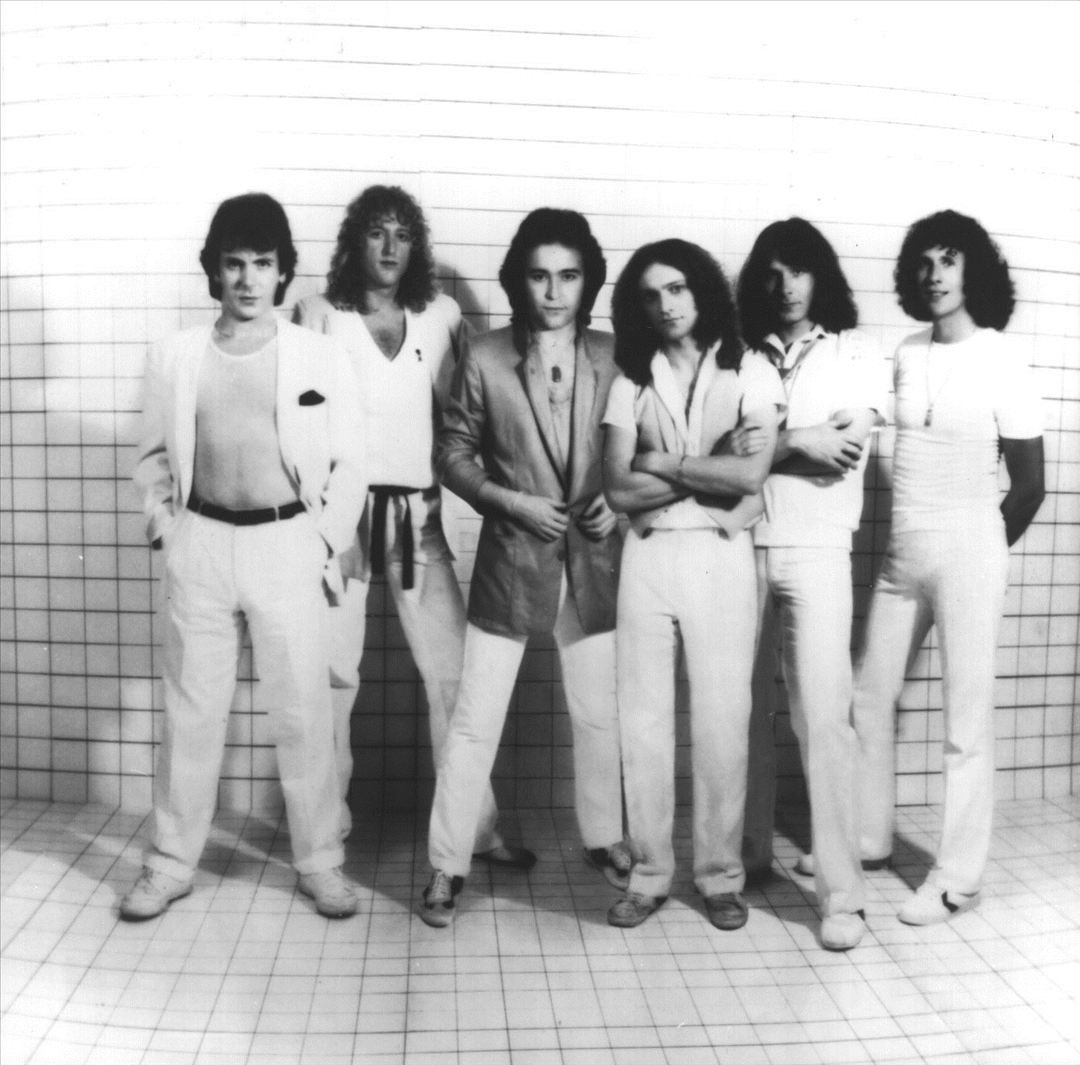
Every rock anthem has an origin story. Most of them are embellished in the retelling. But the true story of Foreigner’s “Juke Box Hero” is better than any embellishment — because it happened twice: once to a kid standing in the rain in Cincinnati, and once, years earlier, to Mick Jones himself, standing in the wings in Paris watching the Beatles.
This is the story of a song about a dream, written by a man who had lived the dream — and the fan who reminded him what it felt like.
The Kid in the Rain
It was 1981, and Foreigner was at the peak of its powers, touring behind what would become the blockbuster album “4.” The band had arrived at a sold-out arena in Cincinnati for a pre-show sound check. Outside the entrance, fans were gathered, hoping for a glimpse of the band. Nothing unusual about that.
Five hours later, the band returned — and the scene had changed. It was pouring rain. The crowds had scattered. But one kid was still there, standing alone in the downpour, waiting.
Mick Jones noticed him. “I thought, well, he’s waiting like five hours here,” Jones later told SongFacts. “Maybe we’ll take him in and give him a glimpse of what happens backstage at a show.” So they brought the kid inside — past security, past the road cases, into the humming backstage world of a major rock tour. And Jones watched as the boy’s eyes went wide — mesmerized by the lights, the equipment, the sheer machinery of it all. This wasn’t a fan meeting his heroes. This was a kid being shown how the magic trick works, and loving it even more.
“I just imagined what was going through his mind,” Jones said. “That’s how it originated.”
That was the seed: a kid who couldn’t get a ticket to a sold-out show, standing in the rain, who gets one glimpse behind the curtain and is changed forever. Jones and Lou Gramm turned that image into a song about the whole arc of a rock-and-roll dream — the kid who hears “one guitar” and decides, then and there, that he’s going to be the one on that stage someday.
The Kid in the Wings
But here’s the thing: Mick Jones didn’t have to imagine very hard what was going through that kid’s mind. He’d been that kid.
Rewind to the early 1960s. Jones was 18 years old, a young English guitarist who had gone to France, fallen in love with the place, and landed a job playing guitar for Sylvie Vartan, the French pop star. One night, Vartan’s show shared a bill at the Olympia Theatre in Paris — with the Beatles.
Jones stood in the wings and watched. And, as he later admitted, he cried. Here was the biggest band in the world, playing a few feet away from him, and he was close enough to touch the dream but not yet living it. It was the most exquisite torture a young musician could experience — and the most powerful fuel.
That night in Paris never left him. He went on to play for Johnny Hallyday — the “French Elvis,” who was married to Vartan and who promptly stole the young guitarist away. In Hallyday’s orbit, Jones found himself in recording sessions with Jimmy Page and John Paul Jones (before Led Zeppelin existed), watched Humble Pie essentially form out of one of those sessions, and toured France with Jimi Hendrix on Hendrix’s first French tour. It was an apprenticeship no school could offer.
But the image that stayed with him — the one that would surface twenty years later in a Cincinnati rainstorm — was himself at 18, standing in the wings at the Olympia, watching the Beatles and weeping. When he looked at that kid in the rain, he was looking at himself.
The Apprenticeship
The Paris years gave Jones an education no music school could offer. After Vartan, Johnny Hallyday — the “French Elvis,” who was married to Vartan — stole the young guitarist for his own band. In Hallyday’s orbit, Jones found himself in recording sessions with Jimmy Page and John Paul Jones, years before Led Zeppelin existed. Humble Pie essentially formed out of one of those Hallyday sessions, with Steve Marriott and Peter Frampton in the room. Jones toured France with Jimi Hendrix on Hendrix’s first French tour, and got to know him well. “He was a sweetheart,” Jones recalled, “an amazing man and just a very peaceful kind of guy.”
There were Beatles encounters too, beyond the Olympia. Jones told one story about being hit by a stage curtain during a show, dropping his guitar and swearing in English — only to have someone come over, delighted to hear the accent. It was John Lennon. That was the beginning of a friendship; Jones would hang out with the Beatles in Paris for a couple of weeks.
Then came Spooky Tooth, the English rock band where Jones cut his teeth in the late sixties and early seventies, writing with Gary Wright and absorbing the heavy blues-rock of the era. And then, in 1974, the move that nearly ended everything: Spooky Tooth headed for America, and Jones found himself living in Manhattan, out of money, sleeping on a friend’s hospitality, on the verge of giving up music entirely and going home to England. He was thirty years old with a lifetime of apprenticeship and nothing to show for it.
Instead of quitting, he started over. He formed Foreigner in 1976 — and every bit of the apprenticeship went into the band. And the deepest lesson of all went into “Juke Box Hero”: he knew exactly what it felt like to stand outside the dream, looking in.
Building the Anthem
“Juke Box Hero” was written by Jones and Gramm for the “4” album — recorded at the legendary Electric Lady Studios in New York City — and from the first notes it was clear this was something special. The song opens with that pulsing, insistent bass line, then Gramm’s vocal enters — low, shadowy, almost spoken — telling the story of the kid in the rain. Then the whole thing detonates into one of the great arena-rock choruses of the era, with Gramm’s voice soaring to stratospheric heights as the kid becomes the star.
Producer Robert John “Mutt” Lange — the future architect of Def Leppard’s and AC/DC’s biggest records — pushed Gramm’s vocal to its absolute limit. It became one of the most demanding vocals Gramm ever recorded, a performance he sometimes struggled to reproduce live. But on the record, it’s perfect: the sound of a dream being chased at full sprint.
Released as the album’s third single in early 1982, “Juke Box Hero” first entered the Billboard rock charts in the summer of 1981 and climbed to No. 26 on the Hot 100 in early 1982. It wasn’t the band’s biggest chart hit — not even close. But charts don’t measure everything. Some songs are measured in singalongs, in the roar that goes up when the first chords hit, in the forty years of kids air-guitaring the riff in their bedrooms. “Juke Box Hero” is measured that way — and by that measure, it’s one of the biggest songs Foreigner ever made. The song became a concert staple, often closing Foreigner’s shows, and in the 1980s the band performed it beneath a giant inflatable jukebox that rose above the stage in epic fashion. It was theater, ritual, and rock and roll all at once. Decades later, with Kelly Hansen on vocals, the band still closes shows with it — and it hasn’t lost a bit of the swagger that made it electrifying in 1981.
The Song That Became a Musical
“Juke Box Hero” had a second life that its creators never imagined. The song’s story — the kid, the dream, the guitar — was so vivid, so universal, that it became the foundation for an entire stage musical. “Jukebox Hero,” a coming-of-age jukebox musical built around Foreigner’s songs, premiered in February 2019 at the Ed Mirvish Theatre in Toronto.
Think about that. A song inspired by a real kid in a real rainstorm became a musical about every kid who ever stood outside a sold-out show. The dream had come full circle: from the wings of the Olympia, to a rainy sidewalk in Cincinnati, to a Broadway-style stage in Toronto. Mick Jones, the kid who cried watching the Beatles, had written a song that became the very thing he once stood outside of — a show other kids would dream about.
The Song That Teaches Dreaming
There’s a reason “Juke Box Hero” has outlasted almost everything else from the early eighties. Most rock songs are about the dreamer or the dream. This one is about the transmission — the moment the dream passes from one person to another. The kid hears “one guitar” through the arena walls. Jones heard the Beatles through the Olympia’s curtains. The audience at the Ed Mirvish Theatre heard it from a stage. Each hearing plants the same seed.
That’s the real magic of “Juke Box Hero.” It’s not just a song about a dream. It’s a machine for manufacturing dreams — one that has been running for more than forty years, powered by a kid in the rain and a kid in the wings, both of whom turned out to be Mick Jones.
In 2013, Jones and Gramm were inducted into the Songwriters Hall of Fame together — the two men who had written the dream, honored side by side. It was a fitting tribute to a partnership built on a shared understanding: that a song can change a life, because it changed theirs.
He stood in the wings and cried. Then he wrote the song. Then the song taught a thousand other kids to dream. If that’s not what rock and roll is for, nothing is.
And think about what that night in Cincinnati planted in him. The kid from Twickenham, who’d watched the Beatles from the wings and wept, who’d stood at the side of the Olympia stage while Sylvie Vartan sang and dreamed of his own name in lights, now held someone else’s dream in his hands for an evening. Decades later, when the song he’d written from that memory became an anthem, the kid in the rain became a jukebox hero — and somewhere in the audience, there might have been another kid, standing in the rain, waiting for his own glimpse backstage. The dream doesn’t end. It just finds the next dreamer, and the next, and the next — as long as there are kids standing in the rain, waiting for the doors to open, and guitars waiting to be picked up, and songs waiting to be written about all of it.
[END EXTERNAL CONTENT: source=file file=~/workspace/blog-drafts/artists260/83b-foreigner.md tool_name=read]
Leave a Reply