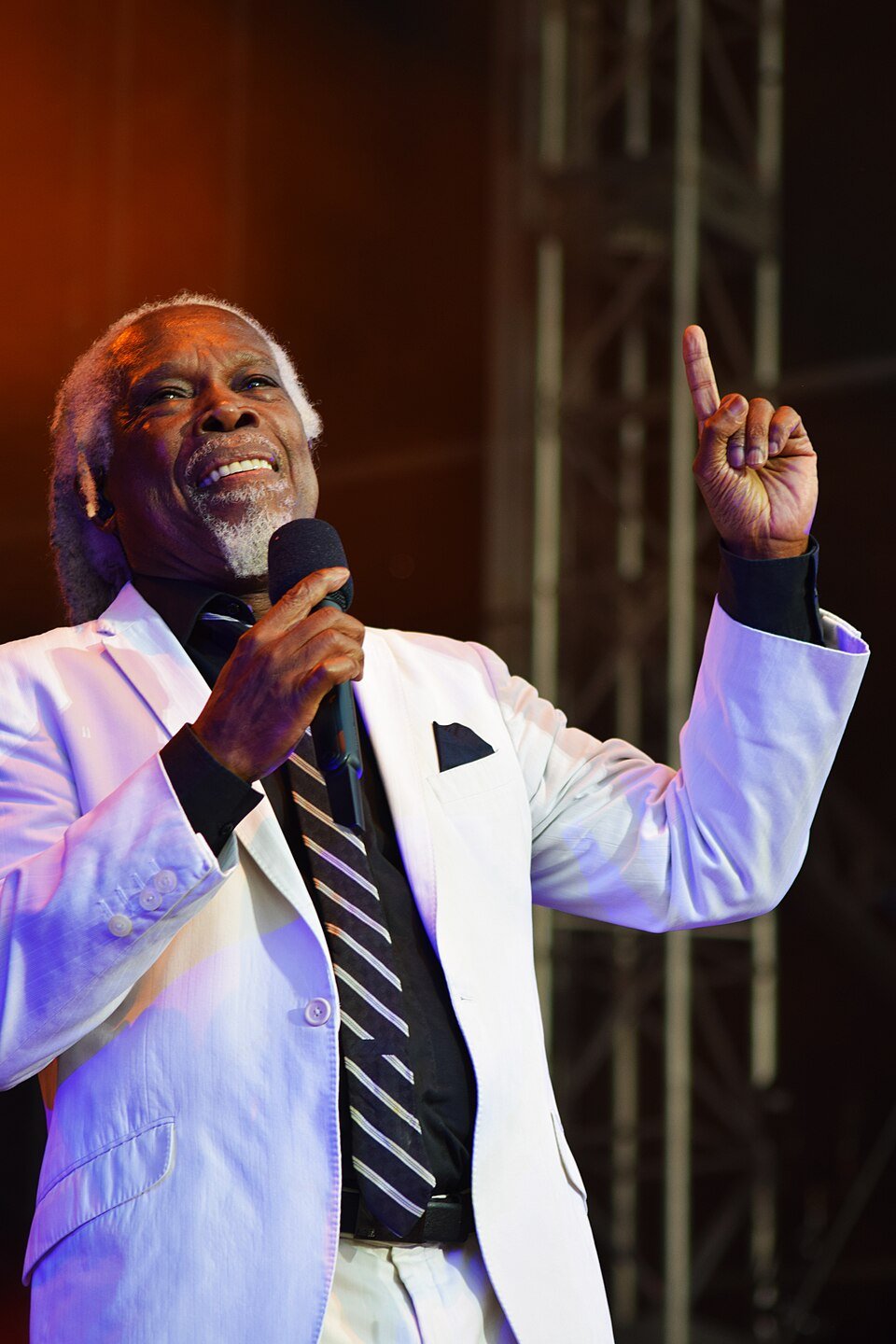
Every hit record has a story, but Caribbean Queen has something rarer: three stories, under three different titles, on three different continents. The song that made Billy Ocean an international star in 1984 first flopped in Britain as European Queen, then conquered America as Caribbean Queen, while a third version, African Queen, charted in South Africa. It may be the only number one record in history that was renamed like a franchise.
Ocean was an unlikely candidate for pop’s slickest heist. Born Leslie Sebastian Charles in Trinidad in 1950, he had emigrated to London’s East End as a small child and trained as a tailor — a man who cut cloth by day and sang in clubs by night, writing songs in the margins of a working life. He had scored a British hit as far back as 1976 with Love Really Hurts Without You, a joyous Motown pastiche that reached number two, but the years since had been a grind of near-misses: singles that flickered and died, a record business that kept almost believing in him. Plenty of singers would have settled into nostalgia by 1984. Ocean, at thirty-four, was still convinced his moment was coming — and, crucially, he had found the collaborator who could deliver it.
A Vibe in New York
Diamond was building a reputation as a craftsman of polished, radio-ready R&B, and the two men clicked. By the early 1980s Ocean had signed with Jive Records, and the label set him to work in New York with Diamond, the pair writing in a room bound up with the label’s own offices. Ocean later recalled the casual way their biggest song arrived: “We got the idea for Caribbean Queen together. We were writing and we got a vibe.” The track they built around that vibe was a precision machine: a pulsing drum-machine beat, a warm synth bass, Ocean’s supple tenor riding over the top, and — the detail everyone remembers — a soaring saxophone break by Vernon Jeffrey Smith that cuts into the song like a flash of neon. Diamond’s production was unmistakably of its moment — all chrome surfaces and digital gleam — but Ocean’s voice kept it human, a soul singer testifying over machinery.
The lyric was a small film in itself: a stranger in painted-on jeans dashes past, electric eyes, a tiger to be tamed, and a confirmed wanderer surrendering to the hook’s promise — “no more love on the run.” It was designed as a lead single for Ocean’s fifth album, Suddenly, and as his calling card to the world. The only question was what to call the queen.
European Queen: The False Start
The first answer was local. In May 1984, Jive released the single in Britain as European Queen (No More Love on the Run) — and it sank, peaking at a dismal number 82 on the UK chart. For a singer who had been chasing a breakthrough for the better part of a decade, it looked like one more expensive failure.
Instead of abandoning the song, an executive at the record company proposed something that sounds like a gimmick and turned out to be genius: keep the record, change the map. Ocean went back into the studio and re-cut the vocal with the geography swapped, producing tailored versions for different markets. It was the pop business thinking like a travel agent — the same groove, the same singer, a different postcard on the cover.
Three Queens
For the United States, the song became Caribbean Queen — a title that traded on Ocean’s own Trinidadian roots and on everything the word “Caribbean” promised an American radio listener. A third version, African Queen, was prepared for African markets. Ocean himself cheerfully admitted the logic was pure weather: “I guess it had more appeal as Caribbean Queen because Europe conjures up a vision of rain and snow and cold, but Caribbean sounds like sunshine and blue skies.”
The American release began modestly. Entering the Billboard Hot 100 at number 85 on August 11, 1984, the single climbed for twelve weeks before reaching number one at the start of November — displacing Stevie Wonder’s I Just Called to Say I Love You, no less — where it stayed for two weeks. It also topped Billboard’s Black Singles chart and its dance chart, spent twenty-six weeks on the Hot 100 in total, reached number one in New Zealand, and — in a delicious footnote — succeeded even in Britain, where the re-titled Caribbean Queen climbed to number six that same autumn, eighty places higher than its European twin had managed. The African Queen version, meanwhile, reached the Top 10 in South Africa. One recording session had produced a hit on three continents under three names, and the album it came from, Suddenly, rode the single into the American Top 10 to become the best-selling record of Ocean’s career.
The Album It Carried
Nor was the song an isolated success. Suddenly, the album built around it, arrived in the autumn of 1984 and turned out to be stacked with hits. Its title track, a tender ballad Ocean had written years earlier and carried from label to label, was released as a single in 1985 and climbed to number four in America — proof that the man who had just conquered the dancefloor could stop hearts at the other end of the tempo scale. Loverboy, a sleek duet of a groove co-written with producer Robert John “Mutt” Lange, went further still, reaching number two on the Hot 100. In the space of a year, Ocean had placed three singles in the American Top 5 after a decade of being told, in effect, that his time had passed. The queen had not travelled alone; she had brought an entire court with her.
The Grammy
At the Grammy Awards in February 1985, Caribbean Queen won Ocean the prize for Best Male R&B Vocal Performance — making him the first British artist ever to win in that category, ahead of a field of American giants on their home turf. The tailor from the East End, born in Trinidad, had beaten the United States at its own game with a song the British charts had rejected under another name nine months earlier.
The victory reset his career. In July 1985 he stood on the stage at Live Aid in Philadelphia, singing for a global television audience of billions — a very long way from the East End tailoring benches. The Suddenly album became an international best-seller, and Ocean spent the rest of the decade near the top of the charts: When the Going Gets Tough, the Tough Get Going — a number one in both Britain and America in 1986 — the transatlantic hit There’ll Be Sad Songs (To Make You Cry), and in 1988 another American number one, Get Outta My Dreams, Get into My Car. Each of those records walked through the door that Caribbean Queen had opened.
The Queen Endures
Four decades on, Caribbean Queen remains Billy Ocean’s signature song, a fixture of eighties playlists, wedding dances and film soundtracks, and one of the defining pop-soul records of its era. Singers have covered it, advertisers have borrowed it, and it still arrives on the radio like a postcard from somewhere warm.
Its strangest legacy, though, is the experiment it proved. The three-queens strategy was a reminder that a pop song is not just notes and words — it is also a name, an image, a place in the listener’s imagination, and sometimes a promise about the weather. Record executives have chased localised titles ever since, but nobody has ever done it with quite this song’s shameless, sun-drenched logic. Ocean and Diamond wrote a great groove; the record company understood that the same groove could wear different crowns. The queen was always the same. She just needed the right kingdom.
Leave a Reply