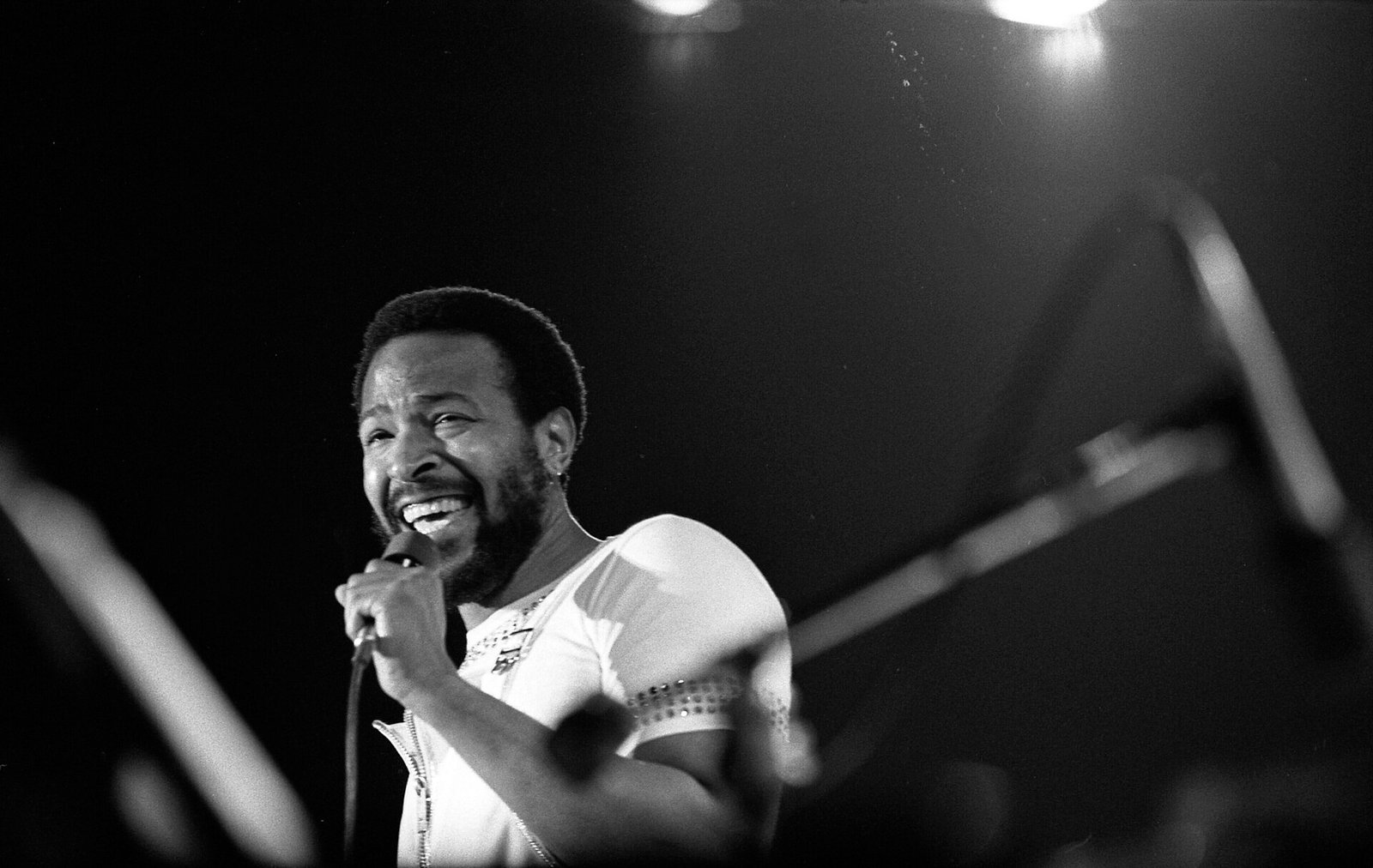
The most famous invitation in soul music began as a prayer of thanksgiving. When Ed Townsend first sketched out Let’s Get It On, he had just come out of a rehabilitation facility for alcoholism, and the song he heard in his head was a religious one — a man urging himself to get on with life, faith, and sobriety. Three years, two complete rewrites, and one teenage muse later, Marvin Gaye had transformed it into something else entirely: the most unabashed celebration of physical desire ever to top the American charts, and the record that completed his reinvention from Motown hitmaker to the most autonomous artist on the label.
The transformation was not a marketing calculation. It was the sound of Gaye’s own life changing direction — away from the social conscience of What’s Going On and toward the flesh, without ever quite letting go of the spirit.
A Song That Kept Changing Its Mind
Townsend, the singer-songwriter behind the 1958 hit For Your Love, brought the song to Gaye around 1970, during the sessions that produced What’s Going On. Its first metamorphosis came at the hands of Kenneth Stover, a Motown staffer and Gaye confidant, who reworked Townsend’s devotional lyric into a political one. Gaye actually recorded that version — a brooding, five-minute demo that stayed in the vault for three decades before surfacing on the 2001 deluxe edition of the album.
Townsend hated it. The song, he insisted, was not about politics at all. It was about love and sex — the getting-on he had in mind was the most literal kind. Gaye, to his credit, listened. Singer and songwriter sat down together, kept the musical track, and wrote a new lyric over it, one that took Townsend’s original intention further than Townsend himself had dared. The prayer became a proposition, though it never lost the cadence of a hymn — which is precisely why it works. Gaye sings the come-on the way a preacher’s son would: as if desire were a form of grace.
The Seventeen-Year-Old in the Studio
The other catalyst was standing in the room. During the Los Angeles sessions, Gaye had befriended the family of jazz guitarist Slim Gaillard and become smitten with Gaillard’s seventeen-year-old daughter, Janis Hunter. A widely retold story places Hunter in the studio as Gaye recorded his vocal, the singer directing every line at the girl behind the glass. True in every detail or polished by legend, the tale captures something audible in the record: this is a performance aimed at one person, not at a market.
Hunter became Gaye’s live-in partner by 1974; they had two children and married in 1977. She was the muse not just of the single but of the whole album taking shape around it — Gaye’s marriage to Anna Gordy, Berry Gordy’s sister, was collapsing, and the new songs poured out of the wreckage and the romance at once.
March 22, 1973: Hitsville West
The finished record was cut on March 22, 1973, at Hitsville West, Motown’s new Los Angeles studio — a sign of how completely Gaye’s world had shifted west after What’s Going On and his Trouble Man soundtrack won him the label’s trust. Townsend had arrived at the mid-March sessions carrying several ideas to test; the first tune they completed was actually a ballad, If I Should Die Tonight, which would take its place on the album. But it was the reworked title song that caught fire. Veteran arranger René Hall conducted a fifteen-piece orchestra live in the room, over a rhythm section built for the occasion: drummer Paul Humphrey, Crusaders pianist Joe Sample and bassist Wilton Felder moonlighting from their own band, guitarists Don Peake and Arthur Wright, and Melvin “Wah Wah” Watson among the players who gave the track its liquid, rippling guitar figures.
Hall’s orchestration is the record’s secret architecture. The strings do not sweeten the funk; they court it, surging and retreating around Gaye’s voice. And that voice is everywhere — Gaye multi-tracked himself into his own choir, pleading, teasing, and answering his own lines in falsetto until the record feels like one man harmonizing with his own desire. Critic Jon Landau, writing in Rolling Stone, singled out the opening — three great wah-wah guitar notes announcing a melody of almost Fifties simplicity — and the long, moody fade that dares you not to play the record again.
Rush-Released, Then Unstoppable
Motown did not wait for an album. Watching months pass without a new Marvin Gaye record, the label pulled the song from the tapes and rush-released it as a single on June 15, 1973, with I Wish It Would Rain on the flip side — the album’s nearly five-minute performance trimmed to just under four minutes for radio. The public response settled every argument about the rewrite. On September 8, 1973, Let’s Get It On reached No. 1 on the Billboard Hot 100, giving Gaye his second pop chart-topper after I Heard It Through the Grapevine, trading places with Helen Reddy’s Delta Dawn before finally surrendering the top to Grand Funk Railroad. It held No. 1 on the soul chart for six weeks, spent thirteen weeks in the Hot 100’s top ten, and finished as Billboard‘s No. 4 song of the year.
The numbers behind it were Motown history. The single sold more than four million copies across 1973 and 1974 — at the time, the largest-selling record the company had ever released — and it remains one of the defining hits of Gaye’s career, eventually certified platinum. The minister’s son who had begged America to ask what was going on was now its best-selling seducer, and Motown could only stand back and count.
The Album It Dragged Into Being
The single’s success forced the album into existence. Drawing on the Los Angeles sessions and on tracks Gaye had cut back in Detroit in the fall of 1970 — among them Come Get to This, Distant Lover, and Just to Keep You Satisfied — Let’s Get It On arrived on August 28, 1973. It was Gaye’s thirteenth studio album, assembled from sessions stretching across three years and two coasts, from Hitsville U.S.A. and Golden World in Detroit to Hitsville West in Los Angeles — a geography that mirrors the song’s own journey from a Detroit-era demo to a California reinvention. It spent eleven weeks at No. 1 on Billboard‘s R&B albums chart, peaked at No. 2 on the Billboard 200, and became the most commercially successful album of Gaye’s career, earning him still more creative control from the label. The title track even spawned its own sequel on the record, Keep Gettin’ It On, Gaye revisiting the groove before the side was over. In 2004 the album was inducted into the Grammy Hall of Fame.
The Groove That Refuses to Retire
Half a century on, the song’s afterlife keeps renewing itself. Rolling Stone placed it at No. 167 on its 2004 list of the 500 greatest songs of all time, and Billboard ranked it No. 32 on its Hot 100 all-time chart. In 2005, a Producers Mix remix carried Gaye’s original vocal back onto the R&B charts and earned a gold certification of its own, thirty years after the rush-release. And in May 2023, a New York jury heard the song at the center of one of music’s biggest courtroom battles, rejecting the Townsend family’s claim that Ed Sheeran’s Thinking Out Loud had copied it — the groove, the court effectively ruled, belonged to everyone now.
But the real legacy is simpler. Let’s Get It On proved that the man who had sermonized on What’s Going On could turn the same intensity inward, toward the body, and lose nothing. Church and bedroom, prayer and proposition — Gaye spent his whole career refusing to separate them. The song that started as one man’s gratitude for surviving addiction became, in his hands, the sound of survival turning back into appetite. That is why it still stops rooms: not because it is the sexiest record ever made, but because underneath the seduction you can still hear the hymn.
Leave a Reply