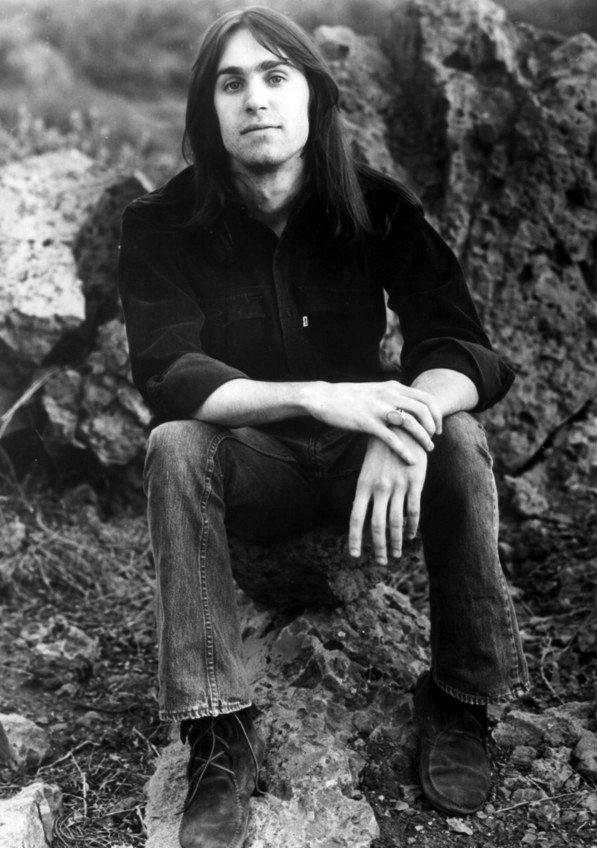
By the winter of 1976, Dan Fogelberg had everything a young singer-songwriter was supposed to want, and it was starting to bore him. He had a gold record in “Souvenirs,” a hit single in “Part of the Plan,” and a reputation as one of the prettiest voices in seventies soft rock. What he did not have was a record that sounded like the inside of his own head — the head of a classically trained pianist’s son who had studied painting and theater, who could play a dozen instruments, and who had just bought a house at nine thousand feet in the Rocky Mountains because he needed to hear what silence sounded like.
What came out of that silence was “Nether Lands,” the 1977 album Fogelberg himself would later call the moment he finally made a grown-up record. It is the story of a songwriter who stopped imitating his influences and started orchestrating his inner life — with a little help from a Hollywood arranger, a Nashville producer, and a mountain that refused to let him leave.
A House at Nine Thousand Feet
Fogelberg had not come to Colorado for the music business. He had come for the mountains. While touring the state in the mid-1970s behind his third album, “Captured Angel,” he learned that a mountain house near Nederland was on the market, and he fell for it on sight. The seller was Chris Hillman — the Byrds and Flying Burrito Brothers veteran, one of Fogelberg’s own musical heroes. Fogelberg flew to his Nashville farm, packed his belongings in a hurry, and moved into the Nederland spread, perched high in the Rockies with a view of the Continental Divide.
The title of the album he would make there was a private joke turned inside out: “Nether Lands,” a play on Nederland, Colorado. In a 1991 television interview, Fogelberg said the record “was written really about that whole experience of living up in the Nederland area. A lot of my work has been directly affected by my love for the Rocky Mountains and for Colorado.” The pun in the title was the only lighthearted thing about it. Everything else was serious, ornate, and new.
The Songwriter’s Drought
Before the flood came the drought. After three albums in four years, Fogelberg hit the first extended dry spell of his adult songwriting life. For months, he later admitted, he simply could not compose. Then, suddenly, the songs started arriving — but in a different language. Where his earlier work had been folk-rock in the California mold, the new material was bolder, more elaborately conceived, touched by classical forms and longer musical arcs. The mountains had changed his idiom.
He was twenty-five years old, snowed in for stretches of that winter, learning to run a snowplow between sessions at the piano. The solitude was total, and it was exactly what the songs needed. Out of that season came eleven compositions, all written by Fogelberg alone: “Nether Lands,” “Once Upon a Time,” “Dancing Shoes,” “Lessons Learned,” “Loose Ends,” “Love Gone By,” “Promises Made,” “Give Me Some Time,” “Scarecrow’s Dream,” “Sketches,” and “False Faces.” It was, by a wide margin, the most ambitious set of songs he had ever written.
“High on This Mountain”
The title track was the summit, literally and figuratively. “Nether Lands” opens the album with a sweep of strings and horns that feels like watching weather move across a mountain range — tension, release, and an upward-looking sentiment that one critic later said he hoped had been written while Fogelberg was actually standing “high on this mountain, the clouds down below.” For this, Fogelberg reached outside his usual circle and hired Dominic Frontiere, the veteran Hollywood composer and arranger, to orchestrate and conduct the string passages. Frontiere’s work frames the album, opening the first track and returning for the finale, giving the whole record the feel of a unified suite.
Fogelberg himself did the orchestral arrangement for the title track’s core, then handed Frontiere the canvas to enlarge. It was a bold move for a soft-rock singer in 1977 — the year of punk’s sneer and disco’s thump — to open his album with something closer to a tone poem. But Fogelberg had stopped worrying about what soft rock was supposed to sound like. The mountain had given him permission.
Dancing Shoes and the Dancer
Not everything on “Nether Lands” looks at the sky. “Dancing Shoes,” the album’s third track, is a love song with a string quartet, light on its feet and warm at its center. It is widely said to have been inspired by the dancer girlfriend Fogelberg was seeing at the time — Maggie Slaymaker, the Nashville dancer who would become his first wife in 1982. The song captures a young man in love with movement itself, and it remains one of the record’s most beloved deep cuts.
Elsewhere the album turns inward and outward in equal measure. “Scarecrow’s Dream” is a tribute wrapped in a fable. “Lessons Learned” and “Loose Ends” are introspective vignettes, the work of a writer examining his own life with new, unsparing tools. “Promises Made” carries the ache of commitments tested by the road. And “Give Me Some Time” features the flute of Tim Weisberg — the jazz musician whose playing on this album would soon inspire Fogelberg to make an entire duet record with him, the platinum “Twin Sons of Different Mothers.”
The One-Man Orchestra
If “Nether Lands” proved anything, it was that Dan Fogelberg was not, as some critics lazily assumed, merely a pretty voice with a guitar. The album’s personnel list reads like a dare. Fogelberg is credited with vocals, electric and acoustic pianos, ARP synthesizer, electric and acoustic guitars, pipe organ, organ, harpsichord, finger cymbals, and sleigh bells — plus that orchestral arrangement on the title track. He had played nearly everything on “Captured Angel” two years earlier, and here he was again, a one-man orchestra with a mountain view.
He was not alone in the studio, though. He co-produced the album with Norbert Putnam, the Nashville veteran who had produced Fogelberg’s debut, “Home Free.” Putnam played bass and helped arrange strings, providing the steady professional hand that let Fogelberg reach for the grand gestures. The drum chair rotated among four top players — Kenneth Buttrey, Russ Kunkel, Joe Vitale, and Joe Lala — each bringing a different weather system to the kit. The album was engineered by John Stronach, mixed by Marty Lewis, and mastered by Glenn Meadows at Masterfonics in Nashville.
Caribou Ranch and the Long Road to Finished
“Nether Lands” was not made in one room. The sessions sprawled across five studios: Caribou Ranch in Nederland, Colorado — the converted barn studio created by producer James William Guercio, already a legendary Rocky Mountain hideout for rock royalty — plus the Record Plant in Los Angeles and Sausalito, Quadraphonic Sound in Nashville, and North Star Studios in Boulder. It was a record assembled the way its songs had been written: in pieces, across distances, with the mountain as the fixed point.
The finale, “False Faces,” brings Frontiere’s orchestra back en masse for five sweeping minutes, railing against the falseness of the traveling musician’s life while a small chorus of overdubbed Fogelbergs — joined by J.D. Souther — lifts the whole thing toward the horizon. It is the album’s closing argument: that the ornate and the honest were never opposites, not in Fogelberg’s hands.
A Suite, Not a Collection
What separates “Nether Lands” from the folk-rock albums around it is its unity. The AllMusic critic Stephen J. Matteo later called it “somewhat of a concept album, replete with orchestration and following an underlying theme throughout,” with “the feel of a long, unified musical suite.” He was right: the record plays like one continuous meditation, from the orchestral dawn of the title track through the narrative detours of the middle songs to the orchestral dusk of “False Faces.” Even the sequencing feels composed rather than compiled.
The middle of the album rewards close listening. “Once Upon a Time” opens the storybook with a storyteller’s patience. “Lessons Learned” and “Loose Ends” are the sound of a young man taking inventory — of love, of ambition, of the person the mirror had started showing him. “Love Gone By” and “Promises Made” ache in the way only songs written at altitude seem to ache, all thin air and long sightlines. “Scarecrow’s Dream” drifts into fable, and “Sketches” — the briefest piece on the record — feels exactly like its title: a painter’s study, dashed off in a moment, left deliberately unfinished. Fogelberg, who had studied painting at the University of Illinois and never stopped, even contributed his own artwork to the album’s interior. The painter and the songwriter were finally working on the same canvas.
And then there is Caribou Ranch itself, the studio that made the mountain sessions possible. Producer James William Guercio had converted an old barn outside Nederland into a world-class recording hideout in 1972, and by the mid-seventies it was the Rocky Mountain home of rock royalty. Fogelberg cut tracks there and at Boulder’s North Star Studio, shuttling between the high country and the coasts. The Ranch would burn in 1984, its control room destroyed by a space heater fire, but by then “Nether Lands” had already preserved what the place had meant: proof that a pop record could be made at nine thousand feet, with snow on the windows and an orchestra on the tape.
Decades later, Fogelberg was still explaining the album to anyone who would listen. In that 1991 interview, looking back across fourteen years, he kept returning to the same point: the record was not a coincidence of geography. It was the sound of a place changing a person, and a person letting it happen. He had gone up the mountain a promising soft-rock singer. He came down a composer.
Platinum and a Voice Found
Released in May 1977 on Full Moon/Epic, “Nether Lands” became Fogelberg’s most successful album to that point. It peaked at number thirteen on the Billboard 200 — his highest chart placement yet — and eventually went platinum. More importantly, it changed how Fogelberg was heard. The kid from Peoria who had been filed next to the gentle balladeers had made a record with classical ambitions and a rocker’s restlessness, and the audience followed him up the mountain.
Fogelberg knew what had happened. Looking back, he described “Nether Lands” as the record where he stopped paying tribute to his influences — the Beatles, Buffalo Springfield, the whole California songbook — and started writing as himself. “I grew up with that album,” he said. It was the sound of a twenty-five-year-old deciding, in the thin air of the Rockies, that being a soft-rock star was not enough. He wanted to be a composer.
He would go on to bigger commercial triumphs — “Phoenix,” “The Innocent Age,” the wedding-standard “Longer” — but he never again made a record quite so purely his own as the one he wrote in the snow. Every December, “Same Old Lang Syne” reminds the world that Dan Fogelberg could tell a true story like nobody else. But “Nether Lands” is the album that tells the truest story of all: the one about a young man who climbed a mountain to find out who he was, and came back down with an orchestra in his head. The mountain is still there. The record, nearly fifty years on, still sounds like the view.
Leave a Reply