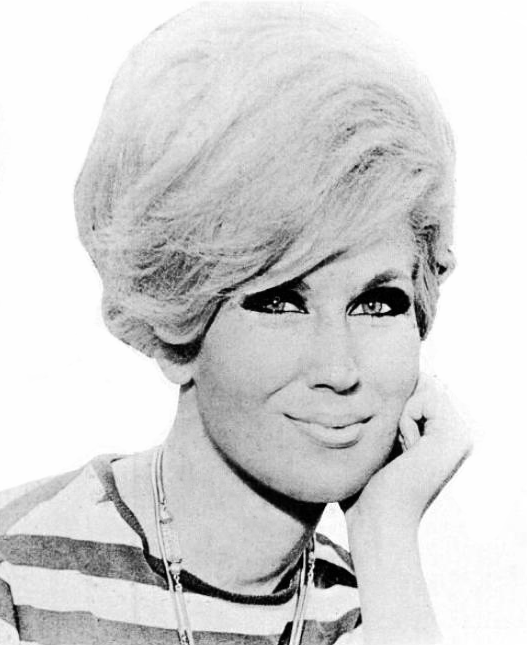
Some songs arrive fully formed, as if they were always waiting to be sung. Son of a Preacher Man is one of them, at least in the way we hear it now. Dusty Springfield’s recording feels effortless, warm, and quietly daring, a story told in a low, confiding voice over a groove that seems to sway rather than march. Yet behind that ease lay a careful journey: a song written in America, an album recorded in Memphis, a singer who knew exactly what she wanted, and a session that brought together some of the finest musicians of the era. This is how a great song found its perfect singer, and how that singer made it immortal.
A Song Written for Another Voice
Son of a Preacher Man was written by John Hurley and Ronnie Wilkins, songwriters steeped in the sounds of American soul and country. The song tells the story of a young woman remembering a romance with the son of a preacher, a tale told with tenderness rather than scandal. Its power lies in its restraint. The narrator is not boasting or apologising; she is remembering, with a mixture of affection and wistfulness that many listeners recognised at once. The song was originally offered to Aretha Franklin, who passed on it, a decision that changed music history. When Dusty heard it, she understood immediately that its quiet storytelling suited her voice perfectly.
Why Dusty Went to Memphis
By the late 1960s, Dusty had long admired American soul music, and she wanted to record where that music was made. Memphis, with its legendary studios and its deep musical heritage, offered something London could not: a rhythm section that lived and breathed soul, gospel, and rhythm and blues every day. Dusty travelled to Memphis in 1968 to record what would become Dusty in Memphis, working with producer Jerry Wexler and arranger Tom Dowd, among others. The city was not just a backdrop; it was a collaborator. Its musicians brought a feel, a swing, and a warmth that shaped every track on the album.
The American Sound Studios Sessions
The instrumental tracks for Dusty in Memphis were cut at American Sound Studios in Memphis, a studio famous for its house band and its string of hits. The musicians there knew how to support a singer without overwhelming her. They played with discipline and with soul, leaving space for Dusty’s voice to breathe. Guitars, keyboards, bass, and drums wove together into a sound that was both polished and deeply human. Dusty, famously meticulous, listened to those backing tracks with great care. She wanted to know every nuance before she added her vocal, because she understood that a great performance begins with listening.
A Vocal Recorded in New York, With Memphis in Its Heart
Although the backing tracks were recorded in Memphis, Dusty’s vocals were largely recorded later in New York, a practical decision that did not diminish the album’s soul. In the vocal booth, Dusty worked with her usual perfectionism, trying phrasings, adjusting dynamics, and searching for the tone that would make the story feel true. On Son of a Preacher Man, she sings close to the microphone, almost as if she is sharing a secret. That intimacy is the song’s magic. She never shouts, never over-sings, never tries to impress. She simply tells the story, and the listener leans in to hear every word.
The Groove That Makes the Song Sway
Listen closely to Son of a Preacher Man and you will notice how much the arrangement does with so little. The opening guitar figure is instantly recognisable, the bass walks with a relaxed confidence, and the drums keep a gentle, insistent pulse. Strings and backing vocals enter at just the right moments, lifting the chorus without breaking the song’s spell. Dusty’s voice rides above it all, sometimes playful, sometimes wistful, always in control. It is a masterclass in balance: nothing is wasted, nothing is forced, and every element serves the story. That is why the record still sounds fresh more than fifty years later.
A Story Sung With Tenderness, Not Judgement
Part of the song’s enduring appeal is its attitude. The narrator remembers a young love without shame and without sensationalism. Dusty sings it that way too, with warmth and a hint of a smile. In 1969, that was quietly bold. A woman singing about desire, memory, and a preacher’s son, without apology, was not something pop radio heard every day. Dusty never turned the song into a provocation; she turned it into a memory, and memories are allowed to be complicated. Listeners of all ages have recognised themselves in that gentle honesty, which is why the song has been covered, sampled, and rediscovered by generation after generation.
From Album Track to Cultural Landmark
When Dusty in Memphis was released, Son of a Preacher Man became its best-known song, reaching the charts in Britain and America. Over time, its reputation only grew. It appeared in films, most famously in Pulp Fiction in 1994, where a new audience discovered Dusty’s voice in a completely different context. Suddenly, teenagers who had never heard of Dusty in Memphis were asking who sang that song. The answer led them back to the whole album, and to a singer whose work deserved far more attention than it had received in some years. It was a second life for a song that had never really gone away.
What Dusty Brought That No One Else Could
Many singers have recorded Son of a Preacher Man, but Dusty’s version remains the standard against which others are measured. That is because she brought a particular combination of qualities: a British singer’s clarity, a soul singer’s feeling, a storyteller’s timing, and a perfectionist’s ear. She understood that the song was not about showing off a voice; it was about trusting a voice to carry a story. Her phrasing, her pauses, and her control of dynamics turn a simple lyric into a small film in the listener’s mind. It is a performance that sounds easy only because it was made with such care.
The Album Around the Song
Son of a Preacher Man should also be heard in the context of Dusty in Memphis as a whole. The album is a journey through love in all its forms: hopeful, disappointed, tender, and resilient. Songs like Just a Little Lovin, Breakfast in Bed, and I Don’t Want to Hear It Anymore show different sides of Dusty’s artistry, but they share the same commitment to emotional truth. Listening to the album from start to finish is like spending an evening with a wise, warm friend. Son of a Preacher Man is the moment that friend leans forward, smiles, and tells you a story you will never forget.
Listening Today: A Song That Still Whispers to Us
Put Son of a Preacher Man on today, and notice how little it has aged. The groove still sways, Dusty’s voice still confides, and the story still feels personal. That is the legacy of how this song was made: great songwriting, great musicianship, a great city, and a singer who knew that the most powerful performances are often the quietest ones. Dusty Springfield did not just record Son of a Preacher Man; she made it hers, and in doing so, she made it ours too. It remains a reminder that a song, made with love and care, can outlive fashion, outlive its era, and keep whispering its story to anyone willing to listen.
Leave a Reply