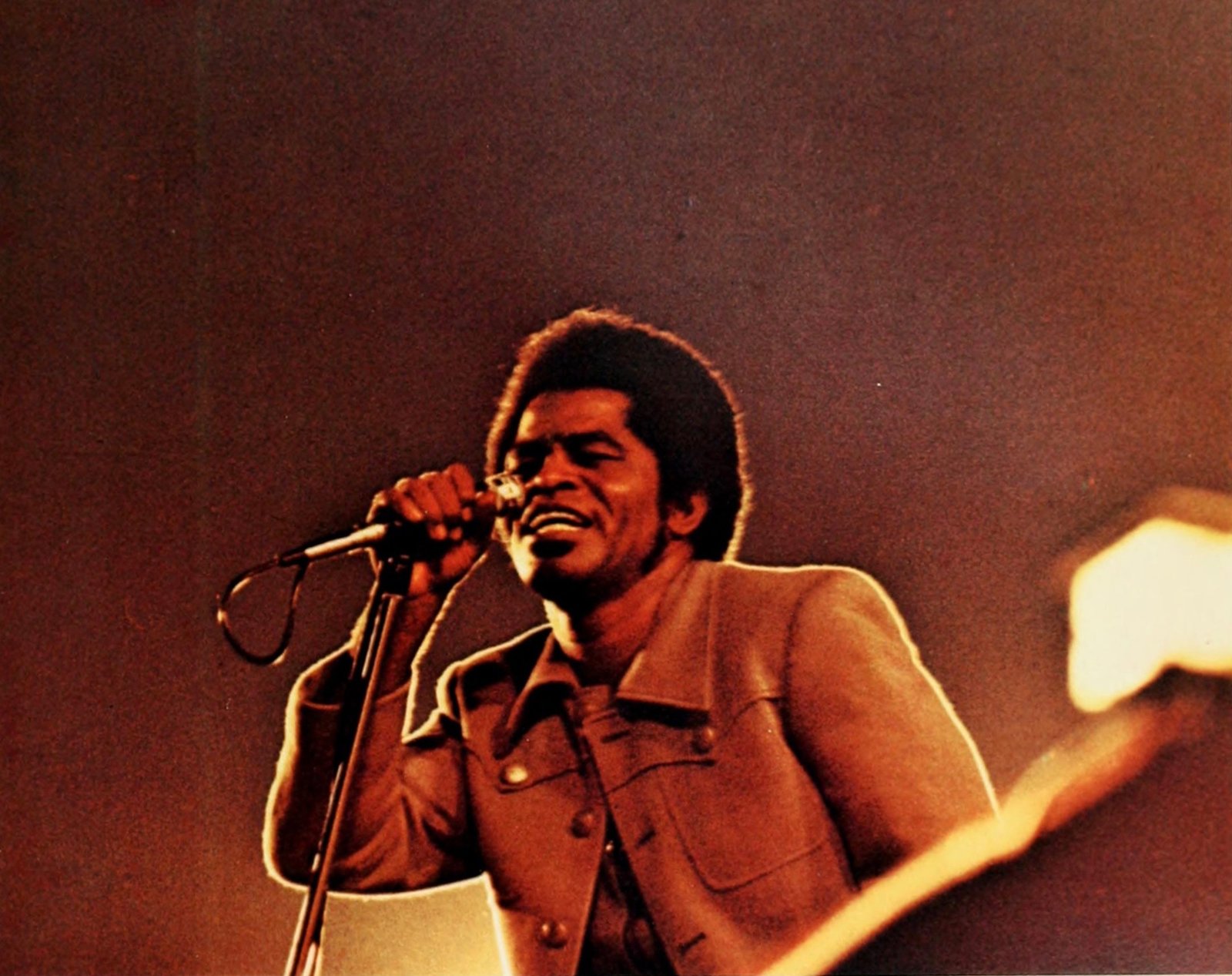
On the first day of February 1965, the hardest-working band in show business limped into a recording studio in Charlotte, North Carolina, somewhere between one show and the next. James Brown and his orchestra were in the middle of a road grind that would have flattened lesser men, and Brown had a new song he wanted on tape before the moment passed. Arthur Smith’s studio was not famous and the session was not planned like history. It was a working stop on a working tour: set up, play the thing once, pack up, drive to the next town.
What they played, in a single take, was Papa’s Got a Brand New Bag. Brown can be heard on the unedited tape talking himself into it just before the band kicks in — “This is a hit!” — and for once the boast was an understatement. In under two minutes of finished single, Brown bent the whole weight of rhythm and blues onto a single beat, cut his first pop Top 10 record, won his first Grammy, and laid the foundation stone of funk. The strangest part is that he did it while he was barely on speaking terms with his own record label.
A Feud, a Tour Bus, and One Free Hour
By 1965 Brown was already a giant inside rhythm and blues. Please, Please, Please and Try Me had made him a star, and his self-financed Live at the Apollo had become one of the great concert albums. But the pop Top 10 still eluded him, and behind the scenes he was at war with Syd Nathan, the formidable boss of King Records. Brown had cut Out of Sight for the rival Smash label in 1964 and Nathan had sued; the two men were locked in a dispute that would not be settled until the middle of 1965, when Brown finally signed a new King contract with more money and, crucially, more artistic control.
The Charlotte session happened in the thick of that standoff. Brown was touring relentlessly, and on 1 February the show’s route took the band through North Carolina with a gap in the day. He used it the way he used everything: to work. The band that crowded into Arthur Smith Studios was his road orchestra at full stretch — among them a young saxophonist named Maceo Parker, drummer Melvin Parker, organist Nat Jones, and, making his first recording with Brown, guitarist Jimmy Nolen, whose clipped, scratching style would become one of the defining sounds of funk. Behind Brown, the Famous Flames — Bobby Byrd and the others — chanted the title like a gospel refrain.
There was no time to polish anything. The song was cut in one take, and it sounds like it: a band too tired to be careful and too drilled to make a mistake.
Everything on the One
What Brown had been developing on stage, and edging toward on records like I’ve Got Money and Out of Sight, finally arrives whole here. In rhythm and blues as Brown inherited it, the emphasis rolled through the bar; in Papa’s Got a Brand New Bag, everything crashes down on the first beat — “on the One” — and the horns stop carrying the melody and start behaving like drums. Nolen’s guitar does not strum so much as scratch. The bass, as Brown himself put it, barely moves at all. “We were tired when we cut it so we weren’t strong enough to make it faster,” he told interviewer Alan Leeds a few months later, “but we wouldn’t let the groove drop.”
Brown later explained the breakthrough in his memoir as a change of hearing: he had discovered that his strength was not in the horns but in the rhythm, and that he was hearing everything, even the guitars, as if they were drums. The lyric riding on top of that rhythm is a celebration — an older man, a “papa,” out on the nightclub floor doing the Jerk, the Fly, the Monkey and the Mashed Potato. In the slang of the day, a “bag” was a person’s thing, their scene, their way of doing things. Papa had a brand new one, and so, unmistakably, did James Brown.
The master tape ran far longer than a single allowed, with the band stretching out in solos. For release, the recording was edited, split across the two sides of a 45 as Part 1 and Part 2, and even sped up slightly, raising the pitch by a half step and sharpening its urgency. The full performance, studio chatter and all, would not be heard until 1991, when it was issued at its original speed on the Star Time box set.

His Own Man Behind the Glass
One more thing about the Charlotte session is easy to miss on the label copy: Brown produced the record himself. In 1965, rhythm and blues singers were not supposed to do that. They were handed songs, handed arrangements, handed producers, and expected to sing what they were given. Brown had spent his King career clawing back control piece by piece — of his recording schedule, of his finances, of the live show he famously financed and ran like a military operation — and the fight with Nathan that framed this session was, at bottom, a fight about exactly that.
So the most revolutionary record of Brown’s life is also a declaration of independence in its credits: written by James Brown, produced by James Brown, performed by a band that answered to James Brown and to no one else. While Motown was perfecting a smoother, pop-facing soul in Detroit, Brown went in the opposite direction — rougher, leaner, more rhythmic — and he went there as his own boss. Critics have been arguing about the precise birthday of funk ever since, but the Financial Times‘ David Cheal may have put it best: it wasn’t the first funk record, but it was funk’s first big hit. It was also the first funk record made by a man who owned his own revolution.
Number Eight, Number One, and a Grammy
King released the single in June 1965, and it did what no James Brown record had done before. Papa’s Got a Brand New Bag climbed to No. 8 on the Billboard Hot 100 — his first pop Top 10 hit — while sitting on top of the R&B chart for eight straight weeks. The Grammy for Best Rhythm & Blues Recording followed, the first of Brown’s career. Settled into his new King deal with creative control in writing, Brown had effectively announced that the most innovative artist in Black music would now answer mostly to himself.
The aftershock came within months. That autumn, I Got You (I Feel Good) took the new sound to No. 3 on the pop chart, and from there the road runs straight to Cold Sweat, Get Up (I Feel Like Being a) Sex Machine and the whole architecture of funk, disco and hip-hop rhythm. But it starts in Charlotte, in one take, with a band running on fumes.

The Bag That Never Emptied
The honours accumulated slowly, the way they do for records that changed the rules. In 1999 the original King recording was inducted into the Grammy Hall of Fame. Rolling Stone placed it at No. 71 on its updated list of the 500 greatest songs of all time. Otis Redding was covering it on stage within three years; Pigbag built a UK hit out of a play on its title in 1981; its groove became part of the common language every funk and hip-hop drummer since has had to learn.
Perhaps the best measure of the record is how little it has dated. The performance attached to this article, from Brown’s own channel, shows the song decades on, still detonating on stage exactly the way it must have in 1965: the horns stabbing, the band frozen and exploding on cue, and Brown — older, hoarser, utterly undiminished — riding the One like he invented it. He did. He just needed one free hour in Charlotte, a band too tired to slow down, and a brand new bag.
Leave a Reply