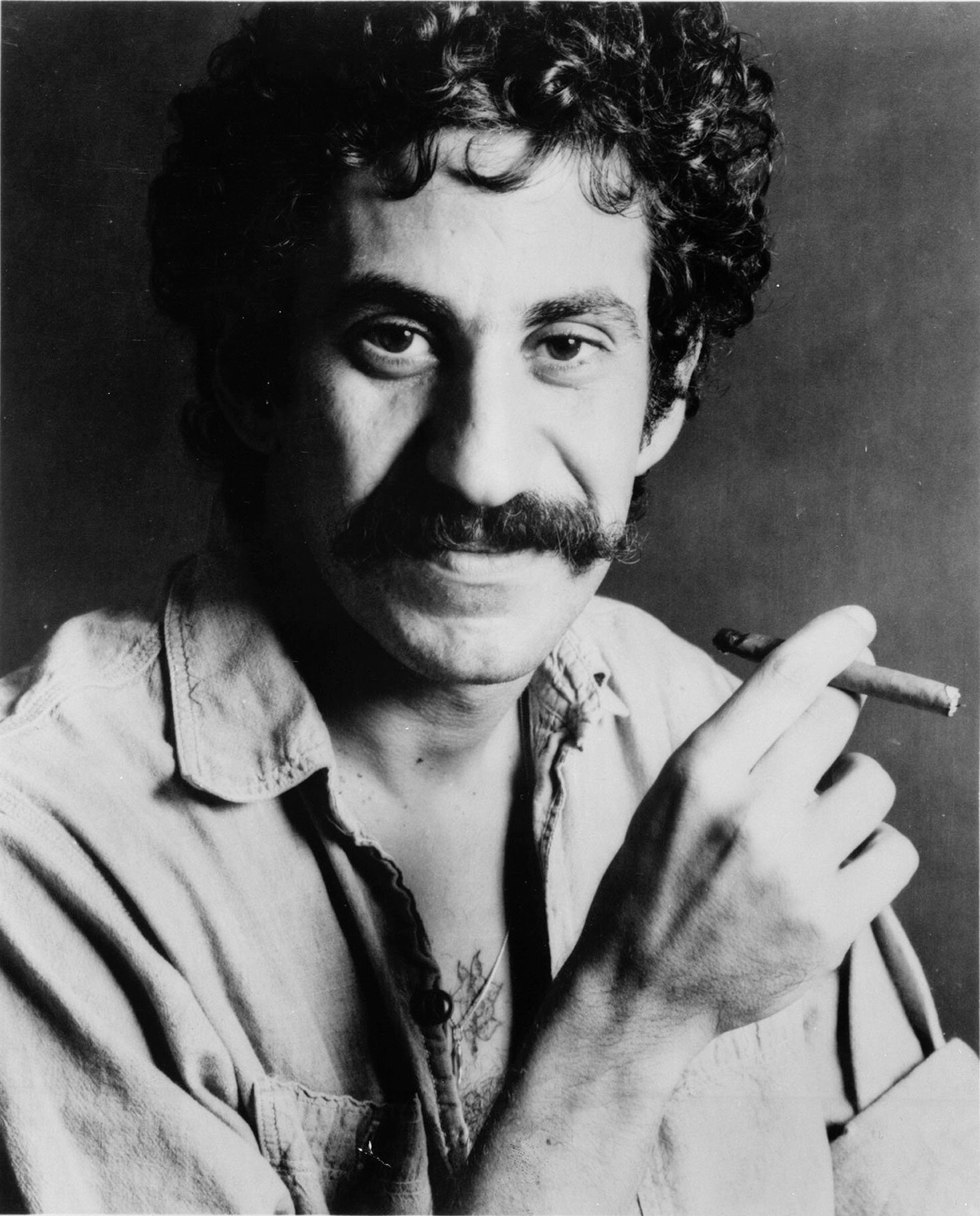
The hero of Workin’ at the Car Wash Blues is a man the world has completely failed to appreciate. Fresh out of a ninety-day jail sentence for non-support, he considers himself — in Jim Croce’s gleeful phrase — an undiscovered Howard Hughes, a genius plainly destined for a corner office, cigars and an air-conditioned life. Every personnel department in town disagrees. So the genius takes the only job going, at a car wash, and spends two and a half minutes scrubbing other men’s cars while explaining, to anyone who will listen, the executive he was born to be.
It is one of the funniest records Croce ever made, and he built it out of the years when he was the man at the bottom of the ladder himself. The idea came to him, of all places, up a telephone pole in the Army — and when it was finally released as a single in the spring of 1974, it gave him the last Top 40 hit of his career, nine months after his death.
Up a Pole at Fort Jackson
Croce told the story himself, on stage, and the live recording of it survives on the album Have You Heard: Jim Croce Live. The song, he explained, is about a guy who thinks he should be ruling the universe somewhere, but who is really working at a car wash. He had come up with it in the military, at Fort Jackson in South Carolina, where his job was running telephone cable up poles. Hanging up there, he had the thought that has occurred to every underemployed person in history: I should be doing something else. Then it struck him that every other man on every other pole was thinking exactly the same thought. The song wrote itself from there.
That recognition is the engine of all Croce’s best character songs. Before fame he had been a construction worker, a truck driver, a welder — a man collecting the menial jobs his narrators would later sing about. He had already served one apprenticeship in disappointment: a solo album, Facets, in 1966 that vanished, and a duo record with his wife Ingrid on Capitol in 1969 that went nowhere and left the couple broke. When the ABC deal finally arrived in 1972, Croce was nearly thirty and writing about working men from the inside, because until months earlier he had been one. The difference in Workin’ at the Car Wash Blues is that the dreamer is not a lovable rogue like Leroy Brown but a gentle fraud, and the joke, delivered with total affection, is on him — and, Croce always admitted, partly on the man singing it.
The Longest Title He Ever Sang
The song’s full refrain is a tongue-twister Croce clearly relished: the narrator has got them “steadily depressing, low down, mind-messing, working at the car wash blues,” a line so long it had to be shortened to Workin’ at the Car Wash Blues before the record could be released. Croce described the track as having a funky street feel, and at 2 minutes 32 seconds it wastes nothing: in come the rejected job applications, in comes the fantasy of the office with its martinis and high-society magazines, all of it set against the reality the narrator calls, in the song’s best joke, working at an indoor Niagara Falls.
Around Croce’s rhythm guitar runs the fingerpicking of Maury Muehleisen, his shy accompanist from Trenton, whose delicate lines were as much a signature of the records as Croce’s own voice. It sounds effortless. It is meant to.

The Last Album
The song was recorded in 1973 at the Hit Factory in New York, with Terry Cashman and Tommy West producing, for the album that became I Got a Name. In July and August of that year Croce and Muehleisen toured Britain, and British television audiences saw the new material early: on the BBC’s The Old Grey Whistle Test the two men performed Lover’s Cross and Workin’ at the Car Wash Blues from the album nobody at home had heard yet. Croce had been famous in America for barely a year, and the London trip was a working introduction — two men, two guitars, no band. Footage of the pair performing together is scarce, which makes those broadcasts precious: this is how the records were actually made, one voice and two sets of hands.
Croce finished recording the album just a week before 20 September 1973, when the charter plane carrying him, Muehleisen and four others crashed on takeoff from Natchitoches, Louisiana. Those same Hit Factory sessions had produced Salon and Saloon, the piano ballad reported to be the last song he ever recorded — a reminder that the album was not assembled as a farewell. It simply became one. I Got a Name was released on 1 December 1973 and climbed to No. 2 on the Billboard 200 — held from the top only by Croce’s own You Don’t Mess Around with Jim, which sat at No. 1 above it. As 1973 turned into 1974, all three of his ABC albums stood in the Billboard Top 15 at once. Two albums by the same dead man occupied the top of the American chart, and one of them was still yielding singles.
The Last Top 40
Workin’ at the Car Wash Blues, backed with Thursday, was released as the album’s third single in May 1974 — the fourth Croce single to appear since his death the previous September, counting the Christmas-season release of It Doesn’t Have to Be That Way. The trade papers greeted it like an old friend. Cash Box, in its review of 1 June 1974, predicted another smash for old Croce fans and new; Record World called it his first local-colour story song since Leroy Brown and “a saga of an undiscovered Howard Hughes.” The record peaked at No. 32 on the Billboard Hot 100 in July 1974, spent eleven weeks on the chart, reached No. 20 on the Cash Box Top 100, No. 9 on the Adult Contemporary chart, No. 28 on Canada’s Top Singles chart and No. 2 on Canada’s adult contemporary list. It remains Croce’s last Top 40 hit. Later that year it took its place on Photographs & Memories, the greatest-hits collection that introduced most later listeners to Croce in the first place — the car wash dreamer filed permanently alongside Leroy Brown, Jim and the man with the bottle of time.
Its afterlife has been pure Croce: affectionate and slightly absurd. Country singer Tony Booth took it into the country Top 30 the same year, reaching No. 27 in America and No. 18 in Canada. Jerry Reed covered it on his tribute album Jerry Reed Sings Jim Croce, and in 1976 the Dutch-Swedish songwriter Cornelis Vreeswijk carried it furthest from home, translating it as Autowasserij blues — proof that a man stuck at the bottom of the ladder, dreaming of the top, translates into any language. And on The Muppet Show, Gonzo the Great performed it, accompanied by chickens — a fate the song’s pompous, downtrodden narrator would have considered entirely beneath him, which is precisely why it fits.

The live performance attached to this article, from Croce’s official channel, is the one preserved on Have You Heard: Jim Croce Live — complete with his spoken introduction telling the Fort Jackson story in his own voice. Listen to how the audience laughs before he has sung a note. Croce had been famous for barely eighteen months, and he had spent most of his adult life as the man up the pole, certain he should be somewhere else. He was right, in the end. He just couldn’t have known that the somewhere else would arrive so briefly, or that a song about a man who never made it would still be scrubbing its way into people’s heads half a century later.
Leave a Reply