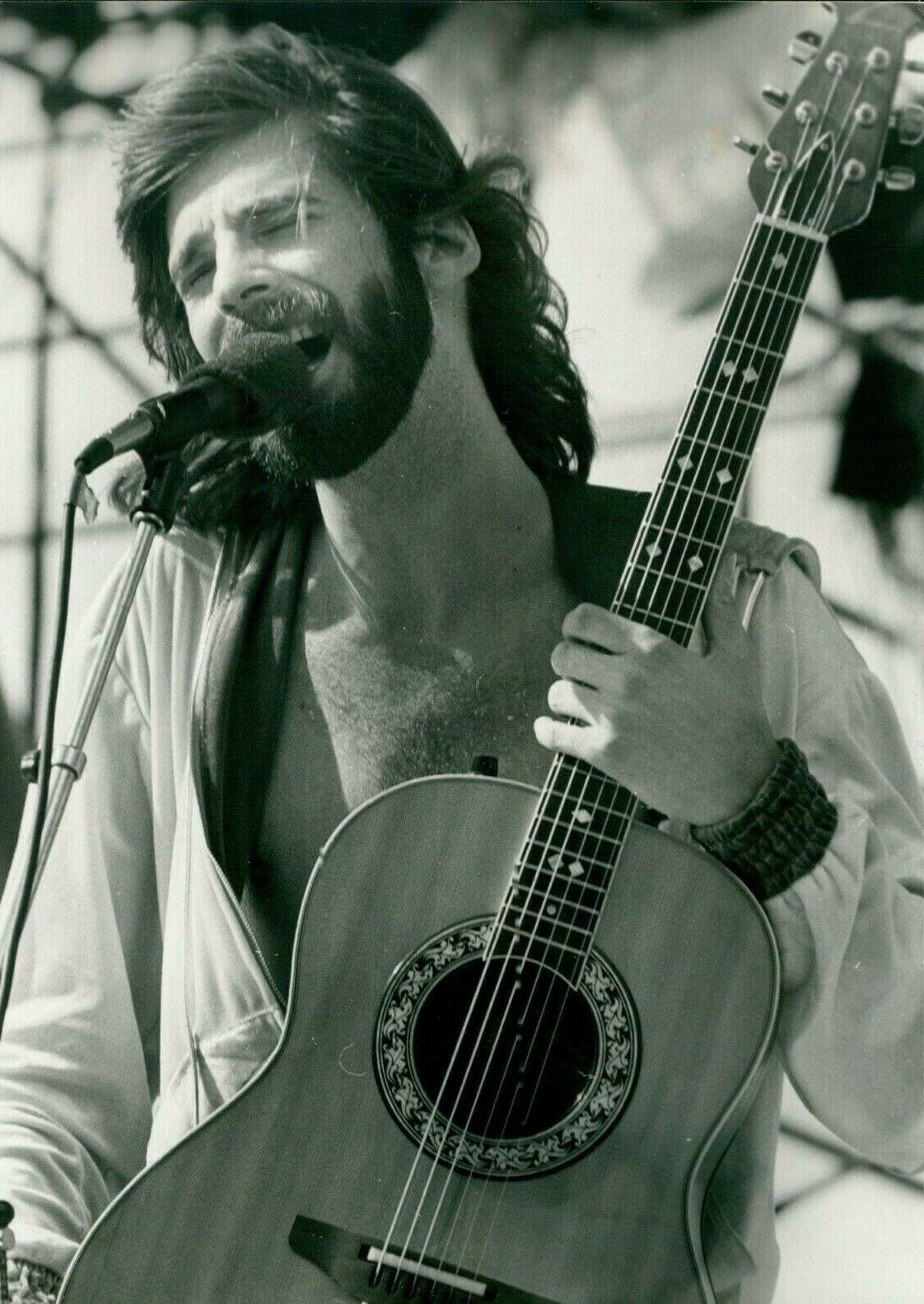
The most joyful dance song of the 1980s was written by two men who could barely move. One had cracked his ribs falling off a stage. The other was hiding a raging throat infection and praying his writing partner would not notice. Between them, dosed on painkillers and pride, Kenny Loggins and Dean Pitchford spent a few days in a Lake Tahoe hotel room building Footloose — a song about the pure, physical need to dance, composed by a pair of invalids who could hardly get out of their chairs.
It became Loggins’ only number one single, the defining record of his career and the anthem of a film that taught a generation to kick off its Sunday shoes. But before any of that, it was a favour for a friend with an unsold screenplay and no guarantee that a note of it would ever be heard.
A Screenplay That Needed Songs
Dean Pitchford was a Broadway performer turned writer who had read a news story about Elmore City, Oklahoma, a small town finally lifting a ban on dancing that had stood for nearly eighty years. He turned it into his first screenplay, a musical in disguise: a big-city teenager arrives in a town where dancing is forbidden and leads the local kids in revolt. Unusually, the songs were not decoration. Pitchford structured the film so that the story’s turning points would arrive as fully written numbers, and he knew the screenplay would be far easier to sell with real songs attached.
Pitchford and Loggins were already collaborators. In 1982 they had co-written Don’t Fight It with Journey’s Steve Perry, a Top 20 hit, and Loggins had form as a soundtrack man, having scored with I’m Alright from Caddyshack. So Pitchford brought his friend the script and asked him to help write a couple of tunes that might help place it with a studio. Loggins liked what he read. “He came to me with the screenplay and asked if I would help him write a couple of tunes which would help him place the screenplay with a movie company,” Loggins recalled. “I liked the screenplay well enough, and he was a buddy, so we sat down and wrote a couple tunes based on the actions in the screenplay.”
It worked. Paramount picked up the film, but with a condition attached: the studio wanted Loggins confirmed for the title song. That made the writing sessions suddenly urgent, because Loggins’ calendar had almost no room in it. He had a handful of shows in Lake Tahoe, and then he was leaving for a long tour of Asia.
Two Invalids in a Hotel Room
Then came the accident. At a show in Utah, walking on stage in the dark, Loggins took one step too many, walked off the edge and fell about ten feet onto packing cases below, cracking his ribs. “I kept yelling for somebody to come and help me, but the audience was screaming so no-one could hear me,” he remembered. “I was there for about ten minutes.” The injury nearly ended the collaboration before it began. Instead, it compressed it: if the song was going to exist, it had to be written in Tahoe, between shows, before the Asia tour.
Pitchford flew in already feeling ill, and by the time he arrived he had what turned out to be strep throat. He told nobody. “I couldn’t let Kenny know, because I didn’t want him to say, ‘Whoa! He’s got strep throat, and I’ve got a show to do,’” Pitchford explained. So the two men settled into a strange charade. Loggins, on painkillers for his ribs, would lower himself gingerly into a chair in Pitchford’s hotel room. Pitchford, also medicated and burning with fever, sat in the corner trying desperately not to look like a man running a temperature. “Somehow, we wrote Footloose in four days in this unbelievable pain,” Pitchford said.
In those sessions they nailed down the shape of the thing: the verses, the chorus melody and the first verse’s lyric. The raw material was pure rock and roll memory. Loggins has said he was reaching for the spark of the music he grew up on — the opening attack of Mitch Ryder’s Devil With a Blue Dress On, the lithe groove of David Bowie’s recent hit Modern Love — while Pitchford fed the script into the words. A line like “kick off your Sunday shoes” could only have come from the screenwriter: in the film, the local preacher is the man who has banned dancing, and the lyric smuggles the whole plot into five words.
When Loggins left for Asia, Pitchford finished the remaining lyrics on his own, everything except the bridge. The song was finally completed at Loggins’ house in Los Angeles when he returned — a title song for a film that had not yet shot a frame.
Writing to Paper, Not Pictures
Almost everything about the process was backwards. Loggins normally wrote soundtrack songs to finished footage, watching scenes and matching their energy. Footloose was, by his account, the only time he wrote to a screenplay alone, composing for scenes that existed only on paper. It turned out to be a liberation. The melody had even arrived in the old-fashioned way, hummed into the little hand-held tape recorder he carried everywhere to catch ideas backstage.
Because the songs existed before filming, the actors could dance to the real recordings rather than to temporary music, and the finished film feels wired directly into its soundtrack. Loggins and producer Lee DeCarlo cut the record in 1983 with a crack band: Nathan East on bass, Buzz Feiten on guitar, Tris Imboden on drums, Michael Boddicker adding synth bass and percussion. The single version, trimmed slightly from the album cut, opens on solo guitar instead of drums and pushes the backing vocals up towards the end, three minutes and forty-two seconds of pent-up energy released.
Number One, Then the Oscars
The single was released on January 11, 1984, ahead of the film’s February opening, and it behaved like a starting pistol. On March 31 it knocked Van Halen’s Jump off the top of the Billboard Hot 100 and stayed at number one for three weeks. It remains the only chart-topper of Loggins’ career, and Billboard ranked it the number four song of the entire year. It was also the first of two number ones from the film: Deniece Williams’ Let’s Hear It for the Boy, another Pitchford lyric, followed it to the top, and six of the soundtrack’s nine songs reached the Hot 100.
At the Academy Awards the following year, Footloose was nominated for Best Original Song, losing to Stevie Wonder’s I Just Called to Say I Love You. The American Film Institute later placed it on its list of the hundred greatest movie songs. None of this had been guaranteed by the material’s humble beginnings as a spec script with demo songs attached; the song had quite literally helped sell the movie it ended up defining.
Everybody Cut
The afterlife has been enormous. In 2018 the Library of Congress selected Footloose for preservation in the National Recording Registry, honouring it as culturally, historically and aesthetically significant — a long way from a Tahoe sickroom. Blake Shelton covered it for the 2011 remake of the film, and the song remains a fixture of weddings, parties and anywhere else a crowd needs permission to move.
Loggins would go on to bigger soundtrack moments — the Top Gun era was still ahead of him — but he never again topped the Hot 100, and Footloose became the record the world attached to his name. There is something fitting in how it was made. A song celebrating young people demanding the right to dance was written by two grown men in genuine pain, sitting very still, imagining movement. The joy in it is not accidental. It was willed into existence, one careful, hurting session at a time.
Leave a Reply