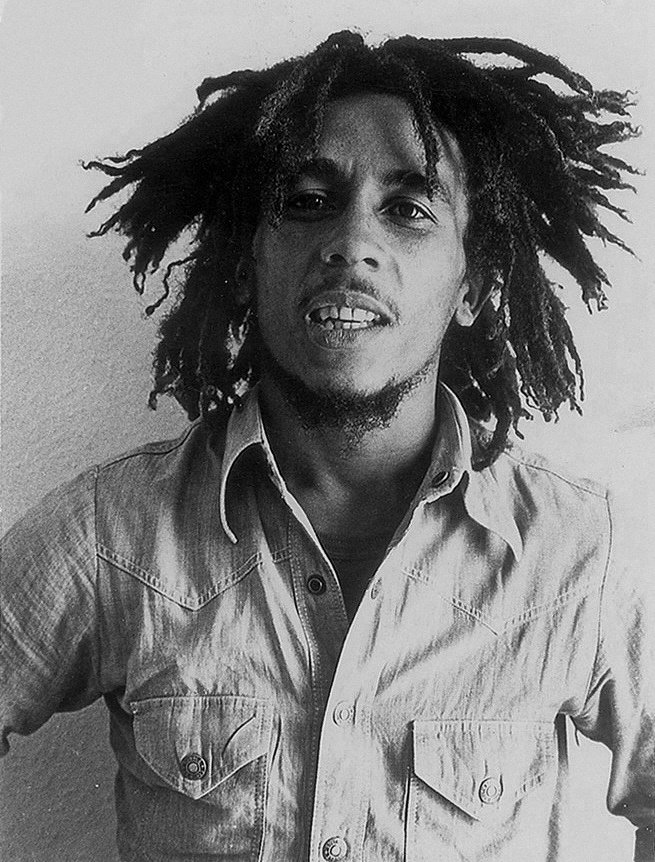
Few of the most beloved recordings in popular music exist in two such different lives. No Woman, No Cry was first heard in 1974 as a short, curiously weightless studio track, its rhythm carried by a machine and its arrangement built around a hazy organ. A year later, in a London theatre, Bob Marley and the Wailers played it for seven unhurried minutes in front of an audience that sang every word back at them — and that live performance, almost accidentally captured, became the version the world adopted as its own. The story of the song runs from a soup kitchen in a Kingston ghetto to one of the great concert recordings ever released, and at every step it is a story about Marley remembering exactly where he came from, and making sure the people who had fed him were not forgotten.
The title itself is often misread outside Jamaica. In the patois of Trenchtown, the phrase means “woman, don’t cry” — a comfort offered to a specific woman, in a specific place, by a man looking back at a hard life shared in the government yards. Everything in the song flows from that act of remembering.
Trenchtown, Georgie, and the Man Who Ran the Kitchen
Bob Marley arrived in Trenchtown, Kingston’s most famous ghetto, as a teenager, and it was there — in its yards, among its rude boys, musicians, and hustlers — that he formed the Wailers and learned the trade that made him. The song’s memories are local and precise: sitting in the Government Yard in Trenchtown, watching hypocrites pass, making a firelight for cooking cornmeal porridge, walking through the streets with feet hurting. These are not poetic abstractions. They are the furniture of a real place, recalled with love by a man who had escaped it and never stopped measuring himself against it.
At the centre of that world stood Vincent Ford, a childhood friend Marley knew as Tata. Ford, who had lost his legs to diabetes, ran the Casbah soup kitchen in Trenchtown, feeding people who, like the young Marley, might otherwise have gone hungry. Marley credited that kitchen with helping to keep him alive in lean years. So when No Woman, No Cry was prepared for release, the songwriting credit went not to Marley but to Vincent Ford — an act of attribution almost universally understood as Marley’s design. Whether Ford contributed a melody, a phrase, or simply the inspiration of his endurance, the effect was concrete: publishing royalties from one of the most performed songs of the twentieth century flowed for years to the man whose kitchen had fed Trenchtown, helping to keep it running. In an industry built on men fighting over credit, Marley used credit as charity.
Natty Dread and the Studio Original
The song arrived at a turning point in the Wailers’ story. By 1974, founding members Peter Tosh and Bunny Wailer had left for solo careers, and the group’s seventh album, Natty Dread, released on October 25, 1974, was the first credited to Bob Marley and the Wailers alone — Marley now unmistakably the leader, fronting a band built around the Barrett brothers, Aston on bass and Carlton on drums, with the I Threes adding their harmonies.
On the album, No Woman, No Cry sits as the second track, and its sound surprises anyone who knows only the famous version. The studio recording used a rhythm box — a primitive drum machine — whose brittle, metronomic pulse gives the track a strangely suspended feeling, while French keyboardist Jean Roussel provided the arrangement and the prominent Hammond organ parts. Marley’s vocal is tender and close, but the performance feels provisional, like a sketch of something the song had not yet become. An earlier demo, cut in London in 1973 in a gospel style with piano at its centre and Peter Tosh present, suggests Marley had been circling the song for some time, unsure of its final shape. The Natty Dread album was admired, and the song was noticed — Jimmy Cliff covered it on his 1975 album Follow My Mind — but nothing about the studio cut predicted what would happen to it on stage.
Two Nights at the Lyceum
In July 1975 the Wailers played two nights at London’s Lyceum Theatre on the Natty Dread tour, and by every account the first night was electric — a mostly young audience, Black and white together, greeting Marley with an intensity that startled even Island Records chief Chris Blackwell. When the band reached No Woman, No Cry, the entire theatre sang along in unison, and Blackwell, standing in the hall, recognized instantly that the song — this song, played this way, with this crowd — was a hit waiting to be documented. Island arranged recording facilities, including microphones hung to capture the audience, and the following night’s performance was recorded with the Rolling Stones’ mobile studio among the equipment assembled for the occasion.
What the tapes caught on July 17, 1975, was a transformation. Freed from the rhythm box, the song stretched past seven minutes, carried by Carlton Barrett’s one-drop drumming, Aston Barrett’s melodic bass, Tyrone Downie’s organ, and a soaring lead guitar line from Al Anderson. The I Threes lifted the choruses like a choir. Above all there was the audience, audible throughout, singing the refrain as if it were theirs — which, by then, it was. Marley’s performance is unhurried and paternal, a man consoling an entire room. Where the studio version consoles one woman, the live version consoles everybody.
The Single That Broke Reggae Open
Island released the performance on the album Live! in December 1975, and issued No Woman, No Cry (Live ’75) as a single that August in advance of it — Marley’s first significant international hit, reaching the UK Top 30 and announcing reggae to mainstream audiences far beyond its existing strongholds. The Live! album became a landmark in its own right, routinely ranked among the finest live albums ever made, with this track as its emotional centre.
The song’s meaning travelled with it. Listeners who knew nothing of Trenchtown heard a universal promise that everything would be all right, and adopted the refrain as comfort for troubles Marley never sang about. Aston “Family Man” Barrett later explained that within the band the song was understood as a tribute to the strength of the women who held their community together — the “she lions,” as he put it, who endured. Both readings can be true at once, and the song’s greatness lies in how naturally it holds them: a specific act of memory that behaved, in the world, like a general blessing.
A Credit That Kept Feeding People
The honours that followed were of the permanent kind. The live recording was placed at No. 37 on Rolling Stone‘s list of the 500 greatest songs of all time, and in 2005 it was inducted into the Grammy Hall of Fame. It anchors Legend, the Marley compilation that became one of the best-selling albums of all time, which means that for millions of listeners it is quite literally the sound of Bob Marley himself. Covers multiplied across decades and genres, from the Fugees’ hip-hop reimagining onward, each new version returning to the Lyceum performance as the source.
And through all of it, the royalties kept arriving in Trenchtown, sustaining Vincent Ford’s work until his death in 2008 — a legacy arrangement so admired that it has become inseparable from the song’s meaning. Legal challenges over the Ford credits were fought and settled in favour of Marley’s estate in the 1980s, but the kitchen had already been fed for years by then. Marley had left Trenchtown as a poor teenager with a guitar. With No Woman, No Cry, he arranged for Trenchtown to be repaid — in money, in memory, and in a recording of a London crowd singing its name back to him, one July night, like a promise kept.
Leave a Reply