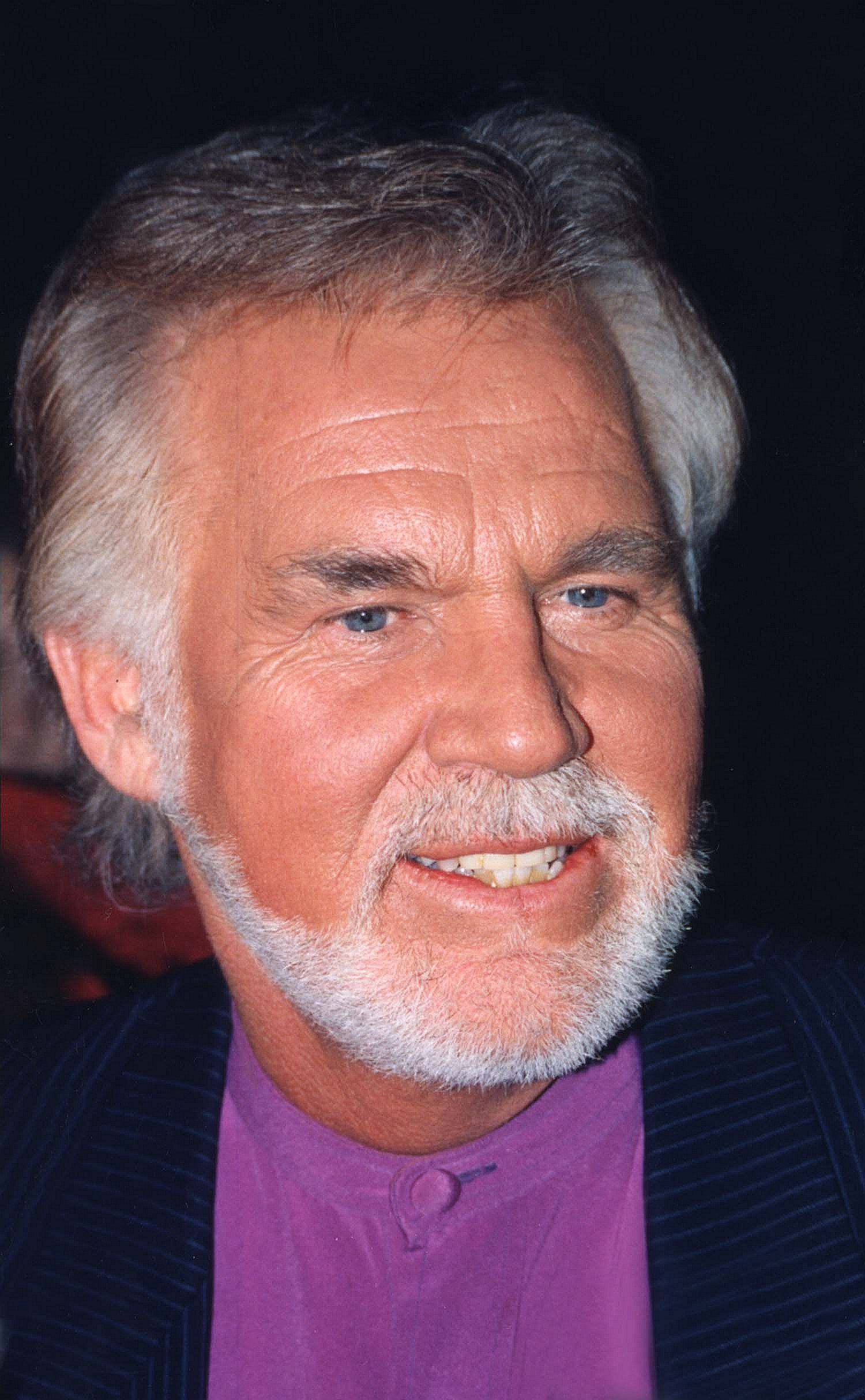
Kenny Rogers built a fifty-year career on knowing when to hold a story and when to let it break your heart, and it all started with a woman in a bar in Toledo who was not real. Lucille, released in January 1977, was the record that rescued him: his first major hit as a solo artist, a number one country single, a Top 5 pop hit and a British chart-topper, all from a song Nashville had been passing on because its story was considered too dark for radio.
The most famous complaint about it came from Houston, Texas, and it was not from a critic. It was from Rogers’ mother — whose name, unfortunately for everyone, was Lucille.
A Song Looking for a Singer
Lucille was written by Roger Bowling and Hal Bynum, two Nashville songwriters with a gift for putting ordinary misery into unforgettable choruses. Bynum, by his own account, carried the seed of the song out of trouble in his own first marriage. His wife was preparing to go away on a trip at a moment when Bynum was fighting off temptation from another direction, and the bitter little sentence formed in his head: you picked a fine time to leave me. It was too good, and too cruel, to throw away.
Bowling helped him build the sentence into a scene. In a bar in Toledo, Ohio, a narrator strikes up a conversation with a worn-down married woman who has slipped off her wedding ring and is dreaming of adventure. Before anything can happen, her husband walks in — a big, broken farmer who confronts her not with violence but with the arithmetic of abandonment: four hungry children and a crop in the field, and a hurt that will not heal. She goes back to him. And in the song’s masterful twist, the narrator follows her to a hotel room anyway, only to find he cannot go through with it. The husband’s words are still ringing in his ears.
It was a miniature novel in three minutes and forty seconds, and Nashville wanted no part of it. The woman was leaving her children. The ending offered nobody any comfort. The song sat around town gathering rejections while its writers waited for a singer brave enough, or desperate enough, to take it.
The Singer Who Needed It
Kenny Rogers was desperate enough. He had spent a decade as the frontman of the First Edition, riding the strange country-rock success of Just Dropped In (To See What Condition My Condition Was In) and Ruby, Don’t Take Your Love to Town, but the group disbanded in 1976 and left him, by his own telling, more than sixty thousand dollars in debt and playing hotel lounges to stay afloat. Nearly forty, he signed as a solo artist with United Artists in Nashville and teamed up with producer Larry Butler, who understood that Rogers’ future was not in psychedelic nostalgia. It was in that weathered, conversational voice, telling stories.
Butler believed in Lucille longer than almost anyone. Rogers’ first United Artists single, Laura (What’s He Got That I Ain’t Got), had barely troubled the charts in 1976, and everyone understood that the album sessions were close to a last chance: if the new label could not find him a hit, there might not be another label. Rogers hesitated over Lucille — he understood exactly what the song was asking of country radio, which was to sympathise with a runaway wife and a would-be adulterer at the same time — but he trusted his producer. On August 5, 1976, he walked into the studio in Nashville and, as Parade has recounted, finished the whole recording in a single afternoon. Butler kept the arrangement restrained, framing the vocal rather than dressing it up, and Rogers sang it the way he would sing everything that made him famous: like a man telling you something that happened to somebody he knew, and letting you draw your own conclusions.
That restraint was the making of the record. Rogers does not act the husband’s speech; he simply reports it, and the ache lands harder for it. By the final verse, when the narrator admits his failure in that hotel room, the singer has quietly transferred the listener’s sympathy to every person in the song — the wife, the husband and the fool who thought he wanted an adventure.
Number One on Both Sides of the Atlantic
Released as a single on January 24, 1977, from the album Kenny Rogers, the record climbed to number one on the Billboard country chart and crossed over to number five on the Hot 100, the kind of double life few country singles managed. In June 1977 it reached number one on the UK Singles Chart — the first of Rogers’ two British chart-toppers — and it topped the charts in Canada and South Africa as well. The story song that was too dark for Nashville turned out to be exactly what the world wanted to hear.
The industry said so formally. At the Grammy Awards in February 1978, Rogers won Best Male Country Vocal Performance for Lucille, while Bowling and Bynum’s writing was nominated for Best Country Song. The record also collected Single of the Year honours from the Country Music Association. A career that had been one bad month from collapse was suddenly the most reliable thing in country music.
The Phone Call From Houston
One listener, however, was furious. Rogers’ mother, Lucille Lois Rogers, heard her son on the radio singing about a woman named Lucille walking out on her family, and she did the arithmetic her neighbours might do. “She called me up on the phone one day, and said, ‘Kenneth Ray, what are you doing?’” Rogers recalled in a 2012 interview with Billboard. “I knew when she said that I was in trouble.”
She accused him of putting her business out on the street — of telling the world she had left four hungry children. Rogers talked her down with the three best defences available to him. “I told her, ‘First of all, you have eight kids. Secondly, I didn’t write it, and thirdly, it’s not about you.’ Then she tamed down a little bit.” Bynum, for his part, confirmed that the name had nothing to do with Rogers’ mother at all. It simply, as he put it, sang good. The coincidence remains one of the great accidental jokes in country music history: the song that made Kenny Rogers famous bore the name of the one woman on earth guaranteed to object.
The Template for Everything After
Lucille did more than top charts. It wrote the blueprint for the rest of Rogers’ career. The Gambler, the wronged husband of Coward of the County — also written by Roger Bowling — the lover of Lady: all of them descend from the man in that Toledo bar, a narrator who listens more than he talks and a singer who trusted audiences with unhappy endings. Bowling, who died of cancer in 1982 at only thirty-eight, had found in Rogers the perfect vessel for his story songs, and Lucille was where the partnership proved itself.
Other singers have returned to it over the years — Waylon Jennings cut a version, and Billy Currington and Justin Moore have carried it to new country audiences — but the original has never been displaced. Its central sentence escaped the record altogether and entered the language, the thing people say whenever fortune chooses the worst possible moment to collapse. It endures because its central moment is not the seduction or the confrontation. It is a stranger’s conscience, ambushed in a hotel room by somebody else’s sorrow. Rogers sang it in an afternoon, at the lowest point of his professional life, and it bought him back everything. You picked a fine time, indeed.
Leave a Reply