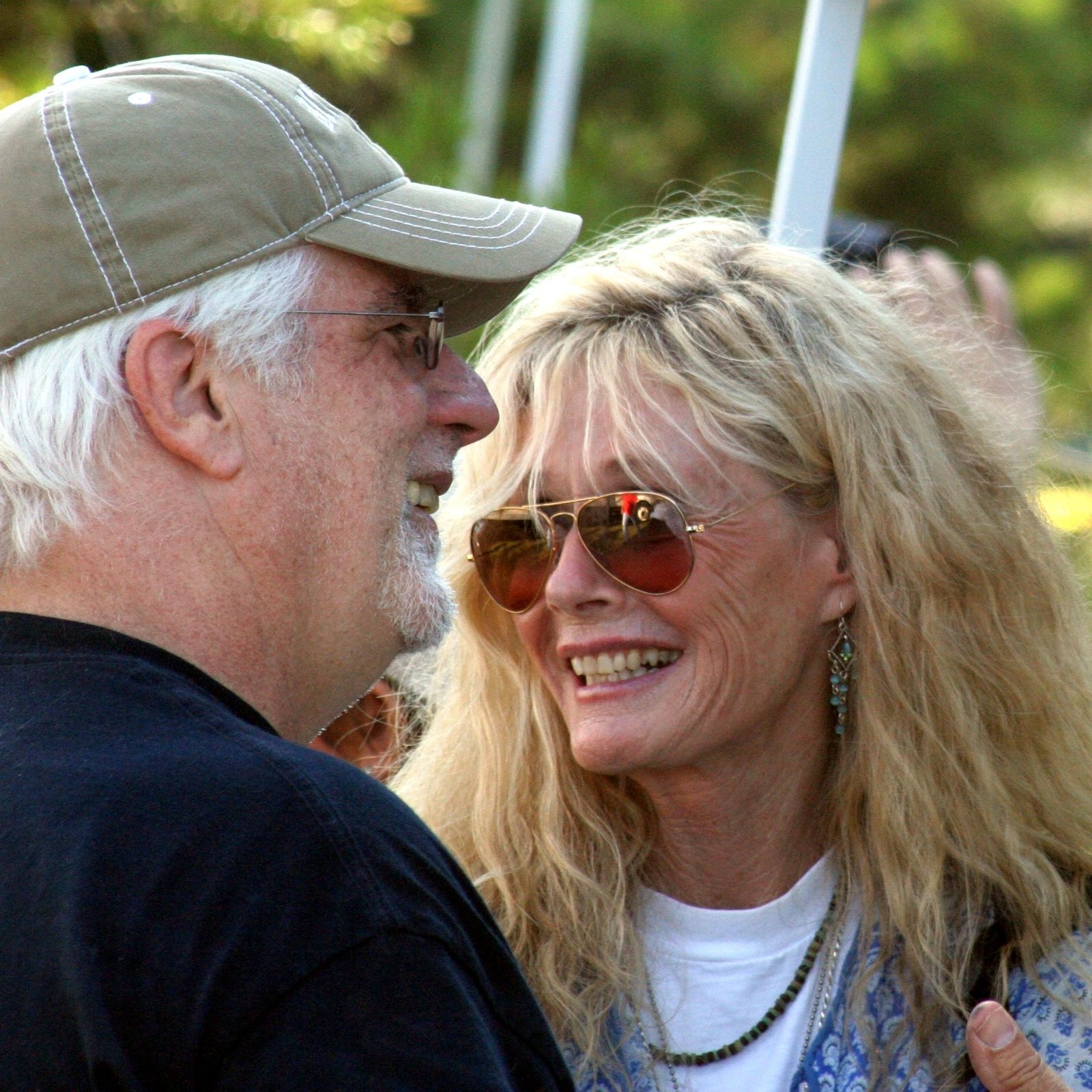
Before the world knew Kim Carnes as the voice of Bette Davis Eyes, she was a thirty-something songwriter whom the record business had been politely ignoring for a decade. Her breakthrough, when it finally came in the summer of 1980, was not one of her own songs. It was a thirteen-year-old Smokey Robinson record called More Love — a song born in genuine heartbreak at Motown, which Carnes rebuilt in gleaming modern pop and carried into the American Top 10 for the first time in her life.
It is the hinge of her whole career: the hit that proved her sandpaper voice was not a problem to be solved but the entire point, and the record that put her in position for the phenomenon that arrived a year later.
Smokey’s Most Personal Song
Smokey Robinson wrote More Love for his wife, Claudette Rogers Robinson, and he has always counted it among his most personal compositions. Claudette had been a member of the Miracles since 1957, but a series of miscarriages — eight in all, including a set of stillborn twins — forced her to retire from touring in 1964, though she kept recording with the group. After each loss, Robinson remembered, she would apologise to him, telling him she was sorry she had let him down. “I would explain that she had not let me down because she was there, she was alive,” he said. “I wanted the babies, but I didn’t know them. I wrote More Love to let her know how I felt about her.”
The Miracles recorded it unusually: the backing track was cut by Los Angeles session musicians rather than Motown’s own Funk Brothers, with the vocals added at Hitsville in Detroit in April 1967. Released that May on the Tamla label, it reached number 23 on the Billboard Hot 100 and number five on the R&B chart, went Top 10 in Canada and hit number one on Cleveland’s local pop chart — a respectable hit, but not one of the group’s immortals. It settled into the catalogue as a connoisseur’s favourite, a beautiful song waiting for its second life.
Life, in time, answered the song. The Robinsons eventually had two healthy children, and they named them out of the family business: a son, Berry, after Motown’s founder Berry Gordy Jr., and a daughter, Tamla, after the label the Miracles recorded for. The plea Robinson had written in the worst of the waiting became, in retrospect, the overture to the family’s happiest chapter — which may be why singers kept sensing there was more life in it than its 1967 chart run suggested.
A Songwriter Still Waiting
Carnes knew all about waiting. Born in Los Angeles, she had sung with the New Christy Minstrels in 1966 — where one of her bandmates, in one of pop’s neater coincidences, was a young Kenny Rogers — before settling into the songwriter’s trade with her husband and collaborator, Dave Ellingson. Her own albums through the seventies brought few sales: Rest on Me in 1972, a self-titled album in 1975 and Sailin’ in 1976 all came and went quietly, while her songs travelled further than she did: Anne Murray, Frank Sinatra and Barbra Streisand were among the artists who recorded Carnes compositions. She was becoming the classic Nashville-and-Los Angeles figure — the writer other people got famous singing, still waiting for a record of her own to land. When the new EMI America label launched, she was among its first signings, and her 1979 album St. Vincent’s Court produced a minor hit in It Hurts So Bad.
Then, in the spring of 1980, the door finally cracked open. Carnes and Ellingson had written the songs for Rogers’ concept album Gideon, and her duet with her old Minstrels bandmate, Don’t Fall in Love with a Dreamer, climbed to number four on the Hot 100. Carnes had a national hit at last — but as half of a duet, on somebody else’s album. The question hanging over her fifth album, Romance Dance, was whether she could do it under her own name.
Rebuilding a Motown Record
The answer turned out to be a cover, chosen with an interpreter’s instinct. Romance Dance, her fifth studio album, was itself a quiet milestone — the first album of her career to chart at all — and More Love was its centrepiece. The song suited her precisely because of the contrast: where Robinson’s original floats on his feathery tenor, Carnes sang it in the famous rasp that had drawn comparisons to Rod Stewart, all grain and urgency. Producers George Tobin and Mike Piccirillo rebuilt the song around her, trading the Motown arrangement for a sleek 1980 production of keyboards and gloss, stretching the song from the Miracles’ two minutes and forty-nine seconds to a radio-ready three minutes and thirty-eight. The lyric’s devotion stayed intact; what changed was the temperature. Robinson’s version reassures. Carnes’ version insists.
She was enough of a believer to record the song twice over: a Spanish-language version, Más Amor, was also cut and released in parts of Latin America. It was a canny, committed piece of record-making — a singer betting that a great song, honestly reinterpreted, could do what a decade of originals had not.
Her First Top Ten
EMI America released More Love as a single on June 4, 1980, with Changin’ on the B-side, and the bet paid off beautifully. Through the summer the record climbed, settling at number ten on the Billboard Hot 100 for three consecutive weeks in August and reaching number six on the Adult Contemporary chart and number nine in Cash Box. It was the first Top 10 solo hit of Carnes’ career, bigger than the Miracles’ original had ever been in America, and it finished among the year’s forty biggest singles.
The follow-up single, Cry Like a Baby, stalled at number 44, which might have made More Love look like a one-off — the familiar fate of the veteran who gets a single summer. Instead it functioned as an introduction. Radio now knew the voice. Programmers knew the name. And Carnes, having proved she could find the hit inside somebody else’s song, went looking for the next one with producer Val Garay and a new album to make.
There was one market where the master kept the edge over the student: Canada, where the Miracles’ original had reached number eight in 1967, a little ahead of Carnes’ number thirteen, though her version went to number three in Quebec and outperformed the original nearly everywhere else. None of that diminished the achievement. A song its own writer considered one of his most personal had now had two lives, thirteen years apart, in two utterly different voices — and the bigger American hit belonged to the woman who had waited a decade for permission to be heard.
The Door It Opened
What she found, of course, was Bette Davis Eyes, an overlooked Jackie DeShannon song that she and Garay rebuilt just as they had rebuilt Smokey’s — another act of reinterpretation, executed with the confidence More Love had bought her. In 1981 it spent nine weeks at number one and made her, briefly, the biggest singer in America. Music histories tend to treat that record as an explosion from nowhere. It was not. It was the second step of a two-step, and More Love was the first.
That is why the song matters beyond its chart line. More Love is the most successful recording of one of Smokey Robinson’s most personal songs — a husband’s promise to a grieving wife, carried to its widest audience by a woman who had spent ten years being told, in effect, that her voice was wrong. In her hands the plea of the title stopped sounding like a request and started sounding like a fact. She did not need more luck, more youth or a smoother instrument. She needed more love for the songs she chose, and the nerve to sing them exactly as she was.
Leave a Reply