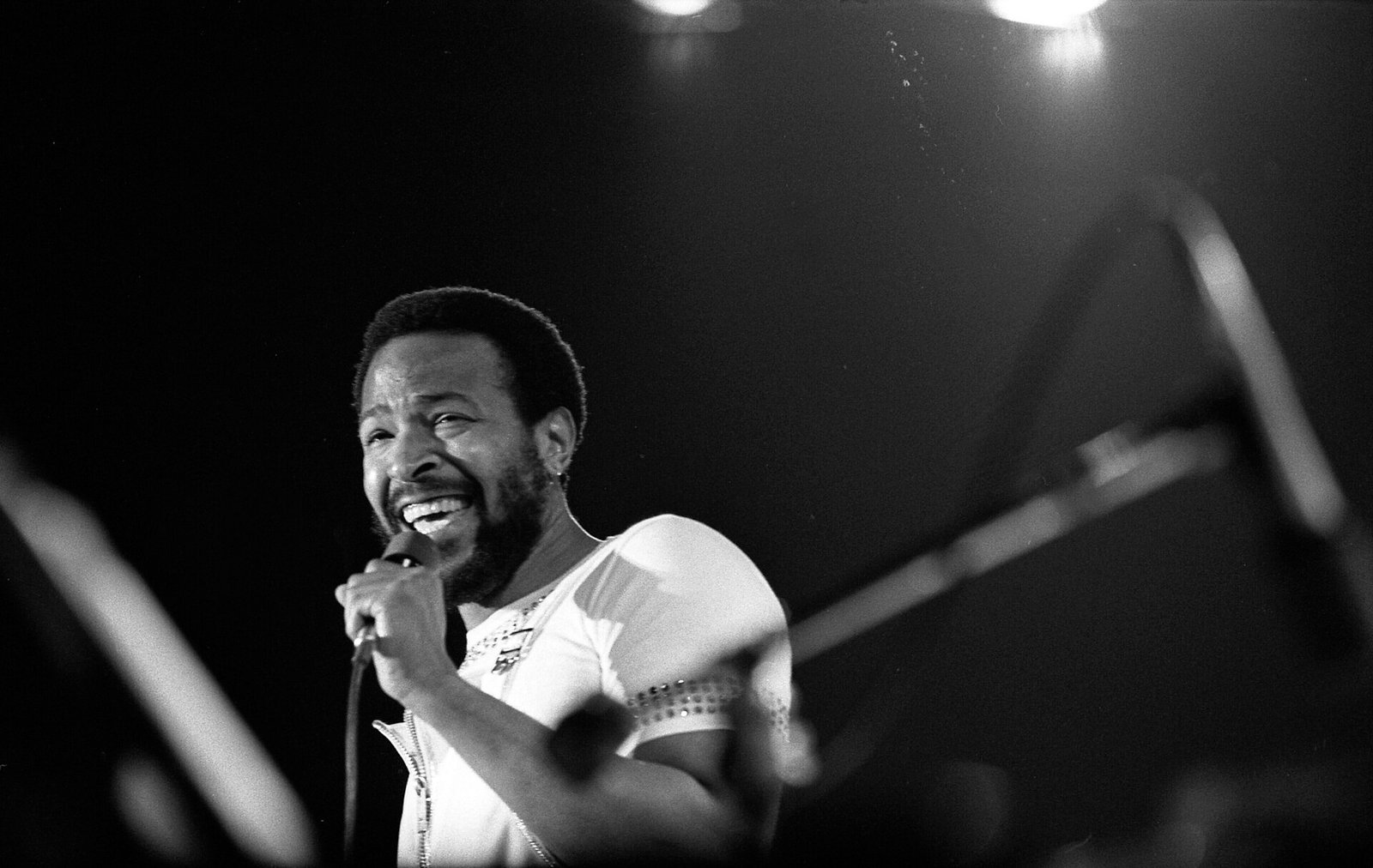
On May 15, 1969, the Four Tops’ tour bus rolled into Berkeley, California, and Renaldo “Obie” Benson looked out at a street battle. Police were attacking anti-war protesters in People’s Park, in the violence that would be remembered as Bloody Thursday. Benson, a singer in one of Motown’s slickest harmony groups, found himself asking a question that would not leave him alone: what is going on? Why were they sending young men across the world to war, and beating other young people in the streets at home?
The question became a song, the song became a standoff, and the standoff changed popular music. What’s Going On was turned down by the Four Tops, nearly buried by Berry Gordy — who is said to have called it the worst thing he had ever heard — and released in the end only because two Motown executives shipped it behind the boss’s back while its singer refused to record another note. It sold out in days.
“No Man, It’s a Love Song”
Benson took what he had seen to his friend Al Cleveland, a Motown staff songwriter who had co-written hits for Smokey Robinson and the Miracles. Together they shaped Benson’s questions into a gentle, floating melody — less a protest march than a plea. Benson offered it to his own group first. The other Four Tops refused it: to them it was a protest song, and protest was not the Four Tops’ image. Benson disagreed with the label for the rest of his life. “My partners told me it was a protest song,” he said. “I said, no man, it’s a love song, about love and understanding. I’m not protesting. I want to know what’s going on.”
He found his singer on a golf course. Benson played the song for Marvin Gaye, and later, at Gaye’s home on Outer Drive in Detroit, picked it out on guitar while Gaye listened. Gaye’s first instinct was to produce it for the Originals, another Motown group, but Benson pressed him: this one was his. Gaye took a share of the writing credit and went to work, adding a new melody, reshaping the lyric and giving the song its title — a question he had personal reasons to ask.
A Singer Ready to Ask Questions
The Marvin Gaye of 1970 was not the carefree hitmaker of I Heard It Through the Grapevine. His singing partner and close friend Tammi Terrell had died that March, at twenty-four, after collapsing on stage in his arms years earlier. Gaye was depressed, disgusted with the Motown machinery and, in his own phrase, feeling like a puppet — a voice for other people’s songs and other people’s decisions. He had largely withdrawn from live performance, talked seriously of quitting music altogether, and was questioning everything the first decade of his career had stood for. His brother Frankie was writing home from Vietnam with stories that confirmed everything Benson had seen in Berkeley. Gaye had also begun to say, in phone calls that alarmed Berry Gordy in the Bahamas, that he wanted to make a protest record. Gordy’s verdict was instant: “Marvin, don’t be ridiculous. That’s taking things too far.”
Gaye recorded the song anyway, and he recorded it his way. On June 1, 1970, he walked into Motown’s Hitsville U.S.A. studio on West Grand Boulevard — not as the label’s crooner but, for the first time, as his own producer.

June 1970: Making the Record Gordy Didn’t Want
The session produced a sound Motown had never made. Over the Funk Brothers’ loosest, jazziest groove — carried by James Jamerson’s roaming bass — Gaye layered party chatter, recorded with friends that included Detroit Lions football players Mel Farr and Lem Barney, so the song opens like a conversation already in progress. The footballers were not random guests. In his despair after Terrell’s death, Gaye had seriously attempted to reinvent himself as a professional athlete and had worked out with the Lions in the hope of making the team; the players became his friends, and their voices, woven into the record’s opening seconds, ground its big question in ordinary Detroit life. Saxophonist Eli Fontaine, asked to play the wistful alto line that drifts across the introduction, thought he was merely warming up; when he offered to do it properly, Gaye told him he already had it. Gaye sang the lead twice and let the two takes intertwine, then added his own voice answering himself in the background, a one-man congregation. Strings from members of the Detroit Symphony Orchestra were overdubbed in September, and the false fade near the end — the record seeming to finish, then drifting back — gave the single its dreamlike circular shape.
In September 1970, Gaye took the finished record to Gordy in California. According to the most repeated account, Gordy called it “the worst thing I ever heard in my life”. Gordy later denied the words, saying he loved the song’s jazz feel but feared it was out of date and would cost Gaye his crossover audience; he also objected to the politics, and to what he dismissed, in a conversation with executive Harry Balk, as “that Dizzy Gillespie stuff in the middle, that scatting — it’s old”. Motown’s Quality Control department voted it down too. Gaye’s answer was a strike: he would not record anything else until What’s Going On was released.
Released Behind the Boss’s Back
The song survived because two executives committed a quiet act of treason. Harry Balk, who believed in the record, conspired with sales chief Barney Ales to release it without Gordy’s knowledge. In January 1971 they pressed 100,000 copies and shipped them to radio. The record sold out almost immediately; another 100,000 were pressed, and within about a week some 200,000 copies were gone. Released on Tamla on January 20, 1971, What’s Going On climbed to No. 2 on the Billboard Hot 100 and sat at No. 1 on the soul singles chart for five weeks.
Gordy, confronted with the receipts, reversed himself completely — and demanded an entire album, fast. Gaye delivered What’s Going On on May 21, 1971, a song cycle built around the title track’s question, produced by himself and unlike anything Motown had issued. Its follow-up singles proved the title track was no fluke: Mercy Mercy Me (The Ecology) and Inner City Blues (Make Me Wanna Holler) both reached the pop Top 10, giving Gaye three hits from one album that his label had never wanted him to start. Half a century later, in 2020, Rolling Stone placed the album at No. 1 on its list of the 500 greatest albums of all time.

The Question That Never Closed
The title track never really left the culture. It became the standard against which socially conscious soul is measured, covered and quoted across generations, and in 2019 Motown finally gave it an official video — directed by Savanah Leaf for the label’s sixtieth anniversary, filming in Detroit and Flint the very concerns the song had raised in 1971. The footage is new; the question in the middle of it is not.
Benson always insisted he had not written a protest song, and the record bears him out. There is no slogan in What’s Going On, no enemy named, no programme offered — only a brother’s voice, asking on behalf of the mothers, fathers and soldiers in the lyric why the world looks the way it does. That restraint is precisely why the record has outlived the arguments of 1971: each new generation hears its own headlines in the question, and finds that Gaye’s gentle bewilderment fits them all. Motown’s founder feared the question would end Marvin Gaye’s career. Instead it began his real one: the moment the puppet cut his own strings and asked, in the gentlest voice imaginable, what was going on.
Leave a Reply