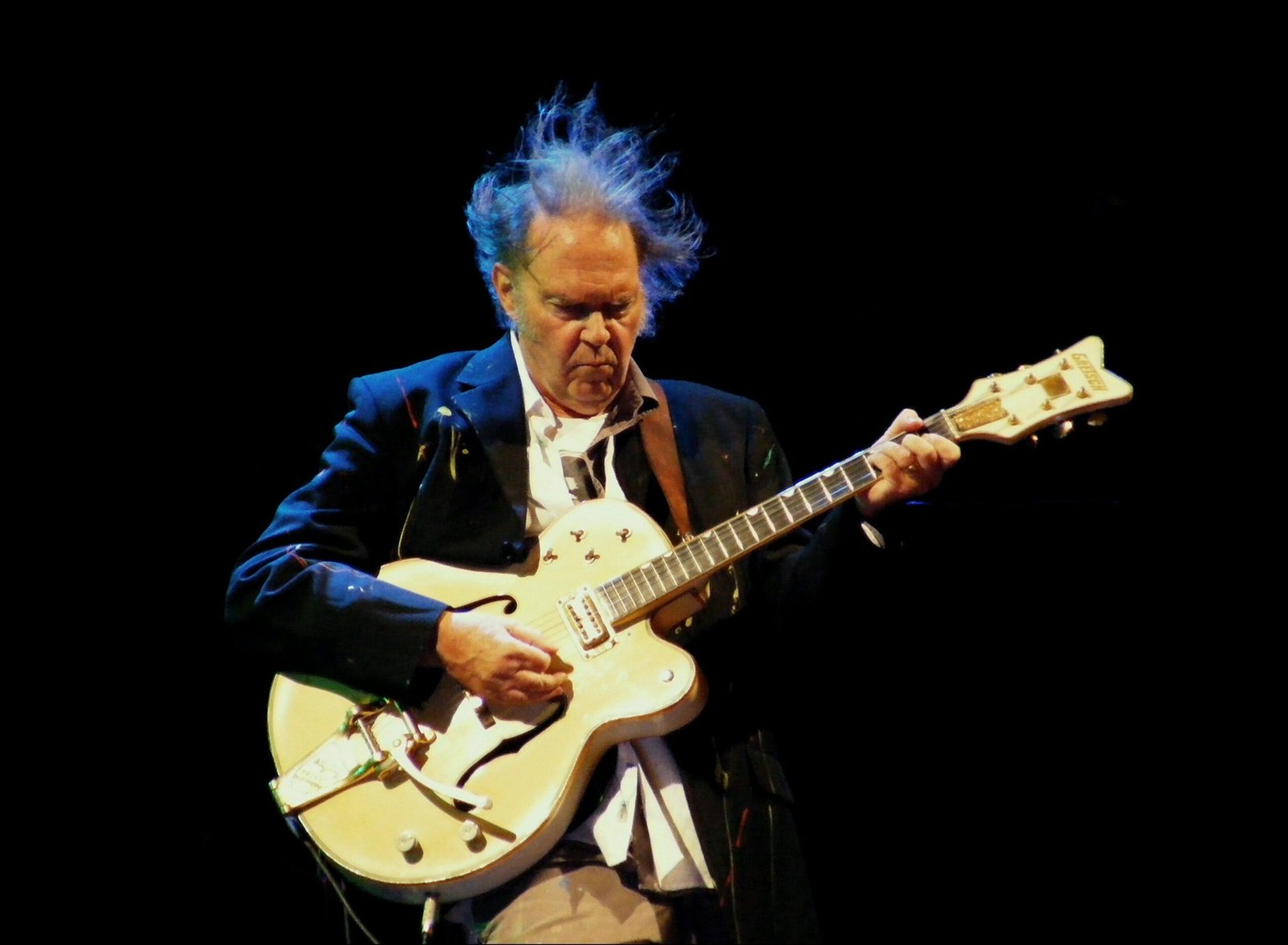
The most efficient writing session of Neil Young’s life happened when he could barely stand up. In early 1969, laid up at his home in Topanga Canyon with the flu and a high fever, Young wrote three songs in a single feverish spell: Down by the River, Cowgirl in the Sand and the two minutes and fifty-eight seconds of compressed electricity that opens his second album. Cinnamon Girl is the shortest of the three and the most direct thing he had ever recorded — a grinding riff, a duet between Young and guitarist Danny Whitten, and a daydream about a girl who may never have existed. It only reached number 55 as a single. It also became one of the most imitated guitar records ever made, and the opening statement of the band that would define Young’s electric life: Crazy Horse.
A New Band in Two Weeks
Young needed a band. His self-titled solo debut, released in January 1969, had been received politely and sold modestly, and its polished studio construction was not where his instincts were pointing. The Rockets were hardly new men: Whitten, Talbot and Molina had been playing together since their schooldays, first as a doo-wop outfit called Danny & the Memories, then through a series of Los Angeles bar bands, and they had already made an album under their own name that nobody bought. At the Whisky a Go Go, Young had encountered them and sat in. Now he hired the three of them outright, renamed them Crazy Horse, and took them into Wally Heider Recording in Hollywood with producer David Briggs. The album they made, Everybody Knows This Is Nowhere, was recorded fast and largely live, in about two weeks, and it was credited, pointedly, to “Neil Young with Crazy Horse.”
The partnership very nearly became a footnote. Within weeks of the album’s release, Young was invited to join Crosby, Stills & Nash, and he spent the next year as a quarter of the most famous harmony group in America, playing Woodstock and stadiums. But he kept returning to the garage band he had made in a fortnight, and to Briggs’s rough, unvarnished way of recording them — the professional polish of CSNY on one side of his life, Crazy Horse’s beautiful clumsiness on the other. Cinnamon Girl is where the second of those lives begins, and for many listeners it is the one that mattered most.
Cinnamon Girl was cut on March 20, 1969, and placed first on the record — a statement of intent before the trance-like epics that surrounded it. The album came out on May 14, 1969, peaked at a modest number 34 in America, but then simply refused to leave, staying on the charts for nearly two years as FM radio adopted it. The three fever songs were its spine, and the opener was its handshake.
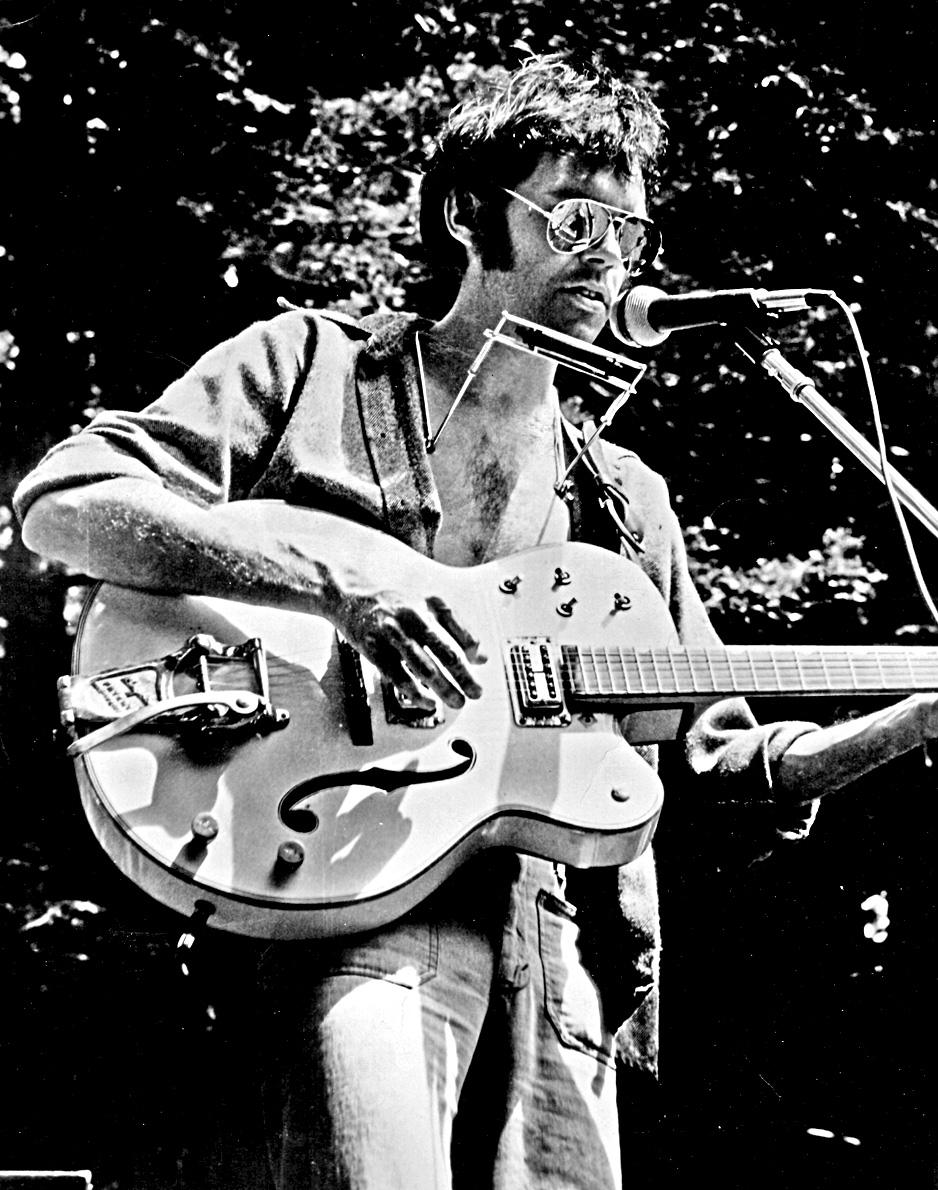
One Note, Two Voices
Everything distinctive about Cinnamon Girl is a product of limitation. Young played it on a recently acquired 1953 Gibson Les Paul he called Old Black, in an open double drop-D tuning that drones through the whole performance. The guitar solo that critics never stop praising consists, famously, of essentially one note, stabbed at repeatedly while the band churns underneath. Young has never apologised for it. “People say that it is a solo with only one note,” he explained, “but, in my head, each one of those notes is different. The more you get into it, the more you can hear the differences.” NME later placed the song’s opening chord progression at number 47 on its list of the fifty greatest guitar riffs of all time, and called the record an example of proto-grunge two decades before grunge existed. In Q magazine, Beck named the Cinnamon Girl riff his all-time favourite.
Set it beside its fever-mates and its economy becomes startling. The same sickbed session produced Down by the River, which stretches past nine minutes on the album, and Cowgirl in the Sand, which passes ten. Cinnamon Girl makes the same band sound like a hit machine: verses, chorus, one-note solo, coda, gone in under three minutes, with Whitten’s rhythm guitar sawing against Young’s lead the whole way. Young’s temperature that day has been reported at 103 degrees. Whether or not the thermometer agreed, the three songs share a delirium — loose, obsessive, circling a single chord pattern as if the band were too feverish to move on — and Cinnamon Girl is the one that turns the delirium into pop.
And then there are the voices. The singing is a true duet: Whitten takes the high harmony, Young the low, and the two lines braid so closely that the record feels sung by one doubled person. On the album mix, Young’s voice leads. But when Reprise prepared the single, the mono mix pushed Whitten’s harmony forward and trimmed the guitar coda — meaning the version radio played in 1970 is, in effect, the one where Danny Whitten is the lead singer. It is one of the reasons the track has grown more poignant with time. Whitten, the other voice in the braid, would be dead of an overdose in November 1972, hours after Young had sent him home from a tour rehearsal. Cinnamon Girl remains the clearest recording of the partnership at its beginning, when it was all promise.

The Girl on Peeling Pavement
Who was she? Young, typically, answered the question in a way that only deepened it. In the handwritten notes for his 1977 compilation Decade, he wrote that he had written the song “for a city girl on peeling pavement coming at me through Phil Ochs’ eyes playing finger cymbals. It was hard to explain to my wife.” Scholars have matched the description to Jean Ray, a folk singer in Phil Ochs’s circle who did indeed accompany herself on finger cymbals. At the time, gossip preferred a more glamorous candidate: Pamela Courson, Jim Morrison’s partner, who moved in the same Topanga circles and had the reddish-brown hair the title suggests. Young has denied the song is about her. Critic Johnny Rogan’s verdict may be the most accurate: the lyric is “exotic and allusive without really saying anything at all” — a fever dream of waiting “between shows” for somebody who exists mainly as an excuse for the riff.
Number 55, and Everywhere
Reprise finally issued Cinnamon Girl as a single on April 20, 1970, with Sugar Mountain on the B-side, and it climbed to number 55 on the Billboard Hot 100 and number 34 in Australia — respectable, unspectacular. The record business then delivered its small joke: within the year, a cover by the Gentrys, released on the storied Sun label, reached number 52, three places higher than Young’s own. Yet the original kept accumulating quiet firsts. According to his autobiography, the disc jockey “Whispering Bob” Harris made Cinnamon Girl the very first record he played on his BBC Radio 1 debut in August 1970. The fierce live version on Live Rust in 1979 renewed it for the punk generation, and it has been a fixture of Young’s electric sets ever since, covered along the way by acts from the Smashing Pumpkins to Radiohead.
The covers kept multiplying the evidence. The Smashing Pumpkins and Radiohead both took it into their live sets; Foo Fighters and Phish claimed it too; and in 1996 the goth-metal band Type O Negative rebuilt it as a slow, cathedral-heavy dirge on October Rust, proving the riff worked at half speed, in another genre, in another century. Even its ending became a subject of devotion: the album version closes with an improvised-feeling coda, the riff ground down to a single repeated figure as the track fades — the first time Young caught one of his one-note endings on tape, and a template for the way he and Crazy Horse would close the song on stage for decades.
That is the strange arithmetic of Cinnamon Girl. Written in a sickbed in an afternoon, sung by two men, built on one note, sold as a number 55 single — and still, more than half a century later, the three minutes by which an entire strain of rock music measures itself. Young went looking for a band that could play the way he felt. In a Hollywood studio in March 1969, with a fever song at the top of the tape, he found them.
Leave a Reply