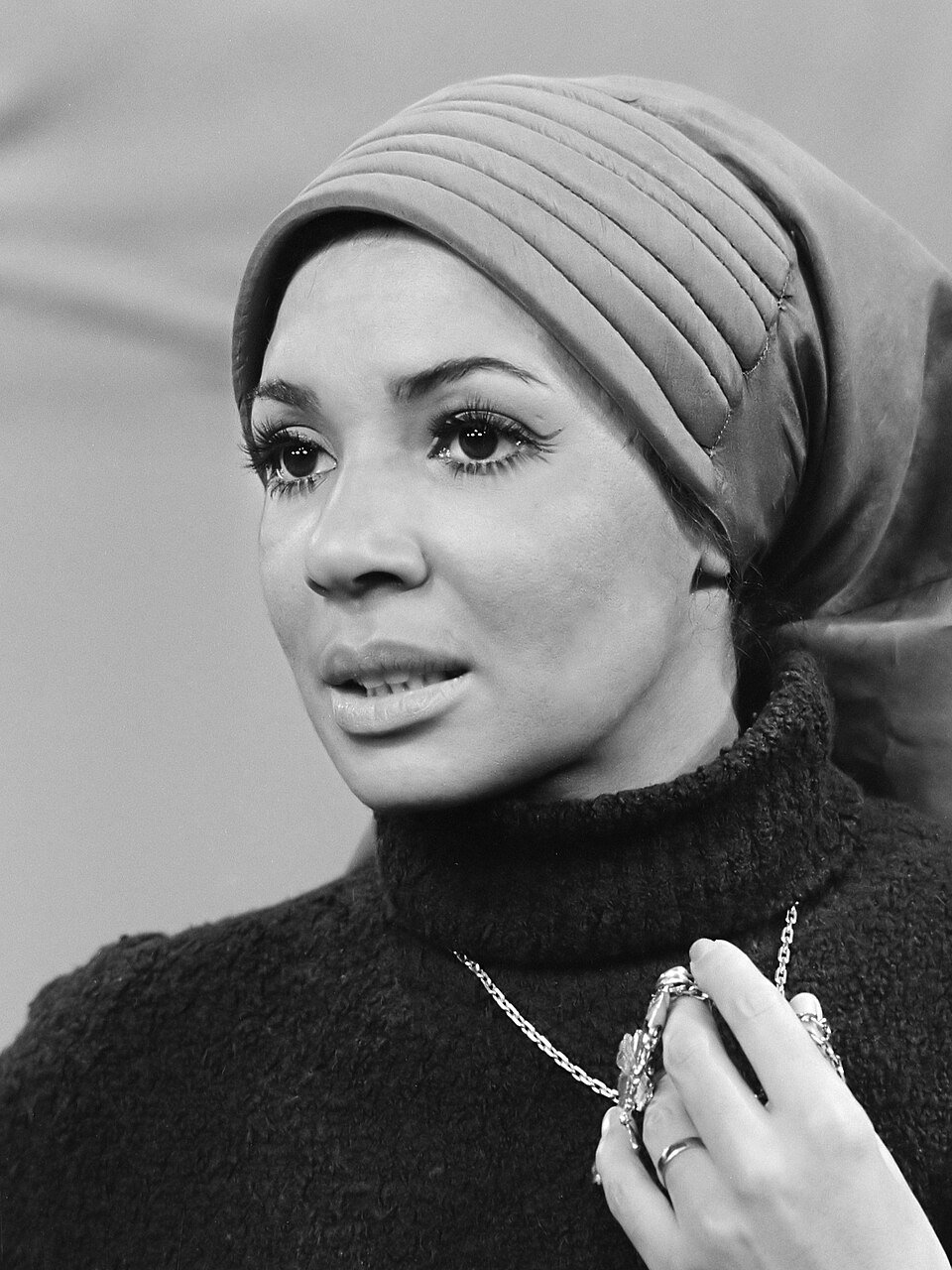
The record lasts one minute and forty-eight seconds. That is all Shirley Bassey needed. In September 1967, the Welsh singer took a song that had been written for a whole line of Broadway chorus girls — a teasing, hip-swaying come-on delivered by a row of jaded dance-hall hostesses — and compressed it into a single voice: brass, nerve and total command. Big Spender climbed no higher than No. 21 in Britain, and by any chart measure it was a minor entry in her catalogue. Yet it became the song she could never leave behind, the calling card she performed for royalty and festival crowds across six decades. This is how a chorus number became a one-woman coronation.
A Veteran Lyricist, a Jazz Pianist and the Fandango Ballroom
Big Spender was written by composer Cy Coleman and lyricist Dorothy Fields for the musical Sweet Charity, which opened on Broadway on 29 January 1966. It was a collaboration across generations. Coleman was a jazz pianist turned theatre composer, all restless rhythm; Fields was the grand dame of American songwriting, a woman who had won an Academy Award for The Way You Look Tonight back in 1936 and had been crafting lyrics since the 1920s. With a book by Neil Simon, adapted from Federico Fellini’s film Nights of Cabiria, and Bob Fosse directing and choreographing, the show starred Gwen Verdon as Charity, a dance-hall hostess in New York who keeps believing in love despite the evidence.
The song is not Charity’s. It belongs to her co-workers at the Fandango Ballroom, who drape themselves across the stage and address the customers directly — a line of women pricing their company by the dance, set, as one historian put it, to the beat of a striptease. Fosse staged it with the girls frozen in louche, angular poses, barely moving, letting the lyric do the leering: the famous invitation to spend a little time with them. It was an ensemble piece by design — no star, no soloist, just a wall of worldly-wise voices. Everything about Bassey’s version would violate that design. When Fosse brought the show to the screen in 1969, with Shirley MacLaine as Charity and Chita Rivera and Paula Kelly leading the hostess line, the number became one of the most imitated set pieces in film musicals — proof that the song’s power lay in its brazen stillness. A solo singer, though, would have to supply all that stillness, and all that brazenness, alone.

First Peggy, Then Shirley
Bassey was not even the first singer to record it. Peggy Lee got there first, releasing Big Spender as a single on 29 January 1966 — the very day the show opened — and folding it into an album of the same name; her cooler, slyer reading was a hit on America’s Easy Listening chart. Lee purred where the lyric winked. Bassey heard something else in the song entirely: not a wink but a challenge.
By 1967 she was, thanks to Goldfinger, the most theatrically powerful female voice in British pop — a singer who did not interpret drama so much as detonate it. Producer Norman Newell, her longtime collaborator, took her into the studio for United Artists, and the arrangement built the song as a series of ambushes: blasts of brass, sudden silences, a rhythm that struts and stops dead while Bassey leans into the microphone. Where the stage version spread its teasing across a dozen voices, Bassey gathered it into one — the hostess, the madam and the whole ballroom in a single pair of lungs. Released in September 1967 with Dangerous Game on the flip, the single is practically over before it begins. One minute and forty-eight seconds. She never lets it feel short. The song also anchored her 1967 album And We Were Lovers — an LP later reissued under the song’s own name, Big Spender, as if the record company had finally admitted which track the whole enterprise was hanging on.

No. 21 — and Then, Forever
The chart verdict was lukewarm: No. 21 in the UK that December, just outside the Top 20, in a British career that had already produced two No. 1 singles. Under normal rules, Big Spender would have faded into the middle of her discography. The timing, though, gave it a strange importance. Within months of the single’s release, Bassey left Britain as a tax exile and, for almost two years, was barely able to work in her home country at all. The record she left behind became her calling card in absentia — the sound of the show she would bring back with her. When she did return, with a record-breaking nightclub run at London’s Talk of the Town in 1970, Big Spender was waiting in the act like a throne she had kept warm. Instead it migrated to the stage, and the stage would not give it back. Bassey built her live act around it — the strut, the pause, the raised eyebrow inside the vocal — until the song stopped being a cover version and became her signature, the moment audiences waited for. She performed it for the 80th birthday of Prince Philip. She performed it at the Glastonbury Festival in 2007, at seventy years old, before a young crowd that roared the invitation back at her. The Encyclopedia of Popular Music dryly records its oddest honour: the record was found effective in clearing pigeons from the runways at Liverpool airport.
Hollywood kept it in circulation, too — her recording turns up in the 2004 film The Life and Death of Peter Sellers and the Danish film Nynne a year later — and in December 2007 the song completed a strange forty-year loop, re-released in remixed form as a single from her album Get the Party Started, the new track built, remarkably, around a vocal she had recorded back in 1984. Queen, meanwhile, had long since adopted it as a Freddie Mercury showpiece, performing it at Wembley Stadium in 1986. Everyone who sings it sings it in Bassey’s shadow.
By then the tune had been burrowing into the culture for decades by every available route. American television viewers of the 1970s heard Edie Adams purr a rewritten version in Muriel Cigar commercials, swapping the lyric’s invitation for a pitch to spend a little dime. Henry Mancini slipped a musical quotation from it into the animated credits of The Pink Panther Strikes Again in 1976, confident the audience would catch the joke. Morecambe and Wise built a Christmas-show parody around it. A song crosses into folklore when advertisers, animators and comedians all assume you already know it — and by the mid-1970s, on both sides of the Atlantic, everybody did. Most of them had learned it from Bassey, whether they realised it or not.
Why It Could Only Be Hers
There is a final, quieter credit due. For Dorothy Fields, the song was a late-career miracle: she was sixty-one when Sweet Charity opened, a survivor from the age of Kern and Gershwin, and Big Spender became the last standard of her extraordinary life in lyrics. It travelled the world not in a Broadway cast recording but in the voice of a singer from Tiger Bay, Cardiff, who understood exactly what the old lyricist and the young jazzman had built: a song about appetite, performed by a woman with more of it than anyone else in the room.
Strip the story down and the paradox is simple. Coleman and Fields wrote for a chorus — for anonymity, a dozen interchangeable voices selling the same illusion. Bassey made the song mean the opposite: one unmistakable woman, entirely in charge, naming her price and enjoying it. That is why a No. 21 single outlived No. 1 records, why it survives every remix and every impersonator, and why, as the television performance above from twenty years after the single shows, she could still stop a song dead in the middle and restart it with a look. The hostesses of the Fandango were teasing. Shirley Bassey was not teasing. She was collecting.
Leave a Reply