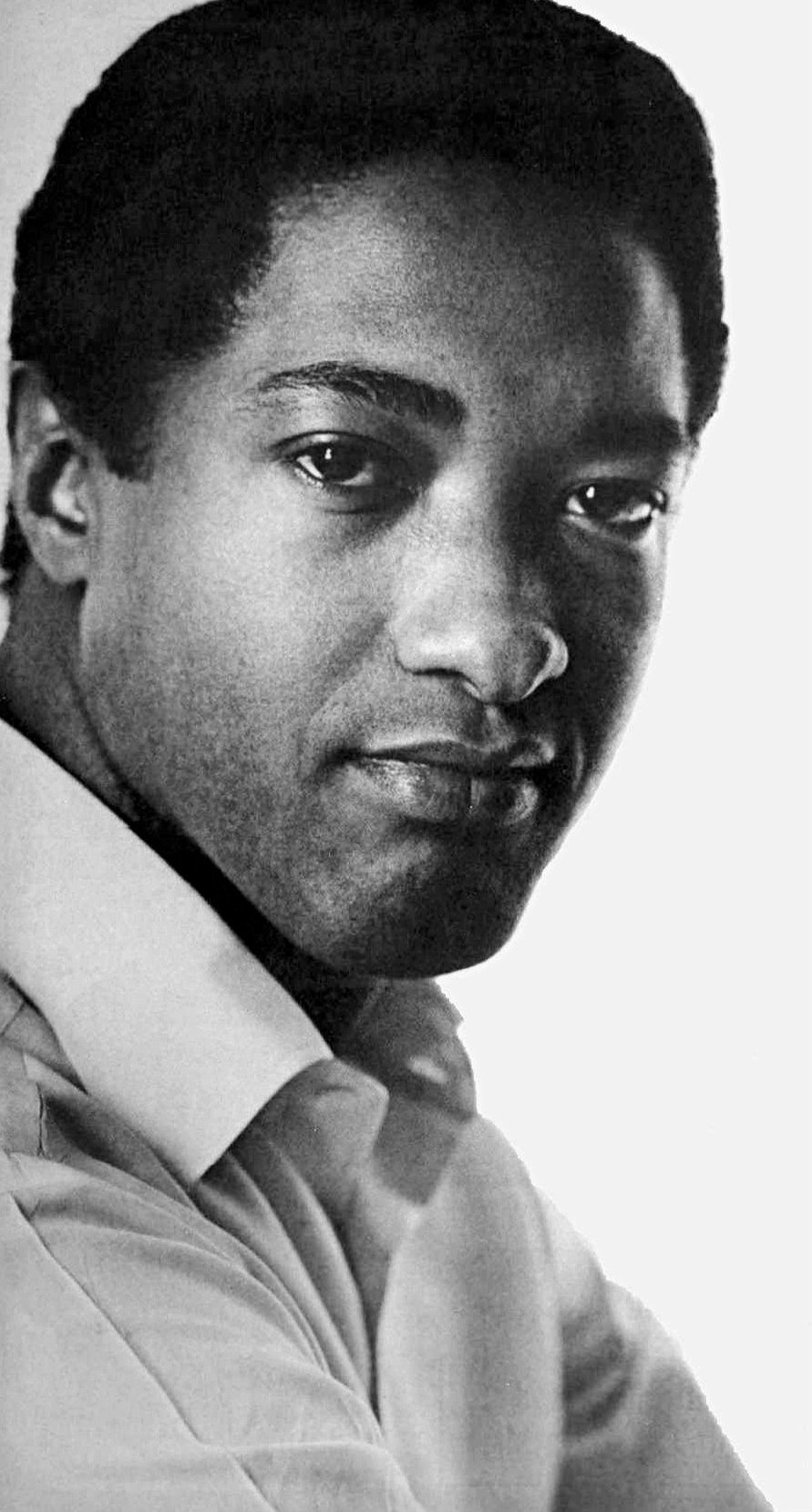
On 26 April 1962, Sam Cooke walked into RCA’s Studio 1 in Hollywood and threw what everyone present remembered as a party. Friends crowded the floor, outtakes dissolved into laughter, and the engineer, Al Schmitt, would recall that everybody was simply having a ball. Out of that loose, happy session came two songs recorded the same day. One, Having a Party, was the cheerful single RCA Victor wanted. The other was slower, heavier and far more dangerous to Cooke’s carefully managed pop image: a pleading, church-soaked ballad called Bring It On Home to Me, slipped out as the B-side — and now regarded as one of the greatest soul records ever made.
It was the sound of Cooke going home. Before the suits and the supper clubs, he had been the golden voice of the Soul Stirrers, gospel’s biggest draw, and Bring It On Home to Me was, in the words of those who knew him, his first serious nod back to those roots. The timing mattered. By 1962 Cooke was a pop star with a chain of hits — You Send Me, Chain Gang, Twistin’ the Night Away — and a businessman besides, with his own label and publishing interests, yet he worried that the sweet, string-laden records were drifting too far from the fire that made him. Gospel fans had once accused him of abandoning them; now, on his own terms, he was about to prove the church had never left his voice. This is the story of how a song another singer turned down, sung as a duet with a friend who had once nearly died beside him, became the record that quietly redrew the map of soul music.
Written on the Road, and Turned Down Once
Cooke wrote the song while out on tour in a package revue run by promoter Henry Wynn — the same stretch of road work that produced Having a Party. Confident in the new ballad, he first offered it to fellow singer Dee Clark, who turned it down. Cooke then phoned co-producer Luigi Creatore from Atlanta and pitched both songs down the line; Creatore liked what he heard and booked a Los Angeles session for two weeks later.
The song did not arrive from nowhere. Musically, it is a significant reworking of I Want to Go Home, a 1959 single by Charles Brown and Amos Milburn, keeping that record’s gospel flavour and its call-and-response shape but turning the lyric unmistakably secular — a lover’s plea instead of a hymn. Cooke’s mentor J. W. Alexander understood exactly what the singer was reaching for: Cooke felt he needed more weight, that the light pop material would not sustain him. He was aiming, deliberately, at the sound of his former group, the Soul Stirrers — at the church that had made him.
Eighteen Pieces and One Microphone Conversation
Producers Hugo & Luigi hired arranger René Hall, Cooke’s trusted musical director, who assembled an eighteen-piece backing group: six violins, two violas, two cellos and a saxophone, plus a seven-piece rhythm section with two percussionists, two bassists, two guitars and a piano. Ernie Freeman played the keys, Tommy Tedesco was among the guitarists, and Frank Capp kept time — an orchestra big enough for a pop spectacle, arranged instead for intimacy.
The first take surrounded Cooke with the whole gospel family — Lou Rawls, J. W. Alexander, Fred Smith and probably the Sims Twins, all echoing him in the old quartet style. It was glorious, and it was too much. On the second, final take, Cooke stripped the responses down to a single voice: Rawls alone, answering line for line, low and close, turning the record into a conversation. That decision — one star, one friend, one microphone apiece — is the heartbeat of the record.
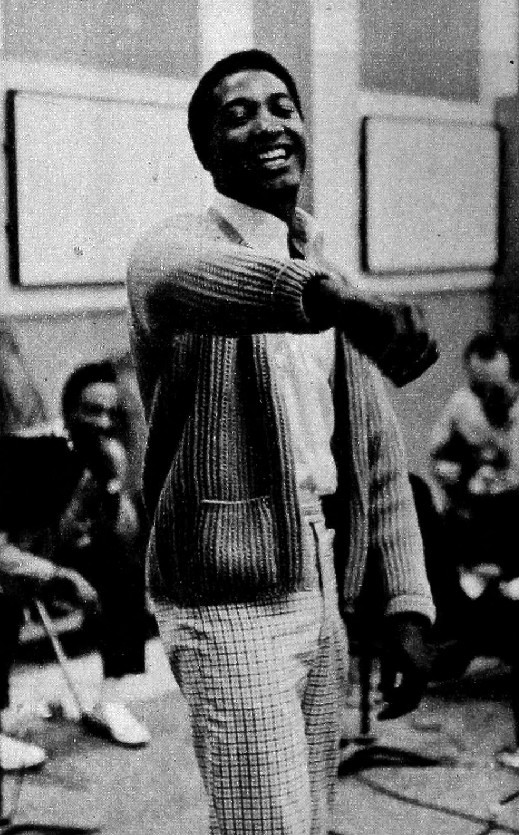
Listen to how the finished record is paced. It opens in no hurry at all — piano, a gentle sway, Cooke almost conversational as he makes his case — and Hall’s strings and saxophone gather around him verse by verse, the way a congregation gathers around a testimony. Rawls’s answers grow surer as the pleading grows more desperate, until the final refrain lifts the whole arrangement into something close to a shout. Two minutes and thirty-seven seconds, and not one of them is wasted: pop discipline on the surface, gospel architecture underneath.
The Friend in the Echo
Lou Rawls was not a hired session singer; he was Cooke’s brother in every way but blood. Both men had come up through Chicago gospel — Rawls had sung with the Highway Q.C.’s, the same fertile ground that fed the Soul Stirrers — and they had toured together for years. In 1958, a car crash on the road nearly ended the story: another man in the car was killed, and Rawls spent five and a half days in a coma, taking the better part of a year to recover fully. By the spring of 1962 he was still rebuilding, singing in small clubs without a record deal of consequence.
So when Cooke waved him over to the microphone at RCA Studio 1, it was more than a session booking. It was a lifeline, and a reunion. Every yeah and oh yeah Rawls breathes behind Cooke’s pleading carries that history: the church they started in, the road they survived, the friendship that outlasted the wreck. Listeners in 1962 could not have known any of it. They simply heard two voices that fitted together like call and answer in a Sunday service — because that is precisely what they were.

The B-Side That Would Not Stay One
RCA Victor released the single on 8 May 1962 with Having a Party as the A-side, and the strategy was not wrong, exactly: the party song became a substantial hit in its own right. But the flip refused to stay in its place. Bring It On Home to Me climbed to No. 2 on Billboard’s Hot R&B Sides chart and No. 13 on the Hot 100, respectable numbers that badly undersell what happened next. The song entered the permanent repertoire — one of the Rock and Roll Hall of Fame’s 500 Songs That Shaped Rock and Roll — and became a standard against which every soul singer since has been measured.
You can hear its full power on the live recording above, from Miami’s Harlem Square Club on 12 January 1963. RCA executives heard that sweating, testifying performance and shelved the album, afraid it was too raw for the mainstream audience they were building for Cooke. It stayed unreleased until 1985, twenty-one years after his death, and is now routinely called one of the greatest live albums ever made.
Everybody Brings It Home
The covers began immediately and never stopped. The Animals cut it in 1965 as an explicit tribute to the recently killed Cooke, taking it to No. 7 in Britain in what became original organist Alan Price’s last single with the band. Eddie Floyd brought it back to the American charts in 1968; Rod Stewart folded it into a medley with You Send Me on his 1974 album Smiler; Mickey Gilley took it to No. 1 on the country chart in 1976 — the same song, at home in soul, rock and honky-tonk. Lou Rawls eventually recorded his own version in 1970, the answering voice finally singing the lead. A new century found the record opening Guillermo del Toro’s Gerald’s Game and riding the soundtrack of Guardians of the Galaxy Vol. 2, and Britain eventually certified the original single Gold.
Its most consequential echo, though, came within months. In a New York hotel room in 1962, a young Motown songwriter named Smokey Robinson heard the record’s slow burn and close harmony and sat down to answer it with a song of his own. But that is another story. What Cooke built in one happy afternoon — an orchestra, a survivor, and a singer bringing his whole church history home to a pop B-side — took two minutes and thirty-seven seconds. It has been playing ever since.
Leave a Reply