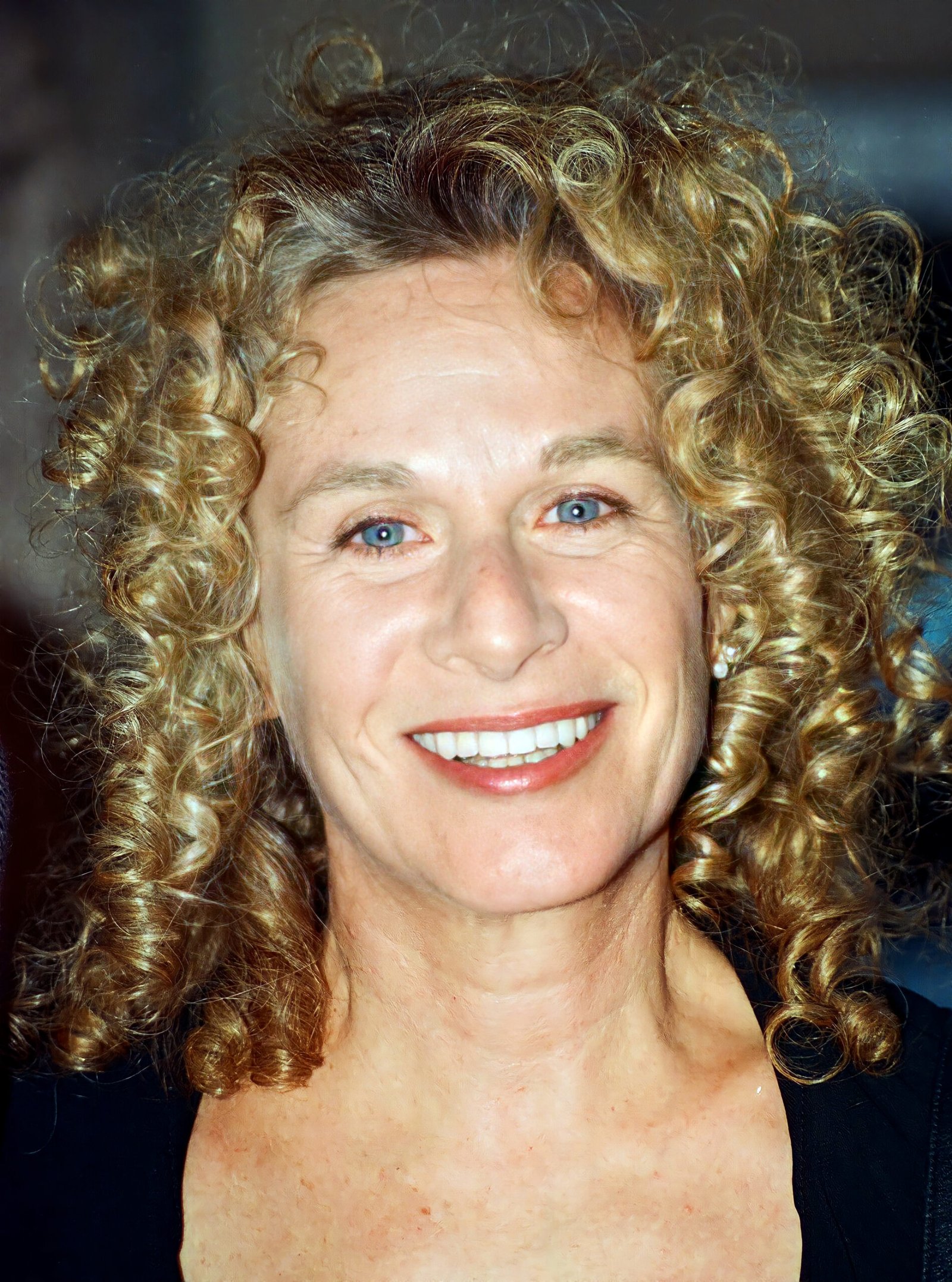
Before Carole King ever sat at a piano on a stage with her name on the marquee, she was already one of the most important people in American pop music. She just wasn’t famous yet. By the time she was in her mid-twenties, she had written or co-written more chart hits than most artists manage in a lifetime. The world sang her songs every day without knowing her name. Then, in 1971, she released an album that changed everything — not just for her, but for an entire generation of listeners who suddenly felt like someone was singing directly to them.
The Brooklyn Girl Who Wrote Everyone Else’s Hits
Carole King was born Carol Joan Klein in Manhattan on February 9, 1942, and raised in Brooklyn. Music came early: she was playing piano by age four, and as a teenager at James Madison High School she formed a vocal group called the Co-Sines and started making demo recordings. A friend of those teenage years was Paul Simon — yes, that Paul Simon — with whom she cut demos as a duo called “Martin and Cynthia.”
At Queens College, her path crossed three more future legends: Neil Sedaka, Gerry Goffin, and later Neil Diamond. Sedaka, who had known King since high school, was so smitten that he wrote his first hit, “Oh! Carol,” in her honor. But it was Goffin who became her partner in every sense. He was an aspiring lyricist; she was a melody machine. They married in 1959, when she was just seventeen.
Through a connection with Sedaka, the young couple landed jobs as staff songwriters at Aldon Music, working out of the legendary Brill Building under publisher Don Kirshner. What followed was one of the most astonishing songwriting runs in pop history. Their first major success arrived in 1961 when the Shirelles took “Will You Love Me Tomorrow” to number one — the first chart-topper ever by a Black girl group. King was eighteen years old.
The hits kept coming like rainfall: “The Loco-Motion” for Little Eva (who had been the Goffins’ babysitter), “One Fine Day” for the Chiffons, “Up on the Roof” for the Drifters, “Pleasant Valley Sunday” for the Monkees, “Take Good Care of My Baby” for Bobby Vee, and the timeless “(You Make Me Feel Like) A Natural Woman,” which Aretha Franklin turned into a cornerstone of soul music. Billboard chart researcher Joel Whitburn later calculated that between 1955 and 1999, King wrote or co-wrote 118 hits on the Billboard Hot 100 — making her the most successful female songwriter of the rock era.
The Road to “Tapestry”
By the late 1960s, the Goffin-King marriage was ending, and King was changing too. After the divorce in 1968, she moved to Laurel Canyon in Los Angeles and formed a trio called the City with bassist Charles Larkey (whom she would later marry) and guitarist Danny Kortchmar. She also began, quietly, to think about singing her own material.
Her first solo album, “Writer,” arrived in 1970 on Ode Records, run by producer Lou Adler. It sold modestly, but Adler believed in King’s voice — that warm, unpolished, conversational voice that sounded nothing like the glamorous girl-group singers who had recorded her songs. He kept her on the label. That faith paid off beyond anyone’s imagination.
“Tapestry” was released on February 10, 1971 — one day after King’s 29th birthday. It was recorded in just three weeks, in the middle of King’s life as a young mother raising three children. Friends stopped by to help: James Taylor and Joni Mitchell sang background vocals. The now-iconic cover photograph was taken in King’s Laurel Canyon living room, where she sits barefoot holding a tapestry she had stitched by hand, her cat Telemachus at her feet. It looked like nothing else in the record stores, and it sounded like nothing else either.
The Album That Defined the Seventies
“Tapestry” didn’t just succeed — it detonated. The album spent 15 weeks at number one and remained on the Billboard album chart for 313 weeks, more than six years. It became the best-selling album by a female artist for a quarter century and the first album by a woman to be certified Diamond for ten million in sales.
The singles read like a greatest-hits collection built in real time: “I Feel the Earth Move” and “It’s Too Late” both reached number one, “So Far Away” reached the Top 20, and “You’ve Got a Friend” became an anthem — James Taylor’s gentle cover hit number one on its own, and the song won the Grammy for Song of the Year. In total, “Tapestry” won four Grammys in 1972: Album of the Year, Record of the Year for “It’s Too Late,” Song of the Year for “You’ve Got a Friend,” and Best Female Pop Vocal Performance.
What made it connect so deeply? King’s voice wasn’t perfect, and that was exactly the point. She sounded like a friend at the piano telling you the truth about her life — about wanting and losing and starting over. The album’s emotional honesty helped launch the entire 1970s singer-songwriter movement, and it remains one of the most beloved records ever made.
The Woman Behind the Piano
For all her success, King was never comfortable in the spotlight. She suffered from severe stage fright and toured sparingly, preferring the studio and her home life. Still, the hits kept coming through the seventies: “Carole King: Music” (1971) also reached number one and gave her the Top 10 hit “Sweet Seasons,” while “Rhymes and Reasons” (1972), “Fantasy” (1973), and “Wrap Around Joy” (1974) all went gold or platinum. “Jazzman,” from “Wrap Around Joy,” became her last big chart smash, reaching number two in 1974.
In 1977, King made a decision that surprised the music world: she moved to Idaho, trading Laurel Canyon for the Rocky Mountains. There she threw herself into environmental activism, working with the Alliance for the Wild Rockies and championing wilderness protection legislation. The girl from Brooklyn had become a mountain woman, and she has said the move saved her in many ways.
She kept recording through the decades, never chasing the charts again with the same hunger. Her catalog grew to 25 solo albums, and her honors piled up: the Songwriters Hall of Fame in 1987, the Rock and Roll Hall of Fame twice — first in 1990 as a songwriter alongside Goffin, then in 2021 as a performer, inducted by Taylor Swift — plus the Library of Congress Gershwin Prize, the Kennedy Center Honors in 2015, and a Grammy Lifetime Achievement Award.
“Beautiful”: The Legend Comes Full Circle
In January 2014, “Beautiful: The Carole King Musical” opened on Broadway, telling the story of the teenage songwriter who wrote the soundtrack of the sixties and then found her own voice. The show ran for more than 2,400 performances, won two Tony Awards including Best Actress for Jessie Mueller, and introduced King’s story to a new generation. In 2019, during the show’s fifth-anniversary performance, King herself surprised the audience by stepping onstage to sing — a rare, emotional moment from a woman who never set out to be a performer at all.
“I’m not a performer by nature,” she has said more than once. “I set out to be a songwriter. That’s all I ever wanted to be.” And yet the songwriter became one of the defining voices of the twentieth century — twice over, once through other people’s voices and once through her own.
Carole King’s story is really two stories in one: the Brill Building prodigy who gave the sixties its soundtrack, and the woman who sat down at her own piano in 1971 and sang the seventies into being. Millions of us grew up with her melodies without knowing it, and then one day we heard her voice and realized she had been talking to us all along. That is a rare kind of magic, and it belongs to Carole King alone.
Leave a Reply