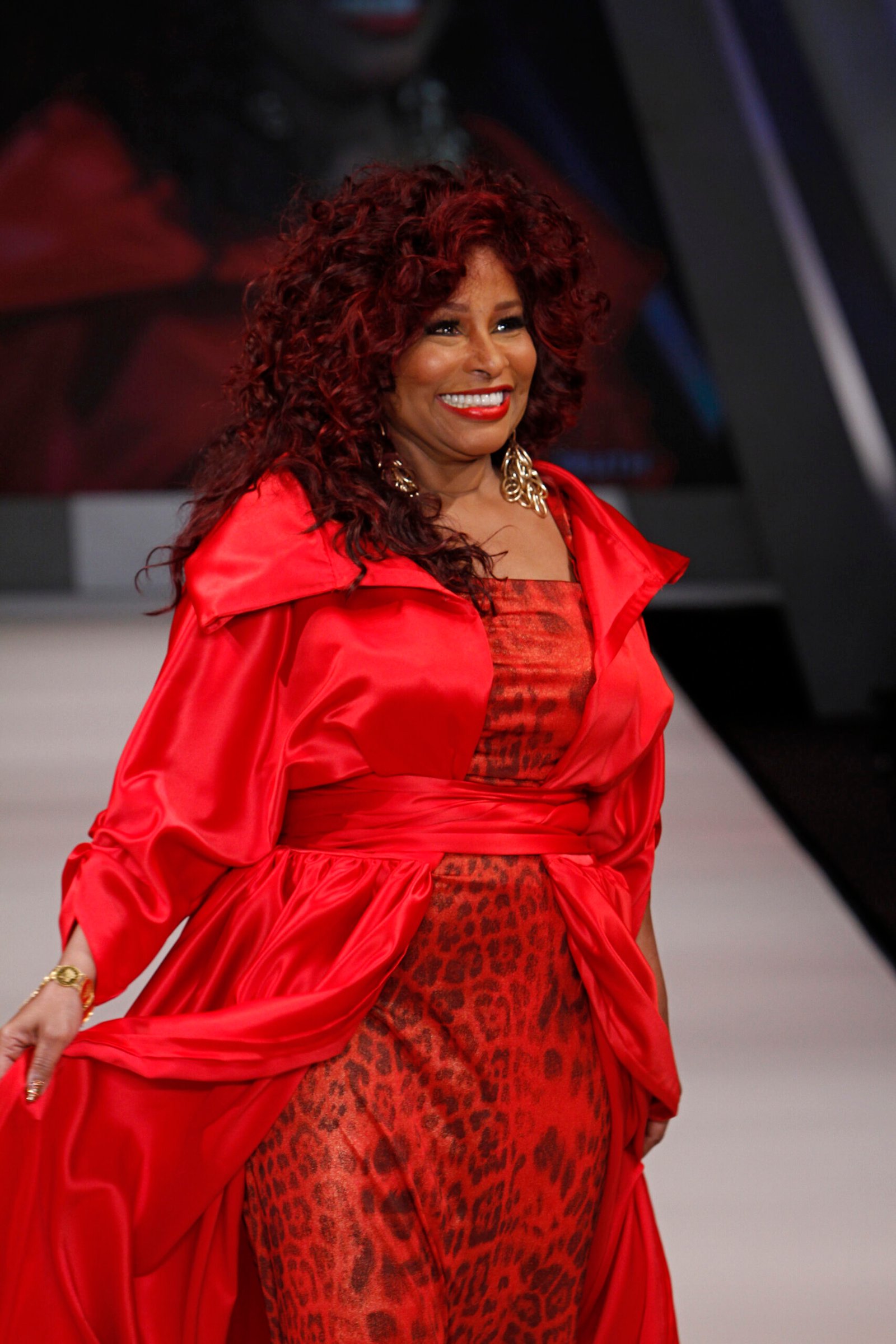
Before she was the Queen of Funk, she was Yvette Marie Stevens — a kid from Chicago’s South Side with a powerhouse voice and a name that hadn’t found her yet. When it did, it came from a Yoruba naming ceremony: “Chaka,” meaning woman of fire. If ever a name told the truth, that was it. For more than five decades, Chaka Khan has burned bright enough to light up everything she touched — and she isn’t done yet.
A Chicago Girl with a Fire Inside
Yvette Marie Stevens was born on March 23, 1953, in Chicago, Illinois, the eldest of five children raised in a bohemian household. Her jazz-loving parents reportedly named her after the Stan Getz song “Yvette.” At 11, she and her sister Bonnie — who would later sing with the Undisputed Truth as Taka Boom — formed the Crystallettes, a Motown-inspired girl group. At 13, she was given the African name Chaka Adunne Aduffe Hodarhi Karifi by a Yoruba priest — Chaka meaning “woman of fire.”
Her teenage years were anything but sheltered. She marched in civil rights rallies with her father’s second wife, joined the Black Panther Party’s free breakfast program for children as a teen, and sang with local groups around Chicago before landing with a band called Lyfe, where she met bassist Hassan Khan. They married in 1970 when she was 17. Though the marriage ended in divorce a short time later, she kept his surname — and Chaka Khan was born.
Rufus: The Band That Couldn’t Contain Her
In 1972, Chaka Khan joined the Chicago funk band Rufus, stepping in as lead singer after Paulette McWilliams departed. The chemistry was immediate. Rufus scored their breakthrough with “Tell Me Something Good,” a song written by Stevie Wonder that hit the R&B Top 5 in 1974 and won the band a Grammy for Best R&B Performance by a Duo or Group with Vocals. The single went gold, and the album it came from, “Rags to Rufus,” became a cornerstone of seventies funk. By the end of the decade, Rufus — soon billed as “Rufus Featuring Chaka Khan” — had racked up six gold or platinum albums and a string of hits including the silky slow jam “Sweet Thing,” which gave Khan one of her most beloved vocal showcases, the joyful “Do You Love What You Feel,” and the platinum-certified “Ain’t Nobody.” The last of those came from the 1983 live-and-studio double album “Stompin’ at the Savoy (Live),” and it won Khan and the band another Grammy. Later that year, Rufus disbanded, closing the book on one of the great band-singer partnerships of the seventies.
It was also becoming obvious to everyone, including the band, that the singer was bigger than the group. Tensions grew as Khan’s star rose, and she began building a solo career while still fronting Rufus — a balancing act that couldn’t last forever.
“I’m Every Woman”: The Solo Detonation
In 1978, Warner Bros. released her solo debut album “Chaka,” and its lead single “I’m Every Woman” — written by the legendary songwriting duo Ashford & Simpson — exploded. It topped the R&B chart, crossed into the pop Top 30, and drove the album to platinum status. A young Whitney Houston sang backing vocals on the track — a fitting touch, since Whitney would take the song back to the top herself in 1993. Khan’s solo career was officially unstoppable, and in 1981 she scored another R&B chart hit with the title track of “What Cha’ Gonna Do for Me.” She still returned to the band for the albums “Camouflage” (1981) and the live “Stompin’ at the Savoy” (1983), but the future was clearly her own.
“I Feel for You”: Prince, Stevie Wonder, and a Rapper
Then came 1984 and the album that made her a global star. “I Feel for You” was built around a song written by Prince for his 1979 album “Prince,” which Khan reinvented with producer Arif Mardin. The track featured harmonica from Stevie Wonder and a rap verse from Grandmaster Melle Mel — making Khan the first R&B artist to score a crossover hit featuring a rapper, a bold move years before rap and R&B pairings became the norm. The album went platinum, and the single won her Grammys for Best Female R&B Vocal Performance and Best R&B Song. “Through the Fire” became another enduring hit from the same album — a quiet-storm classic that remains a staple of soul radio. And in 1986 she lent her voice to Steve Winwood’s chart-topping “Higher Love.” All told, Chaka Khan has won eleven Grammy Awards — including the Grammy Lifetime Achievement Award — across her career.
A Jazz Heart Under the Funk
What many casual fans never realized is that Khan always preferred jazz. Between the big R&B records, she made scat- and jazz-influenced music whenever she could, and in 2004 she finally indulged the impulse fully with “ClassiKhan,” a standards album that showed off the depth of her phrasing. Her list of collaborators reads like a history of modern music: Miles Davis, Quincy Jones, Robert Palmer, Ry Cooder, Ray Charles, Joni Mitchell, Gladys Knight, Chick Corea, Mary J. Blige, and more. Few singers could move so effortlessly from a funk dance floor to a jazz session without losing an ounce of identity.
The Survivor’s Second Act
The years after her 1980s peak were not always easy. Khan struggled for years with a serious drug problem that had taken root during her time with Rufus, and her record sales cooled even as her reputation among musicians kept growing. She kept recording through the era — albums like “Destiny” (1986), “CK” (1988), and “The Woman I Am” (1992) — and remained a fixture on soundtracks and guest spots. But fighters fight. In 2007, she roared back with “Funk This,” an album that won her two more Grammys and reminded everyone what a once-in-a-generation voice she is. In 2023, she was inducted into the Rock and Roll Hall of Fame — a long-overdue coronation for the Queen of Funk.
The Queen Remains
Chaka Khan’s story is the story of a girl who was given a name meaning fire and then spent her whole life living up to it. With roughly 70 million records sold, she fronted one of the great funk bands of the seventies, walked away to become a solo icon, helped birth the idea of rap-soul crossover, and survived the kind of personal storms that end most careers. From the free breakfast programs of Chicago to the Grammy stage to the Rock and Roll Hall of Fame, she never stopped being exactly what that Yoruba priest saw in her: a woman of fire. When she lets loose on “I’m Every Woman” or slides into the silky menace of “I Feel for You,” you hear it instantly — the power, the ache, the joy. Few voices in popular music carry that kind of range: she could scorch a dance floor, seduce a slow jam, and scat her way through a jazz standard without ever sounding like anyone but herself. Some voices you admire. Chaka Khan’s voice you feel, right down in your chest, like a heartbeat with a backbeat.
Leave a Reply