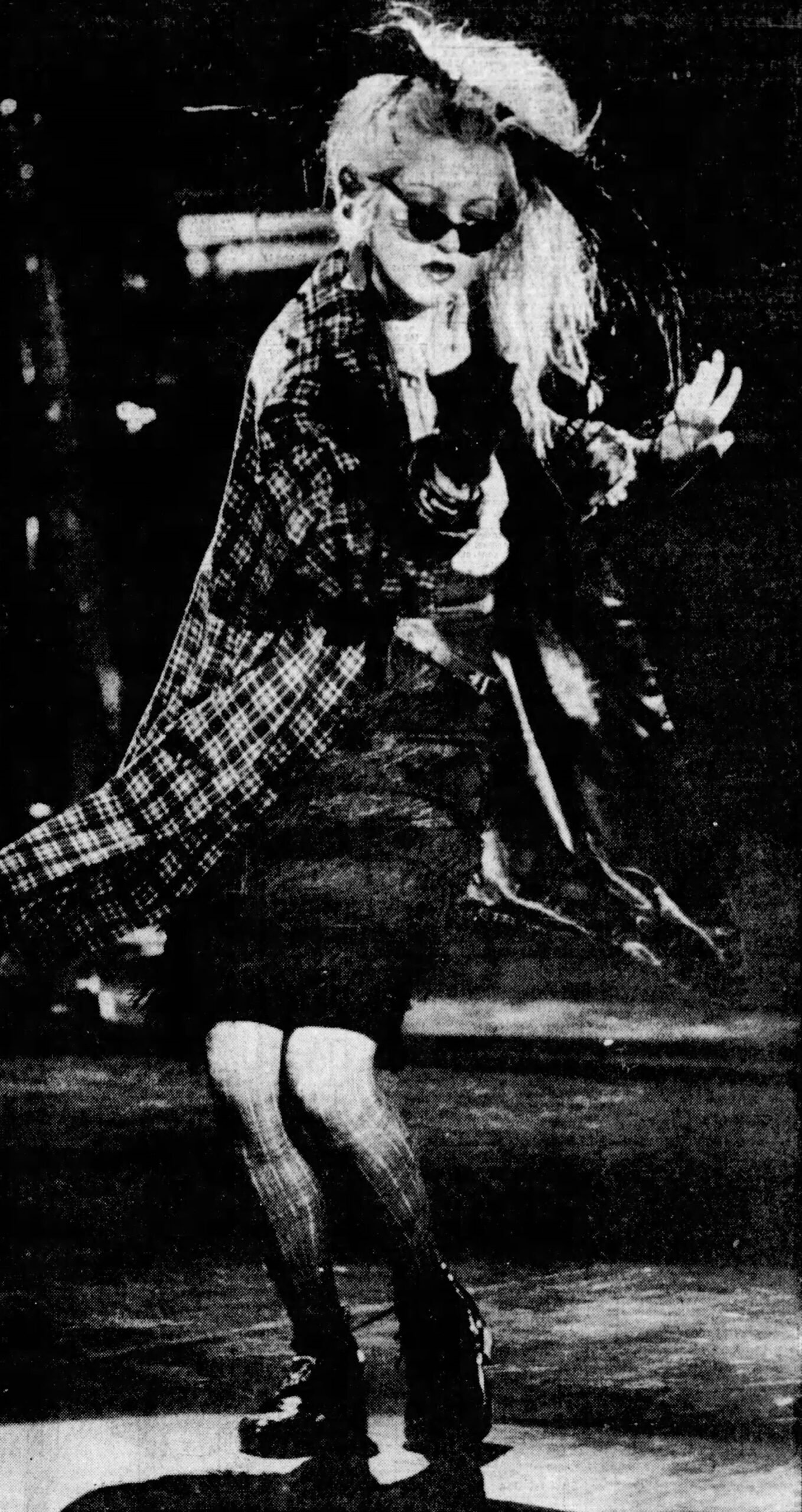
In the winter of 1981, the most famous voice in pop music two years later was a bankrupt ex-bandleader with a busted throat, waiting tables and singing for tips in a New York bar. She had been sued for $80,000 she did not have. She had lost her singing voice twice. She had been told by doctors she might never sing again. And she was about to become the biggest female pop star on the planet.
Nobody in that bar could have guessed it. But Cyndi Lauper had already survived worse.
The Girl Who Ran Away at Seventeen
Cynthia Ann Stephanie Lauper was born in Brooklyn in 1953 and raised in Ozone Park, Queens, in a working-class Catholic household. She was the kid with the dyed hair and the thrift-store clothes, bullied by classmates who threw stones at her for looking different. Home was no safer: her parents divorced when she was five, and her stepfather’s behavior eventually drove her out. Lauper has said the final straw was discovering him peeping through the bathroom keyhole while she bathed.
At seventeen, she walked out. She hitchhiked through Canada with her dog Sparkle, spent two weeks in the woods, and eventually landed in Vermont, where she took art classes at Johnson State College and worked odd jobs. She had been expelled from Richmond Hill High School and would later earn her GED. What she had, more than anything, was a voice, a four-octave instrument she had been honing since age twelve, when her sister gave her an acoustic guitar.
Back in New York by the mid-seventies, she ground through the club circuit in cover bands with names like Doc West and Flyer, singing disco, Bad Company, Jefferson Airplane, and Led Zeppelin covers across Long Island, waiting tables between sets. She fronted a Janis Joplin tribute act. It was brutal, smoky, all-night work, and it nearly destroyed the only thing she had.
The Voice That Died Twice
In 1977, Lauper’s vocal cords gave out. Doctors told her she would never sing again. For a singer who had spent years screaming over bar bands in the Joplin style, the diagnosis felt like a death sentence. She took a year off and rebuilt her voice from nothing with the help of vocal coach Katie Agresta, who taught her to sing properly for the first time in her life.
It would not be the last time her voice betrayed her. After the collapse of her first real band a few years later, she developed an inverted cyst on a vocal cord and temporarily lost her voice all over again. Twice told she might never work again, she kept coming back. Stubbornness, it turned out, was her other great instrument.
Blue Angel: The Band That Bankrupted Her
In 1978, Lauper met saxophonist John Turi and formed Blue Angel, a retro-tinged rockabilly and new wave band. This was her first vehicle for original songs, and she believed in it fiercely, so fiercely that she turned down offers to go solo. When the legendary disco producer Giorgio Moroder wanted her to record a song by herself for the soundtrack of the Meat Loaf movie “Roadie,” she said no. She would not abandon the band.
Steve Massarsky, a manager connected with the Allman Brothers Band, heard the band’s demo, bought out Lauper’s contract from her previous manager for $5,000, and got Blue Angel signed to Polydor Records. Their self-titled album came out in 1980. Lauper hated the cover, saying it made her look like Big Bird, though Rolling Stone would later name it one of the hundred best new wave album covers. Critics liked the record. Nobody bought it. As Lauper later joked, “It went lead.”
The band broke up. Then the hammer fell: the members fired Massarsky, and he sued them for $80,000. Lauper could neither pay nor fight it. She filed for bankruptcy. Broke, voiceless, and back to waiting tables, she waitressed at an IHOP, where she was sexually harassed by her manager and quit after being demoted to hostess, and sang in tiny clubs for whatever the room would give her.
It was in one of those bars, in 1981, that she met David Wolff. He became her manager and boyfriend, and he got her a deal with Portrait Records, a subsidiary of Epic. She was twenty-eight years old, ancient by pop-star standards, with nothing left to lose.
The Song She Stole From the Boys
Producer Rick Chertoff and the musicians of the Hooters, Eric Bazilian and Rob Hyman, helped shape her debut solo album, “She’s So Unusual,” released in October 1983. Lauper co-wrote four of its songs, including “Time After Time,” written with Hyman, and “She Bop.” But the song that detonated her career was one she did not write at all.
“Girls Just Want to Have Fun” had been written and recorded by Philadelphia singer-songwriter Robert Hazard from a male point of view. Lauper heard it, found the original lyrics misogynistic, and rewrote it as an anthem for young women. The arrangement, the yelping vocal, the gang of girlfriends in the video, it was all hers. The single peaked at number two on the Billboard Hot 100, and the video, directed by Edd Griles and starring her real-life mother alongside professional wrestling manager “Captain” Lou Albano as her father, won Best Female Video at the very first MTV Video Music Awards in 1984.
“She’s So Unusual” became the first debut album by a female artist to produce four top-five Billboard Hot 100 singles: “Girls Just Want to Have Fun,” “Time After Time,” “She Bop,” and “All Through the Night.” Lauper won Best New Artist at the 1985 Grammys. The bankrupt bar singer was suddenly on the covers of Rolling Stone, Time, and Newsweek in the same year.
The Night Her Jewelry Nearly Wrecked “We Are the World”
On January 28, 1985, Lauper joined forty-four other stars at A&M Recording Studios in Hollywood for the all-night recording of the charity single “We Are the World.” Quincy Jones had taped a sign to the door: “Check Your Ego at the Door.” Lauper, as usual, brought the jewelry.
Years later, Jones told Vulture that Lauper was the most difficult artist in the room that night. Her manager had come to him claiming “the rockers don’t like the song,” a complaint Jones discovered belonged to Lauper alone. Worse, take after take was ruined by the clinking of her necklaces and bracelets against the microphone. Behind-the-scenes footage shows her apologizing and stripping off the jewelry to get through her solo. Lauper later admitted on “Watch What Happens Live” that she had indeed told her manager she didn’t love the song, and confessed the jewelry was “a pain,” though she insisted she had always been polite to Jones himself. The single went on to sell more than twenty million copies and raise tens of millions for African famine relief. Her solo in the bridge remains one of its most recognizable moments.
Wrestling, “She Bop,” and the Filthy Fifteen
Lauper’s strangest detour was also one of her most culturally significant. Half a year after Captain Lou Albano appeared in her video, a storyline feud between them turned her into a character in the World Wrestling Federation’s “Rock ‘n’ Wrestling Connection,” a crossover masterminded by David Wolff, a lifelong wrestling fan. Lauper became the manager of women’s wrestler Wendi Richter and was in her corner when Richter defeated the Fabulous Moolah for the WWF Women’s Championship at “The Brawl to End It All,” broadcast live on MTV on July 23, 1984. She appeared at the inaugural WrestleMania. Wrestling historians credit Lauper with helping put the WWF, and its marriage to MTV, on the map.
Meanwhile, “She Bop,” her bouncy third single, turned out to be an ode to female masturbation, and in 1985 Tipper Gore’s Parents Music Resource Center put it on the notorious “Filthy Fifteen” list of objectionable songs, alongside Prince’s “Darling Nikki.” The list led directly to the Parental Advisory sticker. Lauper said she was shocked. She had written the song as a goof with a friend who suggested the topic; Washington turned it into a national scandal.
The Broadway Bet Nobody Saw Coming
Most eighties pop stars fade into nostalgia tours. Lauper kept mutating. Her 1986 album “True Colors” gave the world its title ballad, written by Billy Steinberg and Tom Kelly, which became an LGBTQ anthem and lent its name to her True Colors Fund for homeless LGBTQ youth. In 2010, her blues album “Memphis Blues” topped the Billboard Blues Albums chart for thirteen straight weeks.
Then came the gamble of her life. Composer and lyricist for a Broadway musical about a drag queen who saves a shoe factory? In 2013, “Kinky Boots” won six Tony Awards including Best Musical, and Lauper won Best Original Score, becoming the first woman in history to win that Tony by herself. A Grammy for the cast album followed in 2014. In November 2025, she was inducted into the Rock and Roll Hall of Fame.
The Ballads That Outlived the Neon
For all the neon and the noise, Lauper’s most enduring songs are her quietest. “Time After Time,” which she co-wrote with Rob Hyman of the Hooters during the “She’s So Unusual” sessions, became one of the most covered ballads of the decade, and VH1 later named it one of the best songs of the preceding twenty-five years. It was the song that proved the punk with the kewpie-doll voice could break your heart.
Then came “True Colors,” the title track of her 1986 second album. Written by the hitmaking team of Billy Steinberg and Tom Kelly, the same writers behind “Like a Virgin” and “Eternal Flame,” the song arrived as a stripped-down piano ballad, and Lauper sang it like a promise. It went to number one and became an anthem for the LGBTQ community, eventually lending its name to her True Colors Fund, which works to end homelessness among LGBTQ youth. The girl who had been thrown against lockers by a nun for being different grew up to build shelters for kids who were different too.
From a runaway sleeping in the Canadian woods to bankruptcy court to Broadway royalty, Cyndi Lauper’s career reads like a dare. She lost her voice twice and sang louder. She lost everything she owned and bet it all on a song written from a man’s point of view, flipping it into a feminist anthem. She was never the polished product the industry wanted; she was the thrift-store punk who rewrote the rules instead. Four decades on, the girls are still having fun, and the woman who made it possible is still, gloriously, so unusual.
Leave a Reply